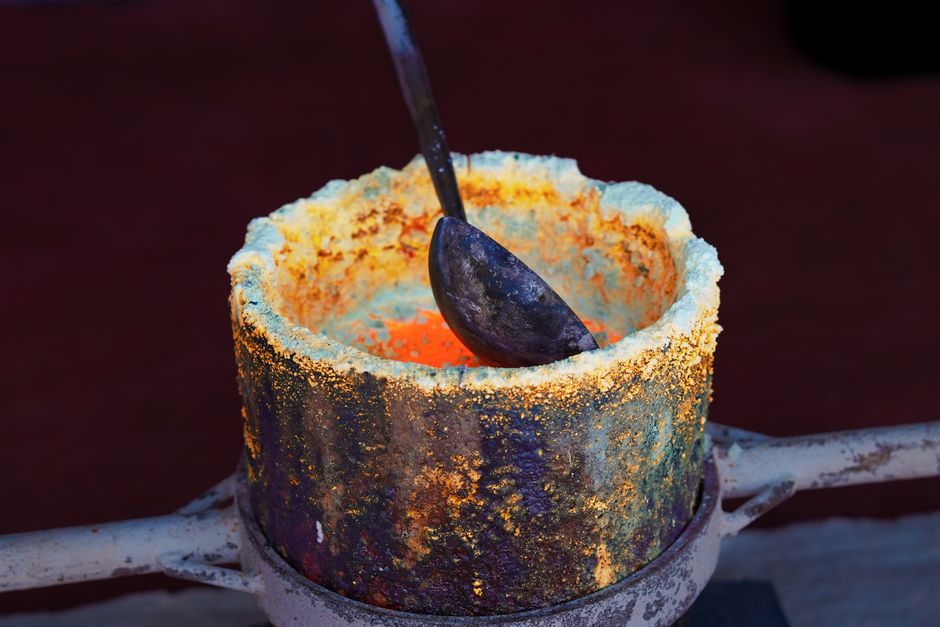
Magnesium die casting is the structural-metal process of choice when a part must shed mass: at 1.8 g/cm³ magnesium is the lightest structural metal on the engineering chart, roughly 33% lighter than aluminum (2.7 g/cm³) and ~75% lighter than steel, while still delivering a strength-to-weight ratio that supports cross-car beams, laptop housings, and EV battery enclosures [S6].
Selection is really four coupled decisions — alloy (AZ91D vs AM60B vs AM50A), process (hot-chamber HPDC vs cold-chamber HPDC vs [thixomolding](term explanation reference) vs rheocasting), machine tonnage (typically 400 t to 5000 t cold-chamber for structural Mg), and sourcing model (China integrated factory vs global multi-slide specialist) [S1][S3][S4].
Why Magnesium, and Where It Beats Aluminum or Zinc
Magnesium's 1.8 g/cm³ density is the headline number, but the engineering case rests on three measurable facts: tensile strength of AZ91D castings lands around 200–260 MPa with yield near 160 MPa, ductility sits at 2–6% elongation, and the alloy is 100% recyclable without property loss, which materially affects life-cycle scoring on automotive programs [S6].
Against aluminum ADC12/A380 (typical tensile 290–330 MPa but at 2.7 g/cm³) and zinc Zamak-3 (2.6 g/cm³ but with a melting point near 380 °C that limits high-temperature service), magnesium AZ91D is roughly 30% lighter than an equivalent aluminum part and flows well into thin walls down to 1.2–1.5 mm — the threshold aluminum struggles to maintain above ~2.0 mm [S1][S2].
For consumer-electronics and 3C housings, this weight plus thin-wall flow is why laptop lids, camera bodies, and drone frames default to magnesium; for structural automotive parts, EV battery enclosures, and steering components, the same density advantage shifts the vehicle's mass distribution downward and improves crash-energy absorption per kilogram [S3][S6].
Alloy Selection: AZ91D, AM60B, AM50A and Where Each Fits
AZ91D is the workhorse — roughly 9% Al, 1% Zn — and accounts for the majority of magnesium die castings in commerce; it offers the best castability, the highest tensile among the common Mg die alloys, and good corrosion resistance in properly chromate-treated or coated forms [S1].
AM60B (≈6% Al, 0.2% Mn) and AM50A (≈5% Al, 0.2% Mn) trade some tensile and yield strength for higher elongation (typically 6–8%) and better impact toughness, which is why automotive seat frames, instrument-panel beams, and cross-car beams that must survive crash pulses are commonly specified in AM60B rather than AZ91D [S6].
For high-temperature service above ~120 °C, conventional Mg-Al alloys creep noticeably and designers move to Mg-Al-RE or Mg-Al-Sr systems; AS41 (≈4% Al, 1% Si) and AE42 (≈4% Al, 2% rare earth) are the typical choices cited for gearbox housings and oil-pan applications where peak temperatures reach 150–175 °C [S6].
Process Selection: Hot-Chamber, Cold-Chamber, Thixomolding, Rheocasting
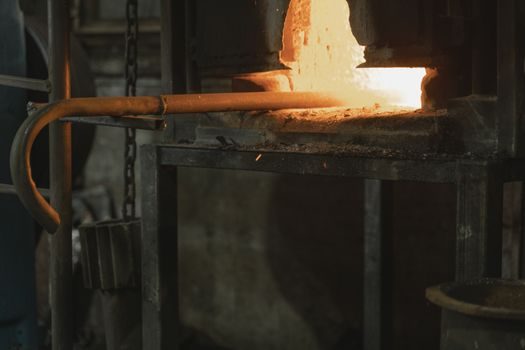
Hot-chamber HPDC injects molten metal from a submerged gooseneck — it is fast, with cycle times under 30 s, but the iron/steel gooseneck dissolves into magnesium melt, so the practical limit is shot weight under roughly 0.5–1.0 kg per shot and small part footprints; this is the route Dynacast uses for its multi-slide magnesium work on consumer electronics [S3].
Cold-chamber HPDC is mandatory for larger structural parts: the melt is ladled into a separate shot sleeve, eliminating the iron-contamination problem and allowing shot weights from ~1 kg up to 25 kg or more, with locking force scaled to projected area — a typical rule of thumb is 1 ton of clamp force per ~7–10 cm² of projected area at 600–900 bar injection pressure, which puts a 600 × 400 mm part into the 800–1600 t class [S1][S4].
Thixomolding feeds magnesium chips into a heated screw that plasticises the alloy into a semi-solid slurry before injection — the material never fully melts, which removes the open-pour fire risk and produces parts with lower porosity and better weld-line integrity than conventional HPDC; it is the process Dynacast lists for medical and consumer-electronic magnesium work where porosity must be near zero [S3].
Semi-solid rheocasting (SSM) on aluminum is well documented at the same source (Kingship cites proprietary slurry prep for T6 heat-treatable aluminum at zero porosity) and is increasingly applied to magnesium for structural EV battery enclosures that need post-casting T6 heat treatment and vacuum-impregnation-free leak-tightness [S1].
Machine Tonnage, Tooling and Tolerance Mapping
Match tonnage to projected area, not part weight: a magnesium structural casting with 1200 cm² projected area and a 2 mm wall typically needs 1200–1600 t clamp force at 800 bar injection; an 800 cm² thin-wall cover can run on a 400–600 t cell. The 400 t – 5000 t envelope cited by Kingship covers everything from 3C covers to full EV battery boxes [S1].
Tooling life on magnesium is materially higher than on aluminum under identical cycle parameters because the lower melt temperature (≈650 °C for AZ91D vs ≈660–700 °C for ADC12) and reduced attack on H13 tool steel; published mold-life figures from Chinese integrated factories run 100,000 to 1,000,000 shots, with H13, DIEVAR, NAK80 and SKD61 as the standard cavity/core grades [S1][S2].
Tolerance capability on a magnesium HPDC part off the machine is typically ±0.05–0.10 mm on critical dimensions and ±0.015 mm after 5-axis CNC post-machining on tight-tolerance features; CNC allowance is also where subsurface porosity is exposed and either sealed or reworked, so machining sequence matters for leak-tight housings [S1].
Comparison: Process Options on Four Decision Criteria

On four selection criteria — shot weight, cycle time, porosity risk, and suitable part class — the main magnesium routes line up as follows: hot-chamber HPDC handles under 1 kg shot weight at 20–30 s cycles with moderate porosity, suited to small 3C covers; cold-chamber HPDC handles 1–25 kg at 40–90 s cycles with moderate-to-high porosity, suited to automotive structural parts; thixomolding handles 0.05–3 kg at 30–60 s cycles with low porosity, suited to medical and tight-tolerance electronics; rheocasting handles 2–20 kg at 60–120 s cycles with very low porosity and is the only one of the four that supports T6 heat treatment for high-strength structural parts [S1][S3].
The trade-off in plain terms: hot-chamber is the cheapest per shot but the smallest in size; cold-chamber is the workhorse for structural parts; thixomolding trades machine cost for the cleanest internal structure; rheocasting trades cycle time for the highest achievable mechanical properties post-T6 [S1][S3].
Where Magnesium Die Casting Is and Is Not the Right Choice
It is the right choice when the priority sequence is: lowest mass at moderate strength, thin-wall flow under 2 mm, high-volume runs above 5,000 parts per year, and a temperature ceiling under ~120 °C for AZ91D or up to ~175 °C for AS41/AE42 — EV battery enclosures, steering columns, instrument-panel beams, seat frames, drone arms, laptop lids, and camera bodies all sit in this envelope [S1][S3][S6].
It is the wrong choice for: parts requiring high ductility above 8% elongation (use aluminum A356-T6 or steel), high-temperature service above ~200 °C where creep dominates (use aluminum or ductile iron), parts below ~50 g where plastic injection molding is cheaper, and any application requiring extensive post-machining of large surfaces — Mg chips are flammable and require special chip-management protocols that drive cost [S6].
For buyers weighing magnesium against aluminum die casting on a structural EV part, the decisive questions are: can the part be designed in 1.2–2.0 mm walls (favors magnesium), does the part exceed 1.0 kg shot weight (favors cold-chamber magnesium or aluminum), and does the program need T6 ductility above 8% (favors aluminum A356-T6 rheocasting) [S1].
Sourcing and Supplier Landscape in 2026
Global multi-slide and hot-chamber magnesium work is dominated by specialty houses such as Dynacast, which runs thixomolding and multi-slide cells across North America, Europe, and Asia for 3C and medical programs [S3].
China-integrated factories — Kingship, Bestcourser, and the die-casting-china.com network — compete on cold-chamber HPDC at 400 t to 5000 t with bundled in-house CNC machining, IATF 16949 certification, and PPAP Level 3 documentation; lead times for prototype tooling typically run 10–30 days for mold and parts, and 3–10 days for CNC-only prototypes [S1][S2][S4].
Alibaba-listed Chinese magnesium die-casting suppliers cluster in the US$2.5–10 million revenue band with response rates ranging from 69.2% to 94.4%, serving domestic, North American, South American, and Western European customers at 15–30% of the regional market share each; the same vendors typically handle aluminum and zinc die casting in parallel, which is worth confirming on tooling-heavy programs [S5].
Quality, Defects and Acceptance Standards
Magnesium HPDC parts must be inspected for the same defect families as aluminum — cold shuts, hot tears, flow lines, blisters, and subsurface porosity — with X-ray void analysis and CMM dimensional reporting as the two non-destructive baseline checks; Kingship documents 100% real-time injection-curve monitoring plus in-house X-ray and Hexagon CMM on every production batch, with full PPAP Level 3 documentation including chemical composition, tensile tests, and FMEA [S1].
Corrosion control is the magnesium-specific concern: bare AZ91D corrodes in salt-spray testing far faster than aluminum, so OEM specifications typically require chromate-free pre-treatment (e.g., Mg-specific conversion coatings), a primer, and a topcoat; this is a hard requirement for underbody and battery-enclosure applications where galvanic contact with aluminum or steel fasteners also has to be managed [S6].
Machinability of magnesium is excellent (specific cutting energy is roughly 50% of aluminum and 25% of steel) but the chips are flammable, so extraction, no-smoking tool policies, and water-immersion chip handling are standard shop-floor requirements — this is one of the non-recurring setup items a sourcing team should audit at a new supplier [S6].
For an EV battery-enclosure program in 2026, the realistic sourcing path is a Chinese IATF 16949 cold-chamber magnesium HPDC shop running 1600 t to 5000 t cells, bundled with 5-axis CNC post-machining and full PPAP — comparable in process logic to a cold-chamber aluminum HPDC program on the same part but with the 30% mass saving on the casting itself; cost benchmarks for the aluminum benchmark process are documented in the 2026 aluminum die casting selection guide, which provides a useful side-by-side tonnage and tooling reference.
For component-level specifications, see magnesium die casting machine, die casting die, and die casting machine.
For related coverage, see Track Loader Selection Guide: Class, Lift Geometry and Undercarriage Specs.