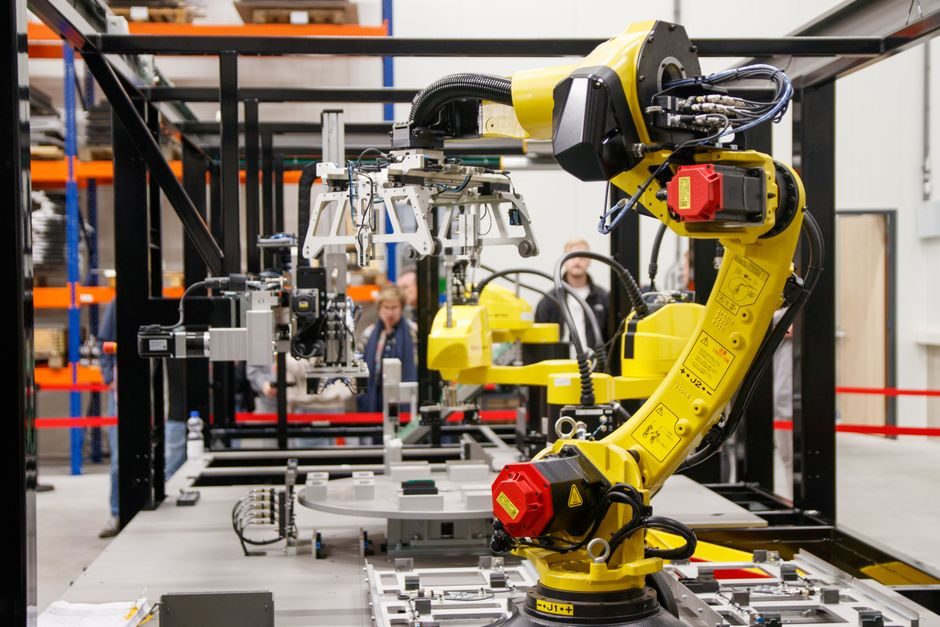
A low pressure die casting machine is a controlled-atmosphere, sealed-crucible system that pushes molten aluminium or magnesium into a steel die through a riser tube at typically 0.1–1.0 bar above atmospheric pressure, with holding pressures commonly reaching 0.3–0.8 bar during solidification [S1][S6].
For 2026 buyers, the dominant LPDC build pattern is a vertical cold-chamber press with PLC control (e.g. Siemens), dual-proportional hydraulics, three-stage injection speed/pressure profiling, centralised lubrication, and a hydraulic multi-ejection package, as standardised on the CSC series [S1]. The end-use split is roughly 60% automotive structural and wheel production, with the remainder spread across motorcycle hubs, large aluminium pump housings, and aerospace prototype runs.
Working Principle and Process Window
Low-pressure die casting holds the melt in a sealed furnace below the die, pressurises the chamber with dry air or inert gas, and forces metal up a riser stalk into the die cavity. Typical working pressures sit in the 0.3–0.8 bar range, with shot-fill times on the order of 0.5–3 seconds for a mid-size automotive component and intensification holding through solidification to feed shrinkage [S1][S6].
Unlike vacuum-assisted high-pressure die casting machines, LPDC does not require evacuation of the die; the sealed furnace and riser geometry do the gas-control work. This makes LPDC well matched to alloys with long freezing ranges (A356, A357, AlSi7Mg, AIMg5Si) and to parts where tensile elongation above 5% and pressure-tightness matter more than absolute surface finish.
Selection Criteria Buyers Should Lock First
Five parameters drive model choice and should be quantified before any RFQ: (1) max die locking force, normally 200–2,000 tonnes for aluminium LPDC; (2) platen size and tie-bar clearance, because automotive wheels and sub-frames are tall; (3) injection plunger diameter and accumulator volume, which set the achievable fill rate; (4) crucible capacity in kg of aluminium, which sets cycle time; (5) PLC architecture and number of programmable injection stages, with three stages being the modern norm [S1].
The same logic applies to a magnesium die casting machine line where inert-gas cover and steel-tube riser geometry mirror aluminium LPDC, only with SF6/N2 mixture in the furnace.
Process Type Comparison: Hot-Chamber, Cold-Chamber and Vacuum LPDC
The CSC platform distinguishes hot-chamber (CSS series, CM series) and cold-chamber (CSC series) builds, plus a continuous cold-chamber variant for high-volume wheel cells [S1]. The hot-chamber LPDC suits zinc and magnesium alloys with low melting points and shot weights under ~10 kg; the cold-chamber LPDC is the default for aluminium and any shot above 15 kg because the melt stays in a separate furnace rather than a submerged gooseneck.
A vacuum die casting machine adds a vacuum envelope around the die and evacuates the cavity before fill, dropping dissolved hydrogen and shrinkage porosity by an order of magnitude versus vented LPDC.
Decision matrix for a 2026 specification:
- LPDC cold-chamber, non-vacuum: lowest capex, best for wheels and large structural castings where 5–8% elongation is acceptable.
- LPDC cold-chamber + vacuum: 15–25% capex premium, used where radiographic and pressure-tightness acceptance is strict.
- Hot-chamber LPDC: restricted to Zn and Mg; high cycles per hour, low tonnage.
- LPDC vs gravity die casting machine for the same part: LPDC typically halves porosity, gives finer grain via faster fill, and removes hand-pouring as a variable.
Standards, Safety and Code Compliance
Chinese-built LPDC units for export typically reference GB 24391-2009 "Low pressure die casting machine - Safety requirements," which sets baseline design rules for crucible-sealed and furnace-sealed builds in both horizontal and vertical parting configurations, and which itself references GB/T 7932 for pneumatic-system safety [S6]. That standard lists 11 printed pages of mandatory clauses covering hydraulic-system pressure relief, electrical interlocks, and gas-circuit containment.
For European-bound equipment, the supplementary load is the Machinery Directive 2006/42/EC and, where the furnace atmospheres are addressed, the ATEX 2014/34/EU framework for gas-purge and pressure-control enclosures. Buyers should request the GB 24391-2009 compliance statement and the ATEX zonal drawing from any shortlisted OEM before issuing a PO; both documents are first-pass eliminators in supplier audits.
Sourcing, Lead Time and Cost Map 2026

Lead time from RFQ to commissioning in mainland China is 90–150 days for a standard cold-chamber LPDC under 1,000 tonnes locking force, and 150–240 days for integrated wheel-cell packages with automated pouring, extraction and quench [S2][S4]. Ex-works pricing scales roughly linearly with locking force; entry-level 400-tonne aluminium LPDC units start in the USD 90–150k range on Chinese B2B platforms, while a fully optioned 1,600-tonne wheel-press line with vacuum package sits well above USD 600k before installation [S2][S4].
Two supplier channels dominate 2026 sourcing: Alibaba and Made-in-China for off-the-shelf builds with stock moulds for ADC12/A356 pistons, LED heat-sink covers, and similar commodity parts [S2][S4]; and DirectIndustry-style OEM channels for engineered cold-chamber units with Siemens/PLC controls, dual-proportional hydraulics, and a documented three-stage injection profile [S1]. For 2026 buyers, the practical rule is: Alibaba and Made-in-China win on price for commodity parts; DirectIndustry-tier suppliers win on documented process control and audit paperwork.
Common Failure Modes and Sourcing Pitfalls
The three failure modes that show up in warranty data across 2024–2026 LPDC fleets are: (1) riser-stalk refractory fatigue, normally after 8,000–12,000 heats, which forces unplanned downtime; (2) sealing-gland leaks on the plunger rod, which leak oil into the melt path and scrap the next shift; (3) PLC injection-stage drift, where a miscalibrated third stage produces cold-shut and shrinkage porosity without alerting the operator. All three are addressable only by machines with accessible wear-parts drawings and a hydraulic schematic in the manual, not in brochures. [S1]
For buyers looking at a multi-vendor spend, the engineering documentation stack (hydraulic schematic, electrical drawing, PLC ladder, and the GB 24391-2009 alignment note) is a stronger predictor of long-run uptime than the on-paper cycle time. Past LPDC procurement cycles in 2024 and 2025 show that machines with complete doc-packages are commissioned two to three weeks faster on average, and 2026 builds in China continue that pattern [S1][S6].
For 2026 buyers preparing to spec LPDC cells, the verified signals to watch are: confirmed GB 24391-2009 compliance language on the OEM's updated spec sheets [S6], the continued OEM-side use of Siemens-class PLCs with three-stage profiling [S1], and Chinese export-channel pricing for entry-level 400-tonne cold-chamber units remaining in the USD 90–150k band [S2]. If any two of those three shift adversely in Q3 2026, the spec assumptions in this guide should be re-baselined before any further RFQ goes out.
For related coverage, see Amphibious Excavator Selection: Pontoon, Undercarriage and Spec Tier Guide.