
U.S. The global automotive parts magnesium die-casting market is projected to grow at a 5.40% CAGR during 2026–2034 [S5].
Demand is concentrated in automotive castings, which consumed an estimated 69% of primary magnesium in 2025, with lighter vehicles and expanding electric-vehicle production acting as the principal market drivers [S1][S5].
Magnesium Price Baseline for 2026 Buying
U.S. Western magnesium averaged $3.53/lb in 2021, $7.59/lb in 2022, $4.98/lb in 2023, $3.52/lb in 2024, and $3.20/lb in 2025, showing that the 2022 spike was not sustained [S1].
The European free-market benchmark moved from $5,011/metric ton in 2021 to $5,206/metric ton in 2022, then fell to $3,240/metric ton in 2023, $2,850/metric ton in 2024, and $2,500/metric ton in 2025 [S1].
These figures are metal-price benchmarks, not delivered alloy or casting prices. Alloy chemistry, melt loss, machining, coating, freight, tooling, and volume must be added separately.
Why Die-Casting Demand Is Expanding
An estimated 69% of primary magnesium consumption went into castings in 2025, principally for automotive applications, making vehicle demand the most direct link between magnesium pricing and die-casting load [S1].
The automotive-parts magnesium die-casting market was valued at $3.5 billion in 2025 and is projected to reach $5.7 billion by 2034, a 5.40% CAGR for 2026–2034 [S5].
The broader die-casting machine market is estimated at $90.46 billion in 2026 and projected to reach $152.04 billion by 2033 [S8]. These totals should not be treated as a magnesium-only demand measure. For material planning, the more useful signal is the automotive segment forecast and the 69% casting share of primary magnesium consumption [S1][S5].
Cost Drivers Behind Each Die-Cast Part
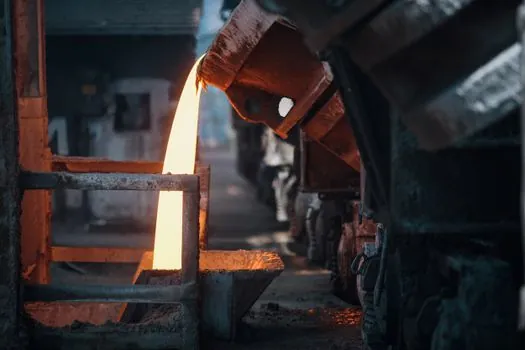
Magnesium price is only one component of part cost, and its influence depends on casting volume because the same part carries tooling, setup, melting, trimming, machining, and surface-finishing costs [S4].
The first driver is metal and alloy cost. A $0.10/lb change applied across 1 million lb of purchased alloy changes material cost by $100,000 before melt loss, but actual purchased weight will exceed finished-part weight [S1]. The second driver is tooling: a production program with several hundred thousand parts can spread a dedicated die over more units than a low-volume program. The third is processing, including melting, injection, trimming, machining, and finishing, with automated die casting identified as a route to higher precision and lower labor cost [S4][S5].
Total cost of ownership must also include furnace energy, protective-atmosphere gas, preventive maintenance, die repair, rejected castings, corrosion protection, and inbound or outbound logistics. In 2025, the United States recovered an estimated 110 thousand metric tons of secondary magnesium from new and old scrap [S1].
Pressure, Vacuum, Gravity, and Squeeze Casting Compared
Pressure die casting is the principal high-volume option for automotive magnesium components because molten alloy is injected into a reusable steel die, while vacuum, gravity, and squeeze casting trade throughput or geometry against tooling and process complexity [S4][S5].
Against four procurement criteria, pressure die casting offers the strongest fit for mass production, repeatable thin-wall geometry, and automation. Vacuum die casting is relevant when component geometry or filling control makes conventional injection less suitable. Gravity die casting can handle larger castings but has lower productivity than pressure injection. Squeeze casting can support castings with controlled feeding under pressure, but cycle time and equipment requirements can constrain high-volume economics [S5].
The equipment decision should follow component geometry and annual volume, not the broader magnesium-price direction alone. A magnesium die-casting machine may suit high-volume housings or frames, while a vacuum die-casting machine, gravity die-casting machine, or squeeze-casting machine may be justified by geometry and production requirements. A die-casting die also requires alloy-compatible tooling, thermal control, and a maintenance plan that addresses magnesium-specific corrosion and contamination risks.
Automotive Applications and Demand Constraints

Automotive magnesium die castings are used in steering wheels, transmission housings, seat frames, dashboard structures, engine covers, and battery enclosures, giving electric vehicles a broader lightweighting role than powertrain mass reduction alone [S4].
Demand growth is supported by vehicle lightweighting, electric-vehicle production, improved die-casting technology, and pressure for better fuel efficiency and emissions performance [S5]. Asia-Pacific is identified as the leading regional market because of China’s and India’s vehicle industries, while Europe’s weight-reduction and environmental mandates support demand and North America retains a substantial manufacturing base [S5].
The material still competes with aluminum, steel, and plastics, and magnesium’s use remains niche because of this competition [S7]. This constraint matters because a forecast CAGR is not a guarantee that a specific casting line will fill. Tooling commitments, vehicle-platform timing, alloy availability, customer localization, and qualification requirements can delay volume more effectively than a modest move in the metal benchmark.
Supply, Recycling, and Purchasing Exposure
U.S. secondary magnesium production was estimated at 110,000 metric tons in 2025, while imports for consumption reached 82,000 metric tons and reported primary consumption was 40,000 metric tons [S1].
Primary magnesium production in the United States stopped in 2022, and the operator of the only U.S. primary smelter filed for Chapter 11 bankruptcy protection in September 2025 [S1]. Import concentration adds another procurement variable: for magnesium metal at 99.8% purity, Israel supplied 47% and Turkey 31% of U.S. imports during 2021–2024, followed by Russia at 8% and China at 6% [S1].
Recycling provides a partial hedge, but not a guaranteed one. About 58% of secondary magnesium was consumed in aluminum alloys in 2025, while 42% went to structural uses, meaning recovered material competes between alloy production and structural applications [S1]. The buyer should track the $3.13–$3.25/lb 2026 import-price range, U.S. import reliance above 75%, and changes in secondary-magnesium availability as the three most actionable purchasing signals [S1].
Sourcing, Tariffs, and Contract Terms
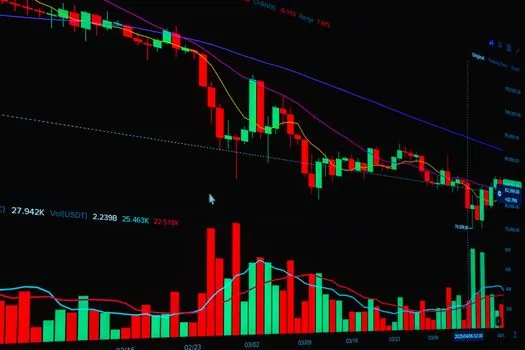
U.S. normal trade relations for magnesium include an 8% ad valorem tariff on unwrought metal, 6.5% on unwrought alloys, 4.4% on powders and granules, and free entry for waste and scrap [S1].
These tariff categories affect landed cost differently, so a buyer should specify whether the purchase is metal, alloy, powder, or scrap rather than using one magnesium price for every format. For wrought metal, the listed tariff is 14.8 cents/kg on magnesium content plus 3.5% ad valorem [S1].
Contracts should also define alloy grade, delivered unit, packaging, moisture protection, heat or traceability requirements, acceptance limits, price-adjustment mechanics, and responsibility for alloying additions. The die-casting process normally combines magnesium alloy with aluminum additives, zinc compounds, and industrial lubricants, so the purchase specification must cover the complete chemistry rather than only primary metal [S4].
For 2026 procurement, use $3.20/lb as the 2025 U.S. annual reference and $3.13–$3.25/lb as the observed 2026 import-price band, then build the casting cost from alloy chemistry, volume, tooling, cycle time, energy, maintenance, and yield; track automotive program awards and U.S. import reliance above 75% as the demand and supply signals [S1][S5].