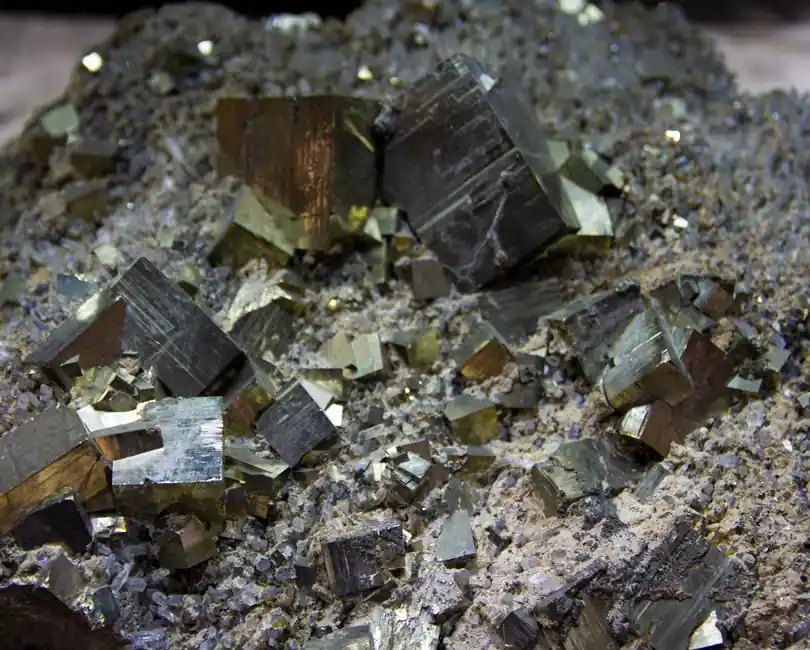
China-origin manganese ore in 2026 is sold across at least 22,941 ChemNet product entries, 100+ Alibaba suppliers, and 104+ Made-in-China manufacturers, with reported Mn grade bands of 30%-50%+ and ferromanganese wholesale tiers of US$ 800-1,500/ton [S3].
Verified 2026 listings place Brazilian-origin lots at Mn 43.01% with P 0.080% and S 0.009%, Indian exporter Emarc India (Faridabad) at 40%-50% Mn, and South African material routed through Dubai-based GOLD/GOLD PLUS traders with a multi-product form mix (ore, concentrate, briquettes, ferroalloys) [S3]. The same supplier map shows China acting as both a re-export hub for African and South American material and an origin point for its own domestic lump and concentrate.
Spec Gates That Decide Buy/No-Buy
Four variables are non-negotiable on every 2026 inquiry sheet: Mn grade, impurity ceilings, size fraction, and form [S3]. Typical supplier grade bands sit at Mn 30%-50%+, with high-grade metallurgical (HG) lots above 44% Mn and Mn/Fe ratios above 7, while mid-grade sinter feed runs 30%-38% Mn with higher Fe [S3]. One verified Brazilian listing dated 2026-06-26 reports Mn 43.01%, Fe 3.66%, SiO 7.21%, Al2O3 6.32%, P 0.080%, S 0.009%, MgO 0.637%, CaO 0.263%, a composition consistent with FeMn/SiMn furnace feed [S3].
Phosphorus is the most punitive impurity because it survives the smelter and degrades steel; supplier data bands it at P 0.10%-0.20% on broad-market listings and as low as 0.047%-0.053% on washed Chinese ore at Mn 41.83% [S3][S4]. Sulfur ceilings are tighter, with broad-market bands of S 0.05%-0.009% and a separate spec point at S 0.05% max for export-grade washed ore [S3][S4]. For comparison against other strategic mineral buys, see Lithium Hydroxide Sourcing From China: 2026 Spec, Price, and Hedging Map, which uses the same four-variable spec gate pattern.
Form, Size, and Application Routing
Manganese ore ships in four principal forms in 2026: raw lump 6-75 mm for direct furnace feed, fines 0-6 mm for sinter plants, concentrate for chemical and battery applications, and briquettes or ferroalloys for ladle addition [S3]. Verified Chinese-origin washed lump from Daji Manganese runs Mn 38%-50% in stepped bands (38-40, 40-42, 42-44, 44-46, 46-48, 48-50%), with a sample report showing Mn 41.83%, Al2O3 1.78%, SiO2 14.07%, Fe 2.96%, P 0.047%, S 0.053%, and a 10-50 mm size cut [S4].
A 99.99% purity "manganese ores, reduced" grade (CAS 69012-49-3, EINECS 273-748-0) is listed on a Chinese supplier directory in 25 kg/drum packaging, which is the right route for R&D and battery cathode precursor work rather than bulk FeMn/SiMn feed [S3]. For end uses tied to welding and steel fabrication, the UHP graphite electrode 2026 mainstream and China-vs-West race covers the upstream carbon electrode that consumes much of the same FeMn output. Indian-origin material from Aditya Overseas Enterprises covers the same size and grade envelope, with Mn 35%-50%, Fe 5%-15%, SiO2 8% max, Al2O3 5% max, P 0.15% max, S 0.05% max, oversize +50 mm capped at 10% and undersize -10 mm capped at 20% [S5].
Supplier Map: Origins, Platforms, and Credentials
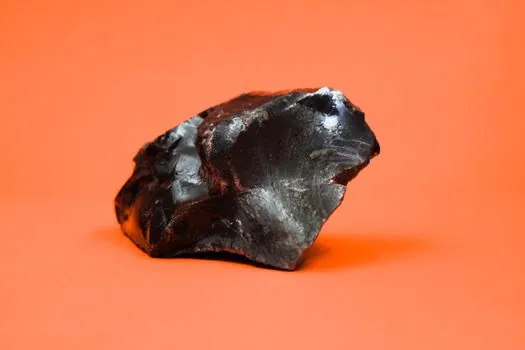
The 2026 source map splits cleanly by origin: South Africa routed via Dubai GOLD/GOLD PLUS traders, Brazil concentrated in Criciuma (Santa Catarina) with a GOLD Member go4WorldBusiness profile, India clustered in Patna (Bihar) and Faridabad (Haryana) with Emarc India holding a 4.6/5 buyer rating, and China dominating Made-in-China and ChemNet aggregators [S3]. Alibaba's 2026-07-03 search returns 100+ matched Chinese suppliers with the top three market splits reported as Middle East 20%, North America 18%, Eastern Asia 15% [S3].
ChemNet's 2026-07-10 China directory lists 22,941+ Manganese Ore product entries across inorganic chemicals, dyestuffs, and food or feed additive channels, the broadest aggregator count in the dataset and a useful baseline for cross-checking any single supplier's pricing [S3]. Foshan Richemical Industry Co., Ltd. is one active Eximnext listing offering Mn 97-99% (likely a high-purity manganese metal or chemical-grade lot, not natural ore) at US$ 5.50-8.50/MT CIF China on a 1-unit MOQ, HS code 2602.00, with T/T, L/C, and D/P terms [S2]. Hunan Daji Manganese in Leiyang, Hunan, founded 1995, holds independent export rights plus quality, environmental, and OHS management certifications and exports to Southeast Asia, South Korea, Belarus, Russia, and Central Asia [S4].
Comparing the Main Buy Options
For a procurement engineer choosing between the four principal 2026 routes, the decision criteria cluster around Mn grade, impurity ceiling, form, and lead time. Brazilian and South African HG lots above 44% Mn with Mn/Fe above 7 are the metallurgical default for FeMn/SiMn furnace feed, with a typical composition around Mn 43.01%, P 0.080%, S 0.009% on the Brazilian example cited [S3]. Chinese washed lump bands at Mn 38%-50% in 2% steps, with a 10-50 mm cut and P typically 0.047%-0.053%, and is the most flexible option for steel mills that need consistent P control [S4].
Indian lots in the 35%-50% Mn range with Fe 5%-15% and SiO2 8% max are common on the mid-tier and direct-shipment market, with Emarc India specifically advertising 40%-50% Mn [S3][S5]. High-purity 99.99% "reduced" manganese (CAS 69012-49-3) is a niche R&D and battery-precursor route rather than a bulk metallurgical play, supplied in 25 kg/drum packs [S3]. For a parallel view on how spec gates drive buying decisions in another Chinese mineral category, the Lithium Hydroxide Procurement: Spec Gates, Contract Levers, 2026 Sourcing Map piece walks a similar four-criterion filter.
Price Bands, MOQs, and Incoterms
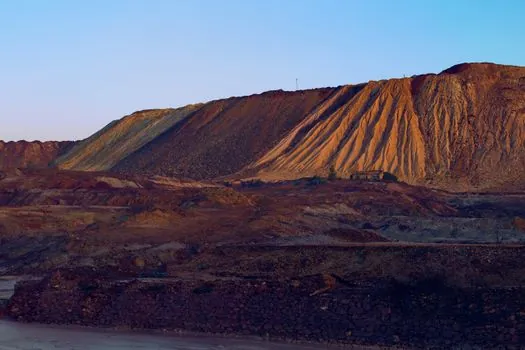
Verified 2026 pricing splits into three tiers. Ferromanganese, silicon-high-carbon FeMn, and high-quality ore on Made-in-China sit at US$ 800-1,500/ton [S3]. Foshan Richemical's Eximnext listing, again likely high-purity Mn metal or chemical-grade, is at US$ 5.50-8.50/MT CIF China with a 1-unit MOQ and HS code 2602.00 [S2]. Alibaba's mid-2026 returns cluster Chinese suppliers at a 1-ton MOQ, while bulk-vessel shipments are listed on go4WorldBusiness for Brazilian and South African material [S3].
Standard payment terms across the 2026 supplier set are T/T, L/C, and D/P, with Eximnext explicitly offering escrow trade assurance on the Foshan Richemical listing [S2]. Bulk carriers handle lump ore loose, while fines may need agglomeration or controlled-moisture handling to suppress dust and degradation in transit [S5]. Chinese suppliers like Daji Manganese also advertise the quality, environmental, and OHS management certifications that European and Middle Eastern buyers typically require, alongside independent export rights [S4].
Limitations, Failure Modes, and Verification
Three failure modes recur in manganese ore sourcing from China. First, grade mis-declaration: suppliers may list a "Mn 48%" headline with no P or S ceiling, and only the lab certificate reveals whether the lot is actually FeMn-feed grade or just sinter fines. Second, size drift: oversize +50 mm and undersize -10 mm caps of 10% and 20% respectively on Indian export lots are tight, and Chinese washed lump at 10-50 mm should be checked at the load port, not on the mill certificate [S4][S5].
Third, "manganese ore" listings that are actually manganese metal, electrolytic manganese, or chemical-grade MnO2 at near-99% purity, which is what the Foshan Richemical Mn 97-99% Eximnext listing appears to be, not a natural ore [S2]. For battery and chemical applications, that is fine; for a FeMn/SiMn smelter, it is the wrong product. Pyrolusite (MnO2) at Mn up to 63.2% and hydromanganese oxide at Mn 45%-60% define the natural mineral envelope, and pyrolusite decomposes at 550-600°C to β-Mn2O3, a process window relevant if the buyer is also calcining ahead of leaching [S1]. For a sense of how unrelated 2026 spec-driven buys look in practice, the Stretcher selection for confined space entry and Wheel Loader vs Motor Grader pieces show the same four-criterion filter applied to different industrial categories.
Sourcing Standards and Traceability
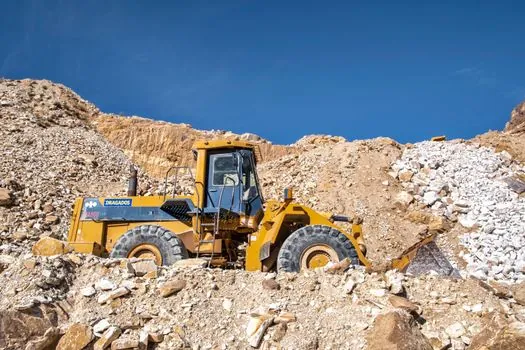
No single international standard governs manganese ore grade, but supplier certificates routinely reference Mn, Fe, SiO2, Al2O3, P, S, and moisture against a typical "ferroalloy producer and steel plant" spec, with Mn:Fe ratios between 3:1 and 7:1 used as a metallurgical quality proxy [S5]. Phosphorus is the most tightly controlled impurity because it carries through into finished steel, and the lowest P ceilings (0.047%-0.053%) appear on Chinese washed lump rather than broad-market Brazilian or Indian lots [S3][S4].
For traceability, the strongest 2026 signal is the supplier's listing age and platform certification: a 2026-07-10 dated entry on ChemNet or go4WorldBusiness with a GOLD Member badge and a third-party lab certificate is a higher-confidence buy than an undated Alibaba storefront with no audit trail [S3]. Two trackable signals to watch over the next sourcing cycle: a possible tightening of the S 0.05% ceiling on broad-market listings, where some 2026 Brazilian lots are already at 0.009% [S3], and the spread between Chinese washed lump at Mn 41.83% with P 0.047% and unverified aggregator listings claiming Mn 30%-50%+ with no P or S certificate [S4].
Spec-level background on the components involved: linear guide, crossed roller guide, and pressure transmitter.