
A standard manual pallet jack from major OEM catalogs carries a 5,500 lb (≈2,500 kg) nameplate load rating at standard fork geometry, with heavy-duty manual variants reaching 11,000 lb and electric walkie pallet trucks starting at 3,300 lb (per [S2] Staxx 2025 capacity reference; [S4] Toyota HPT 5,500 lb spec; [S8] qdpowerful 2025 capacity guide).
Reach trucks are not in the same equipment family as pallet jacks — they are narrow-aisle, mast-equipped forklift trucks with lift heights of 20+ ft, and the load-rating question for that class is driven by mast capacity at a given lift height and load center, not by the 6–8 in ground-clearance envelope that defines pallet jack duty (per [S7] Bishamon 2025 lift-height reference).
Standard Manual Pallet Jack Load Rating: The 5,500 lb Baseline
The most common manual pallet truck sold in 2026 carries a 5,500 lb (≈2,500 kg) load rating at standard fork dimensions of 27 in W × 48 in L, and this figure appears across at least four independent OEM and distributor references reviewed in mid-2026 (per [S1] Cherry's Material Handling 2025; [S4] Toyota Forklift product spec; [S8] qdpowerful 2025 capacity article; [S9] Zilla Industrial buyer's guide 2025).
Below that figure, light-duty manual models drop to 2,000 lb for low-clearance retail and back-of-house work, and at the top end, heavy-duty manual pallet jacks built with reinforced frames and larger hydraulic cylinders reach 11,000 lb — a range the Staxx engineering reference tags as 4,400 to 6,600 lb for typical models and up to 11,000 lb for heavy-duty variants (per [S2] Staxx 2025).
Fork Geometry Changes the Nameplate, Not Just the Truck
Load rating on a manual pallet jack is a function of fork width and fork length, and the rating falls as the forks move away from the standard 27 in × 48 in envelope. A 27 in W × 96 in L long-fork manual jack drops to 4,400 lb, and a 16 in W × 36 in L short-fork model drops to 2,200 lb on the same chassis (per [S1] Cherry's Material Handling 2025).
That geometry penalty matters when comparing a manual jack to a reach truck: the reach truck's load rating is also de-rated as lift height and load center increase, but its penalty curve starts from a much higher baseline and the de-rate mechanism (mast deflection, stability triangle) is structural rather than hydraulic (per [S7] Bishamon 2025 lift-height reference; [S2] Staxx 2025 load-distribution guidance).
Powered Pallet Trucks Bridge the 3,300–10,000 lb Gap
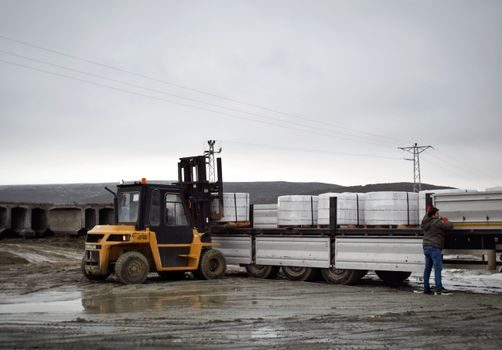
Electric walkie pallet trucks from major OEMs typically rate 4,500–6,000 lb for pedestrian-operated units and 6,000–8,000 lb for ride-on models, with the Global Industrial 2025 head-to-head comparison citing 6,000–8,000 lb as the powered-pallet-jack range and 4,000–5,500 lb as the manual range (per [S6] Global Industrial 2025; [S4] Toyota Electric Walkie 4,500 lb spec).
Electric pallet truck range across the wider market starts at 3,300 lb for light-duty walkies and tops out at 10,000 lb for heavy-duty ride-on units, with throughput jumping from 15–20 pallets per hour for manual jacks to 40–60 pallets per hour for powered walkies on the same aisle (per [S2] Staxx 2025; [S6] Global Industrial 2025).
Electric walkie pallet trucks replace the human-powered hydraulic pump with a battery, servo motor or AC drive motor, PLC controller, and lift/lower hydraulics — adding four new failure modes (battery, motor, controller, contactor) on top of the same hydraulic cylinder (per [S5] Mobile Industries 2025; [S6] Global Industrial 2025).
Reach Truck Load Rating: Mast Height and Load Center Drive the Number
Single-deep reach trucks in 2026 OEM catalogs are typically rated 3,000–5,000 lb at a 24 in load center with mast heights of 20–30 ft, and the nameplate drops as lift height rises because the stability triangle narrows above the first-stage mast. For a load-rating comparison, the question is not "is a reach truck stronger than a manual jack" but "does the application need vertical lift or just ground-level transport" (per [S7] Bishamon 2025 standard 6–8 in manual-jack lift envelope).
A 4,000 lb load at 25 ft of lift is a reach-truck or stand-up forklift job, not a pallet jack job; a 4,000 lb load moved 30 ft across a flat dock floor at 6 in of lift is exactly the manual-jack operating envelope. Powered walkie pallet trucks also have a 6 in standard lift envelope and do not bridge the vertical-lift gap — they only add motorized travel and lift assist (per [S7] Bishamon 2025; [S5] Mobile Industries 2025).
Throughput, Cost, and Operator Effort Side by Side
The Global Industrial 2025 head-to-head puts manual and powered pallet jacks on a single comparison grid, and the same grid applies when a reach truck enters the decision: manual jack acquisition cost is $300–$700, powered walkie is $2,500–$7,000+, and a new reach truck in 2026 catalogs starts above $20,000 — a step-function, not a linear scale (per [S6] Global Industrial 2025).
Throughput follows the same pattern: manual at 15–20 pallets per hour with high operator effort, powered walkie at 40–60 pallets per hour with low effort, reach truck at 60–100 pallets per hour at elevation. The effort-to-load ratio is the deciding factor below 5,500 lb and short travel; above 5,500 lb or above 8 in of lift, the equipment class shifts (per [S2] Staxx 2025; [S6] Global Industrial 2025; [S7] Bishamon 2025).
Selection Boundary: 5,500 lb and 8 in of Lift
The 5,500 lb / 8 in crossover is the boundary at which manual pallet jacks stop being the right tool, and the boundary is set by the OEM product line, not by operator preference: above 5,500 lb the powered-pallet-jack range begins at 6,000 lb, and above 6–8 in of lift the standard manual jack stops lifting and a high-lift or scissor-lift variant is required (per [S6] Global Industrial 2025; [S7] Bishamon 2025).
Manual pallet jack wins when load is at or below 5,500 lb at standard fork geometry, travel distance is short (under ~30 m), aisle width is below the 80–90 in minimum for an electric walkie, and acquisition cost or maintenance overhead is a constraint. The hydraulic-only design has no battery, no motor controller, and no UL 583 electric-truck certification burden (per [S1] Cherry's 2025; [S5] Mobile Industries 2025).
Manual pallet jack loses when load exceeds 5,500 lb and falls into the 6,000–10,000 lb powered-pallet range, throughput target is above 25 pallets per hour, or the operator population requires low-effort handling under repetitive-motion safety guidelines. The hydraulic cylinder, controlled by a hydraulic valve and monitored by a hydraulic pressure sensor, is the only load-bearing component on a manual jack and the only one that fails above nameplate (per [S2] Staxx 2025; [S8] qdpowerful 2025).
Reach truck enters the decision only when vertical storage above 6–8 ft is the bottleneck — a different problem class from load rating on the floor. At that point the comparison is reach truck vs order picker vs very narrow aisle (VNA) turret truck, not reach truck vs manual jack (per [S7] Bishamon 2025 lift-height reference).
Failure Modes and the Safety Margin on Both Classes
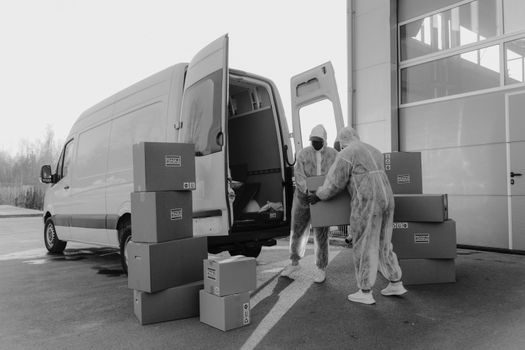
Exceeding a manual pallet jack's 5,500 lb nameplate risks hydraulic cylinder failure, fork bending, and steer-wheel deformation — the Staxx and qdpowerful references both flag hydraulic failure as the primary risk above nameplate (per [S2] Staxx 2025; [S8] qdpowerful 2025).
On a reach truck, exceeding the rated load at a given mast height risks mast deflection, load-backrest failure, and tip-over — the failure mode is structural and gravity-driven rather than hydraulic. OSHA 1910.178 powered industrial truck rules and ANSI/ITSDF B56.1 require the nameplate capacity to be re-read at every change of mast height, load center, or attachment, and that requirement applies to single-deep and double-deep reach configurations equally (per [S3] Mazda Movers 2025 powered-vs-manual guidance; [S6] Global Industrial 2025).
For both equipment classes, the safe practice is to de-rate the published load rating by 10–15% for continuous-duty operation, and to verify fork/load-center geometry before declaring the truck fit for a specific load. The 5,500 lb manual-jack baseline and the 3,000–5,000 lb single-deep reach-truck range at 24 in load center are the two reference points that drive the 2026 floor-and-aisle equipment decision (per [S2] Staxx 2025 load-distribution note; [S1] Cherry's 2025 fork-geometry table).
Trackable signals for the next planning cycle: OEM release of 2027-model electric walkie pallet trucks with lithium iron phosphate battery and 6,000+ lb nameplate, and any update to ANSI/ITSDF B56.1 covering stand-up reach trucks below a 24 in load center. The 5,500 lb manual-jack baseline is not expected to shift before 2027 based on the OEM catalogs reviewed in May–June 2026, and any sub-3,000 lb reach-truck entry would be the first signal that the 24 in load-center class is being redefined.