
U.S. manufacturers are projected to create nearly 1 million production-occupation openings per year from 2024 through 2034, with replacement demand central to the total [S1].
More than 12.8 million people worked in U.S. manufacturing in 2024, and manufacturers are struggling to find enough qualified and willing workers to fill roles such as machine operators, maintenance technicians, CNC machinists and production specialists [S1][S4].
Where the 2026 hiring demand sits
The Bureau of Labor Statistics expects manufacturing employment to remain broadly unchanged across 2024–34, but that headline conceals substantial movement between industries and occupations [S1]. Nearly 1 million production openings are projected annually, primarily because retiring workers and people changing occupations must be replaced [S1].
The technical vacancy is larger than total job growth
Deloitte and the Manufacturing Institute estimate that 3.8 million new manufacturing workers will be needed by 2033 and that 2.1 million of those positions could go unfilled [S3]. This is a capability gap rather than a shortage of work, because manufacturers are expanding while technical hiring becomes harder.
Commonly affected positions include machine operators, maintenance technicians, CNC machinists and production specialists, while industrial automation also creates demand for PLC programmers, controls engineers, robotics technicians and SCADA or DCS engineers [S3][S4].
Automation changes the job specification
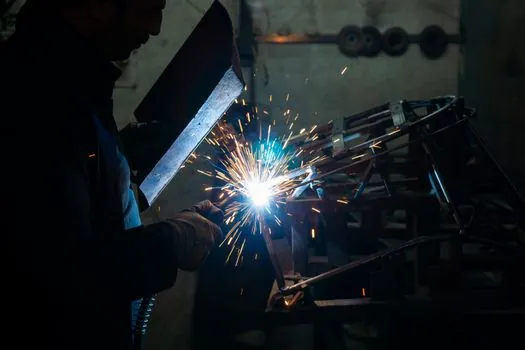
A 2024 online survey of more than 200 U.S. manufacturers informed the Manufacturing Institute and Deloitte's analysis of hiring and workforce-retention challenges [S5]. Technology investment is changing the skills manufacturers prioritize, especially on shop floors built around automated lines, sensors, robotics and digitally monitored equipment [S5].
A machine operator may require only basic equipment familiarity, while a maintenance technician needs electrical, mechanical and diagnostic capability; a PLC programmer adds controls logic and network integration; and a robotics technician must also handle robot programming and fault-finding. Higher skill breadth therefore narrows the candidate pool even when the number of industrial jobs expands [S3][S4].
Who fits the open manufacturing roles
Manufacturers are struggling to find enough qualified and willing workers for roles including machine operators, maintenance technicians, CNC machinists and production specialists [S4]. Employers are raising wages, expanding benefits and investing in training as they compete for qualified candidates [S3].
Companies are working to meet evolving customer demands, support healthier supply chains and leverage government incentives [S5].
As of March 2025, 449,000 U.S. manufacturing jobs remained unfilled [S4].
How employers are narrowing the gap
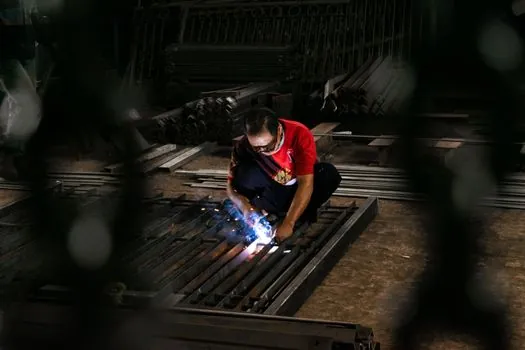
Workforce development works when it is employer-led and tied to actual technology requirements rather than program volume alone [S4][S5].
Apprenticeships, pre-apprenticeships, portable credentials and skills assessments can shorten the path from classroom learning to plant readiness [S4]. Internal upskilling also matters because experienced maintenance staff and operators already understand the plant’s production constraints; training them on new equipment reduces the amount of external hiring required [S5].
The earlier Manufacturing Institute and Deloitte study estimated that 2.1 million positions could go unfilled by 2030 and that the resulting constraints could cost the U.S. economy $1 trillion through delayed or canceled investments, longer order lead times and innovations delayed or not implemented [S2][S5]. In a separate production-complexity context, one manufacturing worker is associated with 4.8 additional workers across the broader economy, illustrating why vacancies affect more than direct payrolls [S5].
Pay, turnover and the replacement cycle
The median wage for workers employed in manufacturing was $51,670 in 2024, compared with the $49,500 median annual wage for all workers [S1].
Occupational replacement demand is the dependable part of the hiring case. BLS expects nearly 1 million production openings each year from 2024 through 34, principally from permanent departures such as retirement or occupational transfers [S1]. Manufacturers therefore need a repeatable recruiting pipeline, not only emergency hiring for a single expansion project.
Two signals will show whether that pipeline is working: the conversion of apprenticeships and skills assessments into qualified hires, and the time required to fill maintenance, controls and skilled-production vacancies. Vacancy counts should also be evaluated by occupation, because an aggregate shortage can conceal simultaneous hiring demand and worker churn in different parts of a plant [S1][S4].
For 2026 hiring plans, the defensible approach is to budget for persistent technical vacancies, define competency requirements by equipment and process, and track time-to-qualification as the key operating metric. That approach treats workforce development as production capacity, with measurable hiring and retention outputs rather than a standalone recruiting campaign [S3][S5].