Ball valves are the dominant quarter-turn isolation device in oil and gas, with selection governed by API 6D for pipelines, API 608 for general metal ball valves, API 607 for fire-safe design, and ASME B16.34 for pressure-temperature ratings [S3][S5].
The choice narrows to a small set of design decisions: floating vs trunnion mounting, full bore vs reduced bore, side-entry vs top-entry body, and a material/seat trim that matches the service fluid, including H2S partial pressure for sour service under NACE MR0175/ISO 15156 [S3].
API and ASME Standards That Anchor Every Oil and Gas Spec
API 6D is the pipeline valve specification, covering bolted bonnet and pressure-seal designs for transmission and distribution lines, with mandatory hydrotest, fire-type testing reference, and double-block-and-bleed configurations on piggable mainlines [S3][S5]. API 608 governs metal ball valves with threaded, flanged, and welding ends for process service, and is the right reference when the line is a process header rather than a transmission pipeline [S3].
ASME B16.34 sets the pressure-temperature rating tables that designers use to derate a valve body class at elevated temperature, while API 607/ISO 10497 defines the fire-safe seat and seal integrity test, a hard requirement on hydrocarbon service where external fire exposure is credible [S3]. ISO 15848 is the fugitive-emission test method for stem packing, and the Class A/B/C leakage tiers are increasingly written into LNG and refinery specifications [S3]. For sour service with H2S, NACE MR0175/ISO 15156 restricts material hardness, weld procedure, and trim metallurgy to prevent sulfide stress cracking [S3].
Floating vs Trunnion: Matching the Mount to the Pressure Class
A floating ball valve holds the ball unseated; the line pressure drives the ball downstream into the seat to create a seal, and this design is most economical in lower-pressure classes, typically up to ASME Class 600 in hydrocarbon service, and in smaller line sizes [S1][S3]. At higher pressure classes or larger bores, the seat load required to seal a floating ball grows and operating torque becomes punishing, so trunnion-mounted designs take over: the ball is fixed on upper and lower trunnions, seats are spring-energized or pressure-energized, and friction is decoupled from line pressure [S1][S3][S4].
Trunnion-mounted ball valves are the default for large-diameter, high-pressure oil and gas pipelines, petrochemical facilities, and gas processing, where double-block-and-bleed, emergency seat injection, and low operating torque on actuator packages are required [S3][S4]. Floating designs remain common on wellhead Christmas trees in lower pressure classes, on instrument and utility lines, and in chemical injection skids where bore size is small and budget matters more than cycling reliability [S1][S3].
Full Bore vs Reduced Bore: When Pigging and ΔP Decide the Call

Full bore (full port) ball valves have a ball bore equal to the pipe inner diameter, giving an unrestricted bore that lets pipeline pigs pass without snag, and the lower Cv per dollar penalty is the reason full bore is standard on mainline isolation valves in transmission [S1]. Reduced bore (standard port) valves are one or two nominal sizes smaller than the pipe, which saves weight, body cost, and actuator torque but introduces a permanent flow restriction and blocks pigging, so reduced bore is the right call on instrument, utility, and secondary process lines where no cleaning pig will ever pass [S1].
On LNG and high-pressure gas transmission, operators almost always require full bore for the mainline block valves and mainline check valves, then accept reduced bore on lateral tie-ins and on downstream station piping. A useful rule is: specify full bore whenever the line will be pigged, when ΔP across the valve must stay below a tight budget, or when the valve is also serving as a launcher/receiver isolation; otherwise reduced bore is acceptable for non-piggable process and utility duty [S1][S5]. For seat-soft versus seat-metal, soft seats (PTFE, RPTFE, PEEK, nylon) dominate general service up to roughly 260°C, while metal-to-metal seats are mandatory above that and on most fire-tested API 607 valves [S3][S4].
Body Construction and End Connections: One-Piece, Two-Piece, Three-Piece, Top-Entry
Ball valve bodies are commonly grouped by piece count: one-piece bodies are the lowest-cost, non-repairable design used in low-pressure utility service; two-piece bodies are the workhorse in general chemical and oilfield service with threaded or socket-weld ends; three-piece bodies allow the ball and seats to be removed without breaking the line, which is the right choice on services that foul or that need periodic seat replacement [S1].
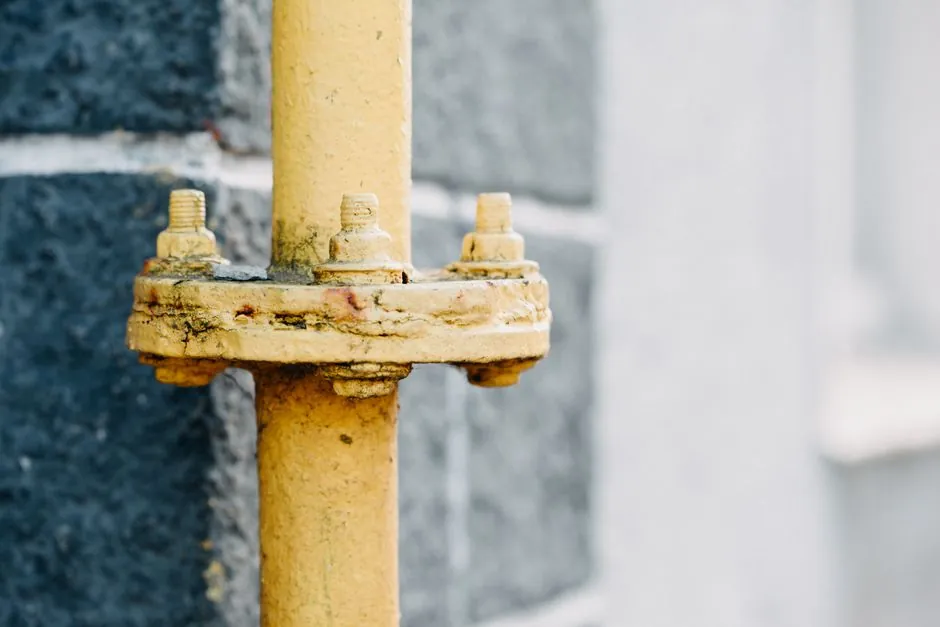
For oil and gas mainlines and process headers, side-entry and top-entry welded bodies dominate, with the body assembly matched to the pipeline pigging requirement, in-line welding sequence, and the need to maintain the seats in the field. End connections follow ASME B16.5 flanges for ASME Class 150 to 2500, butt-weld ends per ASME B16.25 for pipeline valves, and hammer-union or API 16A/16C spec components for frac and wellhead service [S3][S5]. Cryogenic service (LNG, LPG, ethylene) adds an extended bonnet and a stem-seal stack that lives outside the cold zone; standard cryogenic ratings reach −196°C, and the seat and seal materials are tested at that temperature to avoid brittle fracture and leak [S3][S4][S5].
Materials, Trim, and Sour-Service Limits

Carbon steel (ASTM A216 WCB) and low-temperature carbon steel (A352 LCC, LCB) cover the bulk of oil and gas bodies, with stainless 316/316L and duplex (F51/F55) used for corrosive and seawater-injection service, and nickel alloys (Inconel 625, Alloy 825, Monel) reserved for the most aggressive sour and chloride duties [S1][S3][S5]. Internal trim is where most of the selection discipline lives: 13Cr vs SS316 vs Inconel overlay on seats and ball, hard-facing for slurry and steam service, and NACE MR0175 hardness caps (typically 22 HRC for bolting and weld-deposit zones) when the service is sour [S3].
For lined ball valves, PFA and PTFE liners are used on low-pressure corrosive chemical service rather than on mainline hydrocarbon, because lined bodies are pressure-limited and the liner can fail under thermal cycling. In contrast, fully metal-seated trunnion valves with Stellite or Inconel overlays take the high-temperature steam and cracking service downstream of the refinery reactor [S1][S3]. Selection logic collapses to four inputs: (1) identify fluid and any H2S/CO2 partial pressure for NACE applicability, (2) pick body material and trim from a corrosion/erosion standpoint, (3) pick seat material from temperature and fire-safe requirements, (4) match end connection and pressure class to the piping class [S3][S5][S8].
Actuation, Fire-Safe, and Fugitive-Emission Wrap-Up
Manual levers cover small low-pressure ball valves, but anything in oil and gas above about 4 inches or above ASME Class 300 typically takes a gear operator, pneumatic scotch-yoke, or electric actuator sized to the breakaway torque and the seated differential pressure [S1][S4]. For ESD (emergency shutdown) valves, fail-close spring-return pneumatic actuators and SIL-rated solenoid pilots are the common package, sized to close under full ΔP with a documented safety integrity level [S3].
Fire-safe ball valves, tested to API 607, are mandatory on hydrocarbon lines where external pool fire is a credible hazard; after the burn, the valve must still achieve a defined leakage class, typically Class VI soft-seat equivalence for metal-seat designs. Fugitive emissions on the stem are controlled to ISO 15848 Class A or B, with graphite or low-emission packing stacks, and that spec is now standard in most European and Middle Eastern refinery RFQs [S3]. For plant-side reference, electric ball valve selections in oil and gas are usually tied into a plant DCS/ESD with position feedback, partial-turn actuator diagnostics, and a documented partial-stroke test cadence. Where the duty is throttling rather than isolation, V-port or segmented-ball designs, see ball valve, give better rangeability than standard full-port balls, but at the cost of higher torque and faster seat wear. For more on a related isolation device, see butterfly valve selection on midstream large-diameter lines.
Final action: lock the spec sheet to API 6D (pipeline) or API 608 (process) first, then pin pressure class via ASME B16.34, seat and fire test via API 607, fugitive emissions via ISO 15848, and sour-service via NACE MR0175. Two trackable signals: (1) whether the line is piggable, which forces full bore and side-entry welded body, and (2) whether the H2S partial pressure crosses 0.0003 MPa (0.05 psi), which forces NACE MR0175/ISO 15156 material discipline. For a related angle on alternate isolation hardware in upstream, the spec comparison at Butterfly Valve Selection for Oil and Gas: Spec-Driven Criteria covers when a butterfly can replace a ball on a large-diameter line.