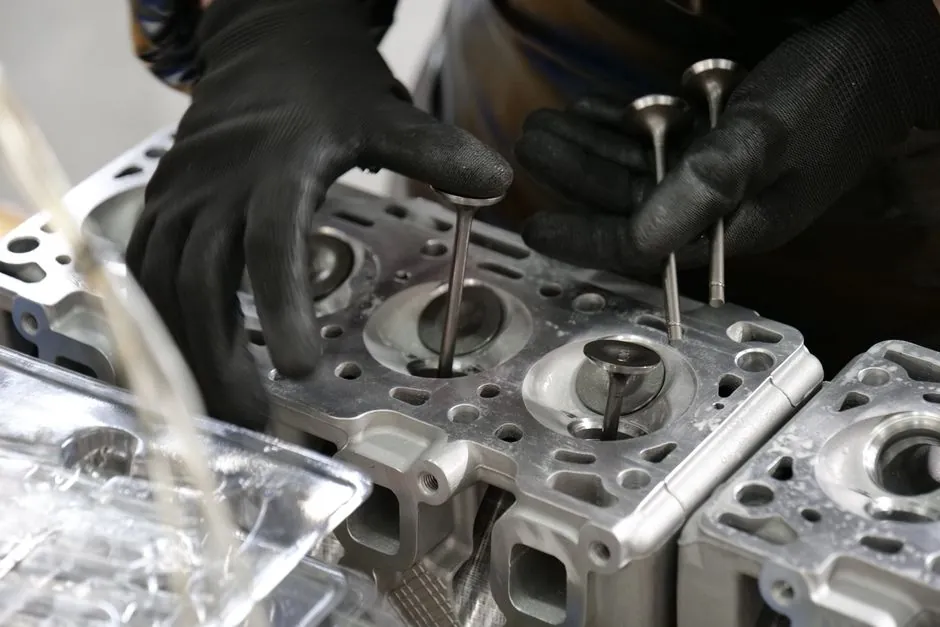
For shipboard piping, a gate valve is specified first by duty (full-open/close isolation in ballast, bilge, bunker, sea chests and fire mains), then by body material, pressure class, stem configuration and class-society type approval [S4][S5].
Marine duty exposes the valve to chloride-rich seawater, vibration, ambient swings from roughly -29 to 50 degrees C in exposed spaces, and intermittent surge, so material and stem choice matter as much as pressure class [S4].
Body material tiering for marine service
Body material is the first cut, because seawater corrosion, ballast chemistry and fuel compatibility dominate over raw strength on most ships [S3][S4]. Bronze (typically C83600 / C87800 silicon bronze) and brass (C36000) are the default for small-craft through-hulls, seacocks and above-water-line general service, with brass rated 0-16 bar and media temperatures from -20 to 120 degrees C on general-purpose valves [S3][S2]. Cast iron and ductile iron (ASTM A216 WCB, A395) are the workhorses for shipboard ballast, bilge and bunker lines at Class 150-300, where cost per DN matters and the medium is treated or coated seawater [S4]. Stainless 316/316L, 90-10 and 70-30 copper-nickel, and titanium are reserved for sea-chest inlet valves, fire-main sections, and high-temperature or high-chloride service where iron-based alloys would pit within a service interval [S3][S4].
Stainless 316 gate valves are cited as handling media up to roughly 800 degrees C in generic industrial service, but on a ship the practical ceiling is the seat/seal elastomer and class-society fire-test limit, not the body alloy [S3]. PVC is acceptable for non-metallic, low-pressure aquatic and aquaculture duty but is rarely used in classed ship piping because it does not satisfy fire-survivability requirements [S3].
Stem, seat and sealing architecture
Non-rising stem (NRS) gate valves are the default on ships where vertical headroom is constrained, especially in engine-room pipe racks and bilge wells; the stem threads are inside the bonnet, so the handwheel does not move axially as the gate opens [S7]. Rising-stem (OS&Y) is preferred where the open/closed status must be visible from a distance, for example on deck manifolds and bunker stations, and where thermal expansion along the stem must not load the packing [S7].
Wedge gate valves split into solid wedge (single-piece disc, strong, used in clean, high-pressure service) and flexible wedge (disc with a machined slot that absorbs seat deformation from thermal cycling), and the flexible variant is the more common choice for marine steam and hot-oil duty where seat distortion is the main leak path [S5]. Parallel slide gate valves use two spring-loaded discs that press outward onto the seats; they open and close faster than a wedge, and are routinely used in marine emergency shut-off duty [S5]. Through-conduit (slab) gate valves give a full-bore, piggable passage equal to the pipe ID, and are chosen for crude-oil and product cargo lines on tankers where cleanliness and low pressure loss dominate [S5]. Knife gate valves are limited to shipboard sludge, bilge sludge and wastewater service where the sharp edge can cut through fibrous debris, and they are never used as a main sea-valve [S5].
Pressure class, flange standard and class-society approval

Shipboard gate valves are typically supplied to ANSI B16.34 / ASME B16.34 face-to-face dimensions in Class 150, 300, 600, 900 or 1500, with Class 150 and 300 covering the bulk of seawater, ballast, bilge and bunker service [S1]. Flange drilling follows ASME B16.5 for imperial sizes or EN 1092-1 for metric, and the specifier must lock both the class and the drilling standard at quotation stage because flange compatibility, not class number, decides interchangeability on board [S1].
For classed vessels, body and gate material certificates, hydrotest (typically 1.5 times the cold working pressure for the shell and 1.1 times for the seat, per API 598 / API 6D where cited), and fire-type testing to API 607 or ISO 10497 are normally required by ABS, DNV, Lloyd's Register, Bureau Veritas or RINA, and the order must be flagged "marine classed" so the foundry routes the casting through the approved material list [S7]. Non-classed small craft do not need this paperwork, and that is one of the reasons bronze and brass remain common in that segment [S2].
Comparison of common marine gate-valve types
The four-way comparison below lines the practical options against the four criteria that drive most shipboard specifications, drawn from the duty profiles in [S4] and [S5].
1. Wedge gate (solid/flexible): strong shut-off in clean service; good for steam and bunker oil; not suited to slurry or piggable lines; seat alignment is sensitive to thermal cycling.
2. Parallel slide gate: fast open/close, lower operating torque, good for emergency isolation; sealing depends on spring preload, which drifts over time and limits use in dirty service.
3. Through-conduit (slab) gate: full bore equal to pipe ID, piggable, low pressure loss; heaviest and most expensive per DN; the default on tanker cargo and ESD lines.
4. Knife gate: handles slurry, fibrous bilge, and tank-emptying duty; thin disc and elastomer seat mean it cannot be used as a primary isolation valve under full system pressure on a classed line.
Where gate valves fit, and where they do not
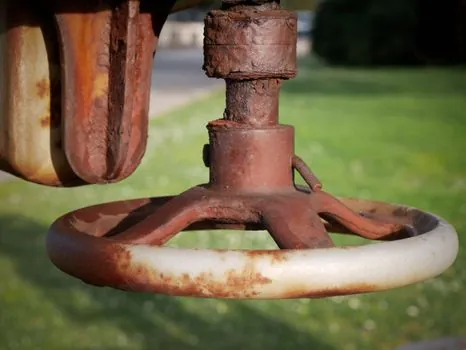
Gate valves are the correct pick for full-open / full-closed isolation where the pressure loss when fully open must be near zero: sea-chest inlets, ballast main loop, bunker transfer, bilge main overboard, and fire-main section valves [S4][S6]. They are not the correct pick for throttling duty, because partial-lift operation erodes the seat faces and causes the valve to fail to close tightly afterwards, a failure mode covered in Why a Gate Valve Fails at Steam Throttling and that applies equally to seawater and oil service. For frequent operation, a ball valve or a butterfly valve is the more durable choice, and many shipbuilders now standardise on ball valves for fuel and quick-closing service, leaving gate valves to do the slow, infrequent isolation job they were designed for [S4].
Common failure modes and selection traps
Three failure modes show up again and again in shipboard gate-valve service: seat galling when a cast iron wedge is paired with a cast iron seat and run hot (use flexible wedge or hard-faced 13Cr / Stellite overlay on at least one face), stem packing leak after long idle periods in cold salt air (specify graphite or PTFE-impregnated packing and re-torque on lay-up), and dezincification of brass bodies in hot, low-velocity seawater lines (switch to silicon bronze or Cu-Ni for any sea-side body above DN50) [S3][S4]. A fourth trap is specifying a rising-stem valve inside a cofferdam or below a low overhead, where the stem travel simply does not fit; non-rising-stem with a position indicator is the safer choice there [S7].
Specifiers should also confirm the bonnet joint is bolted-bonnet (not threaded) for any Class 300+ service and for any line that falls inside the fire-survivability envelope, because threaded bonnets have been the root cause of multiple class-society findings after hot work [S1].
Trackable signals to watch over the next procurement cycle: the 2026-04 Bosseal marine valve guide [S4] and the 2025-06 Haistar marine gate-valve taxonomy [S5] both still rank wedge and through-conduit as the two shipyard-default designs, so any class-society type-approval list update from ABS or DNV in the coming quarters will be the next signal worth checking before locking a new supplier into a hull spec.