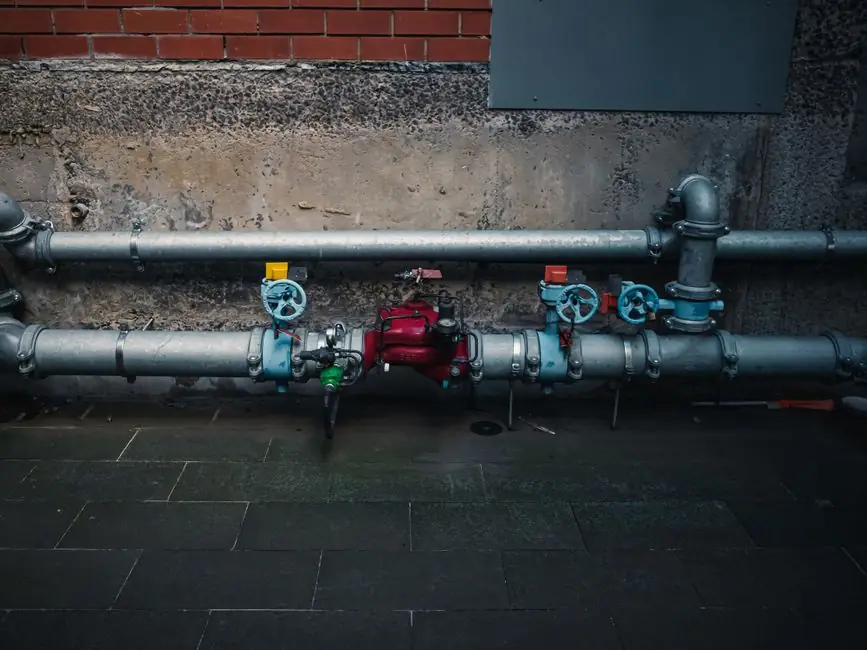
A 4" full-port ball valve at 400 gpm water service drops 0.5-1.5 psi, whereas the same 4" body with a 3" reduced bore drops 2-5 psi, a roughly 3-4x pressure-loss ratio that mirrors the Cv gap between the two geometries [S3][S2]. Full bore designs carry a 20-40% purchase-price premium but recover it through lower pumping energy, pigging compatibility, and tighter torque envelopes on automated skids [S6].
Reduced bore, also called standard port, downsizes the ball bore by one nominal pipe size, so a DN50 reduced-bore body houses a DN40 ball and a 2" class 150 unit typically passes through a 1.5" opening [S1][S2]. That single-size step defines the entire selection matrix, from Cv and ΔP to break-to-open torque and piggability.
Bore Geometry Definitions and the API 6D Threshold
Full bore valves hold a bore equal to the pipe inner diameter; reduced bore valves sit at or below 85% of the connecting pipe ID, with the band between 85% and 95% treated as neither category by most spec sheets [S4]. For Oil & Gas transmission lines, API 6D pipeline valves are almost exclusively full bore to keep maintenance tooling and pigs passable, which is why long-haul operators rarely accept a one-size-down port on a mainline block valve [S2]. The same geometry logic governs ball valve body casting: matching ID means the seat, ball, and pipe all share one wall-thickness class, which is why mass and face-to-face dimensions scale up with full-port selection.
On a 2" DN50 reduced-bore unit, the channel shrinks to roughly 38 mm, the equivalent of a DN40 passage, and below DN250 the rule is "one size down," while between DN250 and DN600 the convention shifts to "two sizes down" depending on manufacturer [S4]. Above DN600 the bore step is not standardized and is negotiated against the project line list, which is why a single EPC line class can carry mixed bore selections on trunk vs. branch.
Pressure Drop and Cv: Putting Numbers on the Trade-off
The Cv of a full bore ball valve runs 3 to 4 times higher than the reduced-bore variant in the same body size, and the standard water-service relation ΔP = SG × (Q / Cv)² quantifies the penalty when a reduced-bore port is forced into a long-run or high-flow circuit [S2]. Concretely, a 4" full port at 400 gpm water produces 0.5-1.5 psi, while the 4" body with a 3" reduced bore produces 2-5 psi on the same flow, an order of magnitude that matches the Cv ratio [S3].
Reduced bore creates a localized Venturi effect: velocity rises through the constriction, static head falls, and the loss is permanent rather than recoverable downstream [S2]. For gravity-fed systems, long transmission lines, or high-specific-gravity hydrocarbons, the recurring pumping-energy penalty on a reduced-bore trunk valve often outweighs the one-time actuator savings, which is the central CAPEX/OPEX tension in any electric ball valve spec on a long-run skid.
Actuator Torque, Weight, and Skid Footprint
Smaller ball diameter means less seat contact area, lower break-to-open (BTO) torque, and a smaller pneumatic or electric actuator, which is where the reduced-bore argument usually wins on cost [S2]. On 8" and larger automated valves, the actuator savings frequently exceed the savings on the valve body itself, so a reduced-bore body paired with a downsized actuator is the budget play for non-piggable branch isolation.
Reduced bore valves weigh roughly 30% less than a full bore of the same pressure class, and their flow resistance is only about 1/7 that of a same-diameter globe valve, so they are commonly chosen for compact skid builds and OEM machinery where envelope and mass are tracked on the GA drawing [S4]. For pneumatic and electric actuation packages, the lower torque also allows a smaller gear train and a lighter bracket, which compounds the cost delta at the skid level.
Pigging, Slurry, and Viscous Service: Where Full Bore is Non-Negotiable
Piggable lines must use full bore valves, because a reduced-bore port will physically trap the pig and cause a catastrophic blockage, and the same rule applies to any regular mechanical-cleaning routine using scrapers, wax-cutting, or blow-down pigs [S1][S2]. When oil and gas mainlines are buried, welded full-bore ball valves are the default, and the pig-pass requirement is treated as a hard line in the project specification, not a preference [S4].
For high-viscosity fluids, slurries, and any media carrying solids, full bore reduces clogging risk, prevents material build-up behind the seat, and keeps the Reynolds number in a stable regime across operating points [S1]. Long-distance oil, gas, and chemical pipelines also accumulate pressure loss across every valve station, so trimming ΔP on each block and check valve directly cuts pumping energy, a long-term OPEX item that is invisible at procurement but dominant over a 20-year field life.
Selection Matrix: Application to Bore Decision
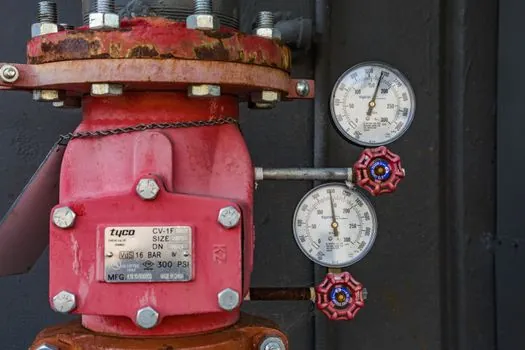
Match the bore to the service constraint, not the other way around, and use the table below as the first filter before any Cv or torque calculation. Pigging required, slurry/viscous media, or pressure-sensitive long-run service forces full bore; clean gas or water, tight envelope, or torque-limited actuation points to reduced bore [S1][S2][S4].
On a typical water-service 400 gpm line, a 4" full bore sits at 0.5-1.5 psi ΔP versus 2-5 psi for a 4" reduced bore with 3" port, and the full-bore unit carries a 20-40% purchase-price premium [S3][S6]. For a pressure reducing valve station or a safety relief valve manifold downstream of a long trunk, the upstream ball valve bore must be checked against the inlet sizing, because a one-size-down port on a high-throughput leg will erode the Cv margin that the relief or regulator was sized on.
Limits, Mis-specifications, and the 85%/95% Boundary
The 0.8 ratio is a rule of thumb for fluid-capacity neutrality, not a guarantee, and on long lines the Cv calculation should still be run with the actual port ID, not the nominal DN.
A common spec error is pairing a reduced-bore block valve with a pig-pass scraper launcher: the launcher is sized to the line ID and assumes a full-bore passage, and the reduced-bore valve will stall the pig even if the rest of the line is full bore. Another is treating reduced bore as equivalent to full bore in relief-valve inlet sizing: on a pressure reducing valve station, the upstream bore dictates the available Cv at design flow, and a DN50 reduced bore on a DN50 line behaves like a DN40 fitting, which is rarely what the datasheet implies at a glance. When in doubt, run the ΔP = SG × (Q / Cv)² calculation at the maximum design flow, not at the normal duty point, because ΔP scales with the square of flow and undersized bore bites hardest at peak load [S2].
Specification Language and Sourcing Anchors
Specify the bore by ratio to pipe ID, not by vague "full port" or "standard port" labels: a clean line is "full bore, bore diameter ≥ 95% of pipe ID, piggable per API 6D" or "reduced bore, bore one nominal size down (DN50 body / DN40 ball), minimum bore ≥ 80% of pipe ID, not piggable" [S4]. The 95% and 85% thresholds are the most widely cited dividing lines, and the 80% floor is the practical limit below which flow capacity and ΔP drift out of acceptable bands for most hydrocarbon and water services [S4].
For a 4" line at 400 gpm water, the measurable gap is 0.5-1.5 psi (full bore) against 2-5 psi (4" body with 3" reduced bore), and the full-bore unit carries a 20-40% purchase premium that is recoverable on long-run pumping OPEX [S3][S6]. Engineers reviewing a ball bearing-style torque spec on a large automated valve should re-check the actuator sizing against reduced-bore BTO before approving a value-engineering substitution, because the cheapest valve body is not always the cheapest skid once the actuator is right-sized. Related material and coating selection, such as ENP vs FBE on the wetted internals, interacts with bore choice and is covered separately for gate-valve internals here; for seat elastomer decisions on butterfly and ball valves, the EPDM vs NBR vs FKM temperature guide is the matching reference. Tracking signals to watch over the next procurement cycle: any EPC line class that flips to "reduced bore acceptable on trunk" without rerunning the Cv at peak flow, and any vendor quote that drops below the 20-40% full-bore premium benchmark, which usually signals a thinner ball or a non-API 6D body.