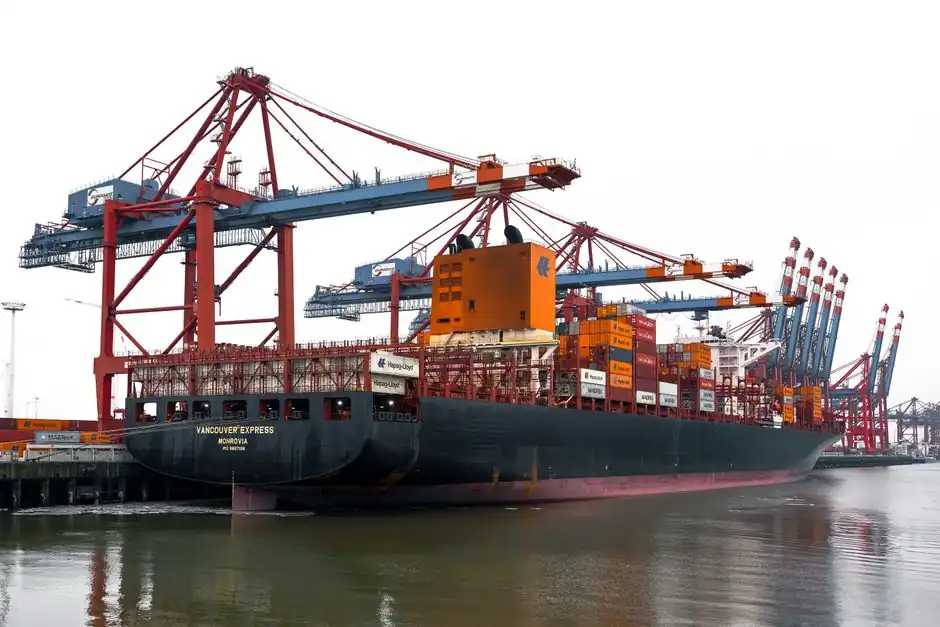
A mechanical pull-chain dock leveler runs on stored spring energy and a manual release: the operator yanks a chain at the rear of the pit, the lip extends, and the deck walks down under the operator's body weight, which is why dock integrators call it a one-person operation [S3][S1].
A hydraulic dock leveler uses an electrically driven power pack, a deck cylinder, and a lip cylinder, exactly three main wearing parts per Blue Giant and Lenworth teardowns, and one button press cycles the unit [S2][S3]. Standard pit capacities for both sit in the 20,000-80,000 lb range, with edge-of-dock (EOD) variants topping out near 30,000 lb [S5][S8].
Operating Principle and Ergonomic Load
Mechanical levelers store energy in a compression spring pack; releasing the hold-down lets the spring drive the deck up, after which the operator must step onto the deck to push it down onto the trailer bed, an action that requires roughly the operator's full body weight on a walking-down motion per multiple OEM write-ups [S3][S4].
Hydraulic levelers replace that whole motion with a push-button raise, lip-extend, and lower sequence, which is why ergonomic guidance from Rite-Hite, Blue Giant, and Dockzilla all flag mechanical units as the higher-strain option for high-cycle docks [S1][S4][S2]. In mixed-traffic yards with 25+ trailer swaps per shift, the cumulative operator force across an 8-hour day is the real discriminator, not the nameplate cycle count.
Upfront Cost vs 6x Lifetime Repair Spend
Hydraulic dock levelers carry a higher initial cost than mechanical units because of the power pack, cylinders, and added controls, but the lifetime cost of ownership flips the sign on high-cycle sites [S2]. A frequently cited industry benchmark, attributed to Rite-Hite's own lifecycle modelling, is that a facility will spend roughly 6 times more on lifetime repair and maintenance for a mechanical dock leveler than for a hydraulic one when both are run at comparable cycle counts [S6].
Mechanical levelers carry more continuously loaded parts: lip latches, hold-downs, springs, and linkage that sit under thousands of pounds of stored energy and see every forklift crossing [S3][S4]. Hydraulic systems reduce that to the power pack, deck cylinder, and lip cylinder, with quarterly checks on fluid, electrical connections, and lubrication, which is a meaningfully lighter PM burden [S2][S3].
Cycle Volume and Capacity Cutoff
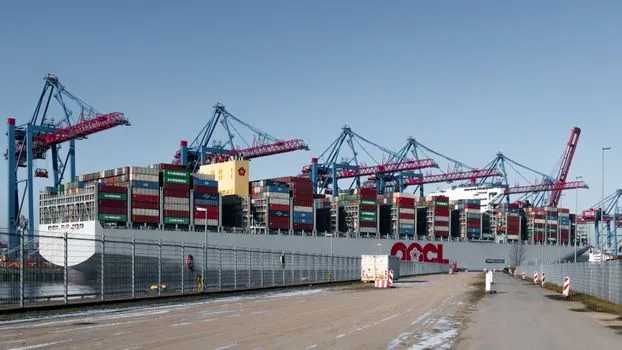
Mechanical dock levelers fit low-cycle, low-capacity, standard-building applications; hydraulic units fit high-cycle, high-capacity, custom-building applications, per Lenworth's facility-side decision rule [S3]. A practical threshold used by most integrators is roughly 5 cycles per day: below that, the spring unit pays back its lower purchase price; above it, hydraulic lifetime savings dominate [S5][S3].
Air-powered dock levelers sit in the middle, with an airbag in place of cylinders and a push-button cycle, but they need a plant-air supply of typically 80-100 psi at a sustained CFM the dock often cannot guarantee without a dedicated compressor [S5][S9]. For facilities that already run a large pneumatic network, the air unit is a credible third option; for everyone else it is a procurement trap, since the dock leveler is the worst place to discover your air capacity is short.
Decision Matrix: Mechanical vs Hydraulic on Five Criteria
Lining the two options against the criteria that actually drive the PO:
1. Operator strain: mechanical requires pulling a chain and walking the deck down; hydraulic is push-button, lower strain on the back, shoulders, and knees [S1][S3].<br>2. Upfront capital: mechanical is the lower entry price; hydraulic adds the cost of the power pack, controls, and electrical drop [S2].<br>3. Lifetime repair cost: hydraulic is roughly 6x cheaper over the unit's life on equivalent cycle counts; mechanical springs, latches, and hold-downs wear on every cycle [S6][S3].<br>4. Maintenance cadence: mechanical needs yearly inspection of high-stress parts and is sensitive to cold-weather spring performance; hydraulic needs quarterly fluid and electrical checks [S2][S3].<br>5. Throughput: hydraulic cycles in seconds with one button; mechanical adds a walk-down step and a chain pull to every trailer swap [S1][S2][S7].
Below ~5 cycles/day, low-budget sites, or locations without reliable 110V/208V three-phase power at the dock pit, the mechanical pull-chain unit still earns its place. Above that, in any 24/7 distribution or cold-storage operation, the lifetime math and the ergonomic math both point to hydraulic, even before counting the soft cost of comp claims from walking-down injuries [S3][S6].
Failure Modes and Cold-Weather Constraints
Mechanical levelers' springs lose efficiency and preload as ambient temperature drops, and the spring pack is the single most common cold-weather failure point cited by installers in northern climates [S2]. Hydraulic units avoid that exact failure mode but introduce two of their own: power-pack motor failure and hydraulic seal leakage, both of which are localized failures rather than a system-wide spring collapse [S3][S2].
A mechanical deck that fails mid-cycle generally fails safe, leaving the deck in its stored position and the dock blocked, while a hydraulic failure can leave the deck partway extended. The pit geometry, lip extension range (typically 12-16 in beyond the dock face), and toe-guard clearance are the same on either type, so a retrofit from mechanical to hydraulic is normally a like-for-like pit swap rather than a civil work package, provided the electrical feed is in place [S5][S8].
When Mechanical Pull-Chain Is the Right Pick
Choose mechanical when the dock runs under 5 cycles per day, the budget is constrained at install, no reliable electrical service is available at the pit, and the operator pool is small enough that ergonomic exposure stays manageable [S3][S5]. This is the typical profile for small regional warehouses, agricultural receivers, and any facility that already has a maintenance team comfortable working on spring and latch systems rather than hydraulic circuits [S2][S4].
For buyers in that profile, the procurement question is straightforward: confirm spring cycle rating (most OEM springs are rated 50,000-100,000 cycles before re-tensioning), confirm lip extension length matches the steepest expected trailer bed, and budget for an annual safety inspection of the hold-down and lip-latch assembly [S3][S4]. Skip the marketing language about "fully automatic" mechanical units, which still require the operator to walk the deck down, and treat any hydraulic retrofit quote as a 3-5 year payback, not a one-season write-off [S1][S6].
When Hydraulic Is the Right Pick
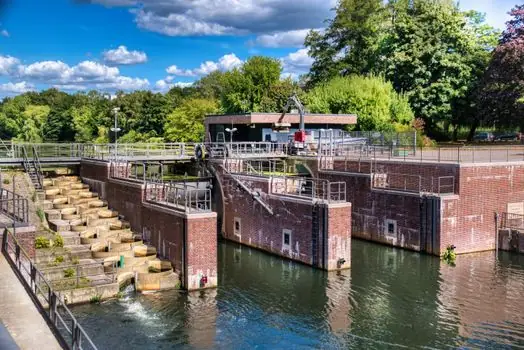
Choose hydraulic when cycle count exceeds ~5/day, dock availability directly drives revenue, and the operator base is large enough that ergonomic exposure is a real liability line item [S3][S1]. High-volume distribution centers, cold-storage cross-docks, and parcel sortation hubs are the textbook applications, and the same units also fit food-grade and pharma facilities where the lip's float range helps with the air-ride suspension movement common on refrigerated trailers [S5][S2].
Spec the power pack for the available service (single-phase 110V is fine for most 20,000-30,000 lb units; 208/230/460V three-phase is the standard call-out for 40,000+ lb and vertical-storing units), confirm the deck cylinder bore matches the rated capacity, and lock in a quarterly PM contract rather than a reactive one, which is the difference between a 10-year and a 5-year service interval according to multiple OEM write-ups [S2][S3]. For a closer look at how lift-assist hydraulics compare with simpler manual mechanisms on a smaller scale, see the spec cutoff between quick-lift and standard-pump manual pallet jacks.
Sourcing Signals to Track
Watch for two data points over the next buying cycle: (1) any updated OEM lifecycle numbers for hydraulic vs mechanical repair spend, since the widely cited 6x figure is a Rite-Hite-derived model, not an industry-published benchmark, and (2) the spread between air-powered and hydraulic pricing, which has tightened as more plants already run suitable compressed-air infrastructure at the dock face. The dock leveler reference page collects the underlying pit, lip, and capacity terminology; the mechanical seal reference applies if hydraulic cylinders on retrofit units need seal-kit sourcing; and the conveyor chain entry is the adjacent spec most useful when a dock leveler feeds directly into a powered chain conveyor in a cross-dock layout. [S3]