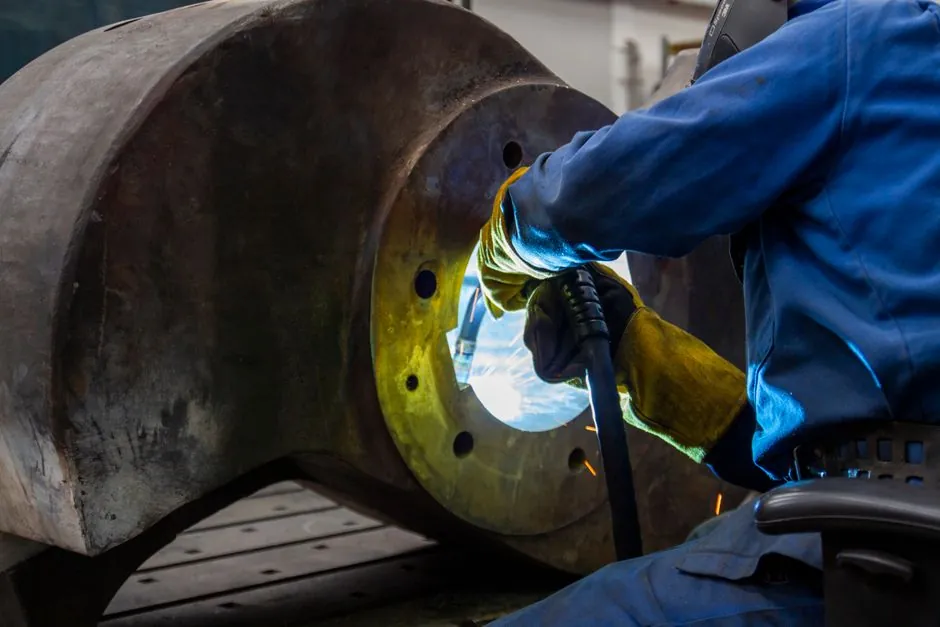
Mechanical seals reduce pump-shaft leakage to roughly 99.9% effectiveness versus the controlled-drip behaviour of gland packing, while typically lasting 3+ years under a maintained seal support system [S3][S1].
The trade is straightforward: 3-5x the purchase cost of braided packing, mandatory precision alignment, and no in-service adjustability, balanced against lower friction losses, no shaft grooving, and compliance with OSHA/EPA emission expectations on hazardous-service pumps [S3][S4].
What a Mechanical Seal Actually Does
A mechanical seal is a spring-loaded face contact device that closes the gap between a rotating shaft and a stationary pump housing, typically with two extremely flat lapped faces (2-3 helium light-bands, ~0.00003 in / 0.0008 mm flatness) running against each other on a hydrodynamic fluid film [S4]. One face rotates with the shaft, the other is clamped to the gland; secondary O-rings or gaskets seal the static interfaces, while the primary dynamic interface carries the pressure load [S4].
Compared with gland packing, which physically stuffs the shaft gap and must press on the shaft to control leakage, a face seal only contacts along a perpendicular lapped plane, so shaft friction, sleeve wear, and flush-water consumption all drop [S4]. For a working primer on the full mechanical seal anatomy, the static/rotary split and the role of the support system are the two diagrams worth memorising.
Core Advantages: Leakage, Energy, Shaft Life, Compliance
Leakage control is the headline number: properly specified face seals are commonly rated at 99.9% sealing effectiveness, against the visible drip and controlled bypass of packed stuffing boxes [S3]. Energy consumption falls because there is no packing-induced shaft drag, which in a refinery with dozens to hundreds of pumps shows up directly on motor load and kilowatt-hour cost [S1].
Shaft and sleeve life improve because the seal face rides on a fluid film rather than rubbing the shaft itself, so the classic packing groove cut into the shaft is eliminated; modern cartridge seal designs do not damage the pump shaft or sleeve at all [S4]. Environmental and safety compliance follow from the near-zero emission profile, which is why refineries cite Cal/OSHA and BAAQMD rules when justifying seal support system retrofits on legacy packed pumps [S1]. For a related reliability-economic argument applied to a different static seal, the O-ring total-cost framing reaches a similar conclusion from the elastomer side.
Disadvantages: Cost, Skill, Sensitivity, No Field Trim

Purchase cost is the largest barrier: mechanical seals run roughly 3 to 5x the price of an equivalent packed stuffing box, before any seal support system, bracket rework, or coupling realignment is added [S3]. Installation is slower because the pump housing must be opened, the driveshaft decoupled, and faces set within tight alignment tolerances by trained personnel [S1].
Mechanical seals have no field adjustability: once a face set is installed it cannot be re-tensioned like packing, so a wear or contamination event means a full seal replacement rather than a 10-minute gland re-pack [S3]. They are also sensitive to dry running, vibration, thermal shock, and particle contamination, with a tendency toward sudden, catastrophic failure rather than the gradual leakage progression of packing [S3][S5]. The same brittleness shows up in bellows seal designs, where elastomer or metal bellows add compliance but also add another mode of failure if chemistry or temperature limits are misread.
Decision Criteria: When to Choose Mechanical Seal vs Packing
Use this comparison as a field-engineer shortcut when the pump duty, fluid hazard, and maintenance budget are all on the table: [S1]
Leakage / emission: mechanical seals deliver near-zero visible leakage and are specified for OSHA/EPA-sensitive services; packing accepts controlled drip and is unsuitable for VOC, hydrocarbon, or toxic duties [S3][S1].
Energy and shaft life: seals cut shaft friction and eliminate shaft grooving, reducing kWh per pump and avoiding sleeve replacement; packing wastes drive power and slowly wears a groove into the shaft [S4].
Installed cost vs lifecycle cost: packing wins on first cost and on quick field repair by general maintenance staff; seals win on 3+ year life under a proper support system and on total cost of ownership over a refinery-grade asset register [S1][S3].
Process tolerance: seals need clean flush, stable alignment, and skilled installers; packing tolerates dirty, misaligned, hot, or abrasive services where a face seal would fail in days [S1][S5].
Typical Configurations and Materials
Seal face material sets are the first engineering decision after sizing: carbon (self-lubricating, general purpose), silicon carbide (abrasive and high-temperature resistance), and tungsten carbide (wear and impact strength) cover the majority of pump and mixer duties, with Viton, EPDM, or PTFE selected for the secondary O-ring based on chemical compatibility [S3]. Configurations split into component seals (built up on the shaft from individual parts) and cartridge seals (pre-assembled, set, and tested as a unit), with cartridge types dominating new installs because they lower maintenance cost and reduce seal-setting errors at the bench [S6].
Balanced versus unbalanced face geometry is the second design axis: balanced seals reduce face load at higher pressures and run cooler, while unbalanced designs are simpler, cheaper, and adequate for lower-pressure, lower-speed services [S5]. For pumps that sit in a wider rotating-equipment train, the same cartridge principle shows up in construction machinery and equipment hydraulic motors, where pre-assembled seal cartridges shorten field-rebuild time.
Failure Modes and Limits to Specify Against
The recurring failure modes are predictable: dry running from a lost flush, particulate scoring of the lapped faces from a filter breach, thermal shock on a cold start into a hot pump, vibration from coupling misalignment, and chemical attack on the secondary elastomer [S3][S5]. Each mode points back to a specification lever: API plans (API 682 is the usual reference for pump seal arrangements, though plan numbers should be confirmed against the current edition), seal support system sizing, and material compatibility charts.
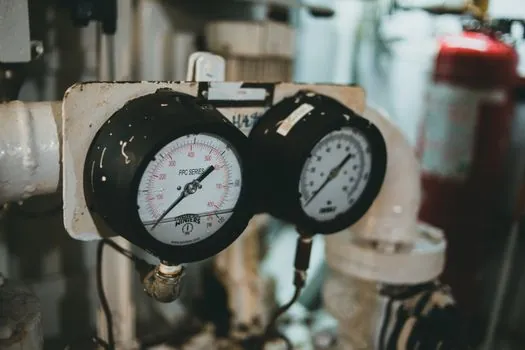
Quoted directly from a refinery-side field guide: "With a proper seal support system, mechanical seals should last a minimum of three years," with monitoring of that support system and a preventative maintenance strategy capable of extending life further still [S1]. On monitoring hardware itself, the same instrument family that reads seal pot pressure and temperature overlaps with the checking and testing apparatus used for vibration and flush-condition trending.
Sourcing, Standards, and What to Track Next
Specification discipline matters more than brand choice on seal work: pin the seal to a standard (API 682 for pumps, ISO 5199 for the pump side, and the relevant hygienic standard for food/dairy), require a face-material certificate, and demand a flushed or pressurised support system on any hot, crystallising, or vapour-prone duty [S3][S4]. Spare seals and faces should be stocked against MTBF rather than against calendar time, because the failure mode is sudden, not gradual [S3].
Trackable signals over the next planning cycle: published updates to API 682 and ISO 5199 seal-chamber dimension tables, broader availability of IoT-equipped "smart seals" with embedded temperature and face-load telemetry, and wider use of recyclable composite face materials in place of tungsten carbide on lower-duty services [S3]. For a related decision on a different valve-train seal interface, the HART vs Foundation Fieldbus breakdown sits next to seal work in most modern DCS upgrade scopes.