The membrane switch market reached USD 4.5 billion in 2023 and is forecast to hit USD 5.6 billion in 2026 and USD 7.7 billion by 2030, expanding at a 7.9% CAGR over 2024–2030, with polyester and polycarbonate as the dominant substrate families [S1].
Across industrial, medical, and consumer-goods applications, current supplier catalogues show membrane panels defined by four common design elements—polyester or polycarbonate overlays, tactile element geometry, backlight technology (EL, LGF, or LED), and waterproof sealing—with China-made units listed at US$0.32–2.84 per piece [S1][S3][S5][S6].
Overlay Material: Polyester vs Polycarbonate vs Polyimide
Polyester (PET) is the default overlay choice, with the global market split analysed by product showing polyester as one of the two leading substrate families alongside polycarbonate [S1]. Standard PET overlays are rated for typical operating windows of -40 °C to +85 °C when paired with silicone rubber keypads, as published in current silicone-rubber keypad datasheets (Shore A 30–80) [S2].
Polycarbonate (PC) offers higher optical clarity for windowed displays and embossed legends, and current supplier listings quote PC/PET membrane switch panels at US$1.19–1.99 for screen-printed graphic overlays [S5]. Polyimide enters the picture only when continuous upper-temperature limits exceed PET ratings or when the design is exposed to harsh soldering profiles, but it is not a first-line consumer or industrial overlay in the surveyed catalogues. For most industrial-control front panels, PET wins on chemical and UV resistance, while PC wins on clarity and embossability — a tradeoff best resolved by the legend method (printed second-surface on PET vs subsurface-printed PC) [S1][S5].
Tactile Element: Metal Dome, Polyester Dome, or Non-Tactile
Supplier datasheets explicitly list “tactile and non-tactile with a metal dome or polyester tactile domes” as the two click-feel options, alongside the option of no tactile feedback at all for sealed flat panels [S9][S10]. Metal domes (typically 5 mm, 10 mm, 12 mm, 20 mm stainless) deliver a defined snap ratio of roughly 30–50% of rated force, while polyester domes (printed silver or carbon ink on PET) trade that crispness for a thinner stack and lower cost.
Actuation force in adjacent silicone-rubber keypad lines is specified at 120–350 g for general-purpose keys and 320–450 g for IP68 industrial keys, giving a defensible band when the same datasheet is asked to rate a rubber-over-membrane hybrid [S2]. Non-tactile membrane switches are quoted lower in current China pricing sheets (US$1.02–1.29 for custom touch membrane switches), reflecting the absence of a dome and embossing step [S5]. Specifying a dome means also specifying its electrical life — metal domes are routinely rated to 1,000,000 actuations in adjacent silicone-keypad catalogues [S2], which is the same order of magnitude buyers should expect on a membrane switch built around a metal dome array.
Backlight Technology: EL, Fiber, LED Array, and LGF

Four backlight families coexist in the current market: electroluminescent (EL) film, fiber-optic layers, discrete surface-mount LEDs, and the newer light-guide film (LGF) construction. EL backlights are driven at high frequency and low power, are very thin, and reach a typical life of 4,000 hours or more before noticeable linear attenuation — a known disadvantage relative to other technologies [S3].
Fiber-optic membrane switches transmit LED light through an optical fiber layer, deliver tactile feedback without adding a touch point, and reach life expectancies of 50,000 to 100,000 hours, with the optical fiber usable as a fixed layer of the membrane stack [S3]. Conventional LED arrays (0603, 0805, 1206, 0201 packages from suppliers such as Kingbright and Everlight) remain the lowest-cost option and are widely used as indicator backlights, though they cannot illuminate a large area uniformly [S3][S10]. The newer LGF construction, using side-firing LEDs into a light-guide panel, can drive a total membrane thickness as low as 0.8 mm with lower optical loss and longer life than EL [S3]. Two-colour and RGB variants are now common for status and unit-selection legends, matching the data-entry “unit selection” membrane switches published in 2026 [S2].
Sealing, Tail, and Circuit Support: PET Tail, FPC, or PCB
Ingress protection is the single most common reason a non-tactile panel is upgraded to a sealed construction. IP68-rated silicone rubber keypads are published as standard catalog items with actuation force 320–450 g, Shore A 30–80, and operating temperature -40 °C to +85 °C, and membrane panels are routinely paired with these as the underlying switch element [S2]. Waterproof membrane panels are listed at US$1.09–1.49 per piece in current China wholesale pricing, indicating sealed construction is now a stock option rather than a custom upcharge [S5].
Circuit support choices divide into three families: silver-printed PET tail, flexible printed circuit (FPC), and rigid PCB. PCB-backed membrane switches are sold as a distinct catalog line with both tactile and non-tactile variants and metal/polyester domes, with FPC custom membrane keyboards offered as a parallel low-profile option [S9][S10]. For long flex-life applications with hundreds of thousands of actuations, a rigid PCB with metal domes is the conservative choice; for tight-bend, thin-stack designs, FPC is preferred over PET tail because the copper trace survives repeated flexing better than printed silver.
Application-Driven Variant Matrix
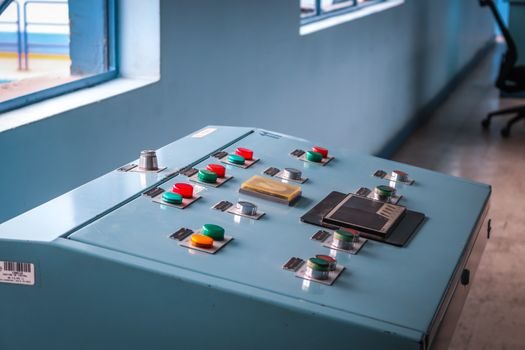
Medical and laboratory equipment dominate the backlit-membrane-switch demand, with antibacterial overlays, easy-clean sealed surfaces, and backlight + adhesive technology specified together, often produced via digital printing for low-volume customised runs [S2][S3]. Industrial controls push the same construction harder on moisture and UV resistance, with material selection driving whether a panel is rated for washdown or only drip-proof enclosures [S3]. Health and fitness equipment sits in a third bucket defined by sweat, salt, and humidity corrosion, demanding the same sealing strategy as medical but with higher abrasion resistance on the overlay.
Consumer goods and data-entry terminals — represented in current catalogues by unit-selection membrane switches (kilograms vs pounds), power on/off, and tactile-feedback controls — fall back to non-backlit PET overlays with embossed keys, where the design priority shifts from optical performance to emboss definition and tactile snap [S2]. Across all three application families, the same stack order recurs: top graphic overlay → upper circuit layer → spacer → lower circuit layer → rear adhesive → (optional) backlight film or LGF layer → (optional) rigid PCB or FPC backer [S3][S5][S9].
Selection Criteria Comparison: Four Realistic Options
Stack the four most common build options against the four criteria a buyer actually trades off — tactile feel, backlight, sealing, and unit price band — using the data points in this article:
Option A — Non-tactile PET overlay, no backlight, no seal: tactile = none; backlight = none; sealing = none; price band ≈ US$1.02–1.29 [S5]. Fit for indoor consumer data-entry pads where cost dominates and feel is unimportant.
Option B — Polyester dome, LED-indicator backlight, basic dust seal: tactile = light snap (polyester dome); backlight = discrete SMD LEDs; sealing = dust/light splash; price band ≈ US$1.19–1.99 [S5][S10]. Fit for handheld instruments and appliance controls.
Option C — Metal dome (PCB-backed), LGF or fiber-optic backlight, IP65 front panel: tactile = defined snap, ~1,000,000-cycle life class; backlight = uniform, 50,000–100,000 h fiber or LGF layer; sealing = IP65 via bezel + adhesive; price band ≈ US$1.30–1.35 up to US$2.84 [S3][S5][S9]. Fit for medical and industrial-control front panels.
Option D — Metal-dome PCB, LGF backlight, IP68 sealed silicone-rubber over-membrane: tactile = 320–450 g force, defined snap; backlight = LGF as low as 0.8 mm stack; sealing = IP68; price band = upper end of custom. Fit for washdown food-processing, outdoor, and harsh-environment human-machine interfaces [S2][S3].
Who Should NOT Pick the Mainstream Option

Buyers whose equipment runs above 85 °C continuous, or whose panel is exposed to wave-solder reflow during PCBA, should not specify a standard PET-overlay membrane switch without verifying upper-temperature rating — this is the failure mode that destroys the emboss and the adhesive [S2]. Buyers who need a panel to flex more than a few hundred thousand cycles should not accept a silver-printed PET tail; FPC or PCB is the correct minimum, as printed silver will fatigue and rise in resistance before the dome reaches end of life.
Buyers who need a large uniformly lit legend area should not choose discrete SMD-LED backlighting, since LED membrane switches “cannot meet the lighting of a large area” and are mostly limited to indicator use [S3]. For those applications LGF (as thin as 0.8 mm) or fiber-optic (50,000–100,000 h) is the correct minimum. Buyers specifying 24/7 always-on illumination should also avoid EL backlights, since EL brightness attenuates linearly from initial power-on even when life exceeds 4,000 hours [S3].
Standards, Sourcing, and Shortlist Logic
Most membrane-switch buyers cross-reference ingress-protection ratings (IP65, IP68) against the end equipment’s overall enclosure standard rather than a switch-specific document, and the catalogues reviewed reference Italy-sourced membrane-switch test equipment for optical and electrical validation, indicating third-party lab testing is the typical qualification route [S5]. Life claims in current silicone-keypad datasheets quote “usually 1,000,000 times above” at -40 °C to +85 °C, which is the same benchmark a metal-dome membrane switch should be asked to meet on a 1–2 mA, 5–24 V DC load [S2].
Shortlist logic for a new spec: fix the operating environment (temperature, fluids, UV, flex cycle count) first, then choose overlay polymer, then tactile element, then backlight, then sealing — in that order. That sequence avoids paying for a 0.8 mm LGF backlight on a panel that will never be seen in the dark, or for a metal-dome array on a sealed silicone-rubber keypad that already provides the click. For a 2026 industrial-control buy, the defensible minimum shortlist is Option B for handhelds, Option C for medical/instrument panels, and Option D for washdown or outdoor HMIs [S2][S3][S5][S9].
Trackable next signals: any 2026 catalogue update that publishes a verified IP68 rating for a flat (non-rubber-overmolded) membrane panel, and any LGF backlight datasheet that moves the total stack under 0.6 mm, would shift the Option C / Option D boundary. Buyers weighing membrane panels alongside complementary industrial-control components can compare total installed cost in the same buying window — see the energy meter price and cost guide for a parallel spec-to-cost exercise, or the electric heating element selection map if the membrane switch sits beside a heater-control HMI. For designs that pair a membrane switch with a downstream sensing element, the firefighting combustible gas detector selection spec map covers the IP and certification decisions that often run in parallel.
Spec-level background on the components involved: linear guide, waterproof membrane, and crossed roller guide.