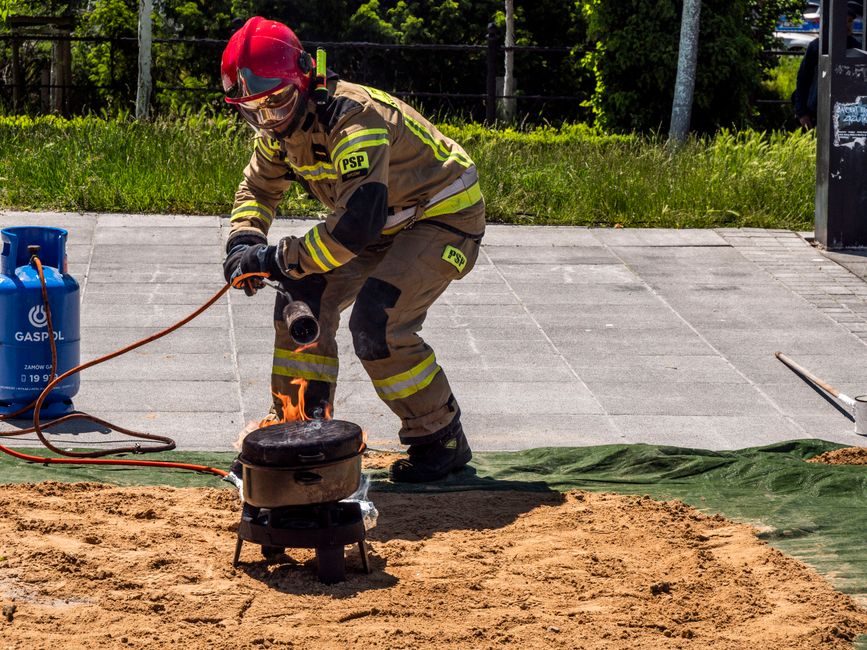
Fireground gas detection on 2026-08-03 splits into two hardware lanes: portable LEL/catalytic-bead or NDIR handheld units priced US$33.00-39.00 per piece (MOQ 2) from Shenzhen Sconda [S1], and fixed 4-20 mA 3-wire explosion-proof CH4 detectors at MOQ 10 sets for hard-installed fire-panel tie-ins [S2]. A third alarm-host lane, addressable smoke+gas control panels at US$400.00-480.00 per piece, runs the detection loop on the building side [S3].
Selection for firefighting duty is not the same as selection for chemical-plant LEL monitoring. A nozzle-team operator approaching a propane tank needs a 4-gas or 1-gas handheld with audible pre-alarm, ATEX/IECEx zone marking, and a charging cradle — not a 24 VDC DIN-rail transmitter meant for a control room. The catalog breadth from Chinese ODM/OEM suppliers like Shenzhen UH Technology (established 2002, 11-50 employees) covers both lanes, which is why spec discipline — not brand — decides the buy [S2]. For the broader sensor landscape, the combustible gas detector encyclopedia entry lays out the LEL, ppm and %-vol scales that fireground buyers must understand before quoting a model.
What "firefighting-grade" actually requires
Intrinsic safety is the non-negotiable on a portable. Handheld units that go onto a firefighter's turnout must carry Ex ia IIC T4 Ga or equivalent zone marking so they do not become the ignition source in a leaking LPG cloud; the Shenzhen Sconda handheld at US$33.00-39.00 lists "LPG / Natural Gas Detector" detection targets at MOQ 2 pieces, which positions it as a low-cost entry unit rather than a certified SCBA-team primary [S1]. For hard-installed detection in mechanical rooms, pump houses, and gas-meter enclosures, fixed 4-20 mA 3-wire explosion-proof CH4 detectors from Shenzhen UH Technology route into a fire alarm host at 48 VDC, the same rail that powers photoelectric smoke detectors in the same cabinet [S2].
Response time matters as much as the sensor. Catalytic-bead and metal-oxide semiconductor (MOS) cells respond to methane in single-digit seconds at the %-LEL scale and are the workhorse of fireground portables, while NDIR optical sensors reject false alarms from cooking aerosols and vehicle exhaust — a frequent nuisance in vehicle-fire and structure-fire overhaul. Fixed CH4 detectors in this catalog band use catalytic-bead or semiconductor cells because the panel side is alarm-threshold-driven, not continuous-analytics-driven. The portable gas detector reference covers the trade-off between response time, poisoning resistance, and battery life that fireground buyers will hit on first overhaul.
Portable vs fixed: criteria comparison
The two lanes line up against four decision criteria — power, mounting, output, and certification:
Power: portable LEL detectors carry rechargeable Li-ion or replaceable cells for 8-24 h shift life; fixed units run 24 VDC or 48 VDC from a fire alarm host with backup battery. Output: handhelds give local audible/visual alarms at preset thresholds (commonly 25% LEL pre-alarm and 50% LEL main alarm, though the entry Shenzhen Sconda unit at US$33.00-39.00 ships as a leak sniffer with buzzer + LED ladder, not a calibrated LEL meter [S1]); fixed CH4 detectors output 4-20 mA proportional to %-LEL so the fire panel can drive ventilation, shut solenoid valves, or call dispatch [S2]. Mounting: handhelds are belt-clip or chest-clip for the entry team; fixed units are wall or ceiling mount with conduit entry. Certification: handhelds need Ex ia for zone use; fixed units in hazardous areas need Ex d or Ex e depending on whether the housing contains the sensor cell. The fixed gas detector entry maps which Ex marking pairs with which zone.
Cost in the 2026 catalog follows the lane split sharply. Entry portable leak detectors from Shenzhen Sconda start at US$33.00 per piece with MOQ 2, suiting a volunteer brigade outfitting a truck with two spares [S1]. Mid-range battery-powered 4-gas handhelds from Nanjing KELISAIKE run US$400.00-1,300.00 per piece at MOQ 1 for O2/LEL/CO/H2S combinations used by industrial fire brigades and hazmat teams [S1]. Fixed CH4 detectors in the Shenzhen UH Technology line are negotiable at MOQ 10 sets, while the fire alarm host itself — the addressable panel that ties detectors into a building system — runs US$400.00-480.00 per piece at MOQ 1 from Shenzhen Xinhean Technology, paired with US$16.20-16.80 addressable wireless smoke detectors at MOQ 1 [S3].
Selection criteria that actually move the spec
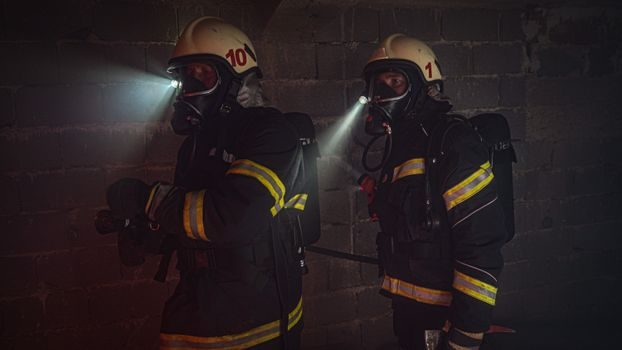
Sensor type decides what the detector sees. Catalytic-bead sensors respond to a wide range of combustible gases but are poisoned by silicone vapors, lead, and halogenated compounds — a real failure mode in vehicle-fire overhaul where brake fluid and hydraulic residue are present. Semiconductor (MOS) cells are cheaper and more sensitive to LPG/propane but drift with humidity and temperature, requiring field calibration every 6-12 months. NDIR (non-dispersive infrared) is selective to hydrocarbons, immune to poisoning, and stable for years, but costs more and misses hydrogen — which the fireground cannot always rule out. The catalog from Yaoan (Shenzhen) Electronic Technology Development shows the spread: 12 combustible gas detectors, 56 portable multi-gas detectors, 51 fixed gas detectors, and 22 toxic gas detectors all under one roof, which is the practical shape of the buyer's market [S4].
Output protocol decides what the detector does once it alarms. A 4-20 mA loop with HART overlay is the industrial default and pairs directly with a fire alarm host input module, while a relay-output (SPDT) unit simply closes a contact for the panel. Addressable loop units (the US$16.20-16.80 wireless smoke detector from Shenzhen Xinhean Technology is a useful proxy for the price band [S3]) carry a unique ID so the panel can pinpoint the alarming device — useful in a large warehouse but overkill for a 200 m² engine bay. For multi-gas response, the multi gas detector reference lays out the cross-sensitivity penalties (CO sensors responding to H2, LEL sensors responding to alcohol vapors) that fireground buyers must weigh against single-gas simplicity.
Who this is for, and who it is not for
This catalog lane fits volunteer and industrial fire brigades outfitting new trucks, building-fire system integrators quoting a fixed CH4 detection loop, and hazmat teams needing a 4-gas handheld for confined-space entry. It is not the right lane for municipal incident commanders who need an ATEX/IECEx-certified 5-gas meter with PID for VOC incident response at chemical plants — that buyer should be looking at the toxic gas detector tier instead. It is also not the right lane for offshore platform or refinery fixed detection, which sits in the gas detector reference for ATEX zone 1 certified hardware with SIL-rated loops. [S1]
Pricing on the 2026-06-13 made-in-china.com snapshot also shows the addressable fire alarm system tier running US$400.00-480.00 per panel at MOQ 1, and the wired photoelectric smoke detector at US$16.20-16.80 per piece at MOQ 1 from Shenzhen Xinhean Technology — confirming the fixed-detection lane is bought in panel-plus-sensor bundles, not as a single SKUs shopping cart [S3]. The Yaoan (Shenzhen) catalog, by contrast, breaks the buy into 51 fixed gas detectors, 56 portable multi-gas units, and 22 toxic gas detectors as separate procurement lines for a brigade building out from scratch [S4].
Procurement signals worth tracking

Two signals to watch in the next sourcing window. First, the spread between entry portable leak detectors (US$33.00-39.00 MOQ 2 from Shenzhen Sconda [S1]) and mid-range 4-gas handhelds (US$400.00-1,300.00 MOQ 1 from Nanjing KELISAIKE [S1]) is roughly 10x, which is unusually wide for a single product family and points to a calibration, sensor, and certification premium that the fireground buyer should expect to pay for any unit that will be carried into a real IDLH atmosphere. Second, the fixed 4-20 mA 3-wire explosion-proof CH4 detector from Shenzhen UH Technology at MOQ 10 sets [S2] is the volume-buy threshold for hard-installs; below that volume, integrators typically substitute a panel-mounted gas module rather than a true field transmitter. For a closer look at the chemical-plant analog of this buy, the combustible gas detector selection for chemical plants piece maps the same sensor/zone trade onto a different duty cycle.