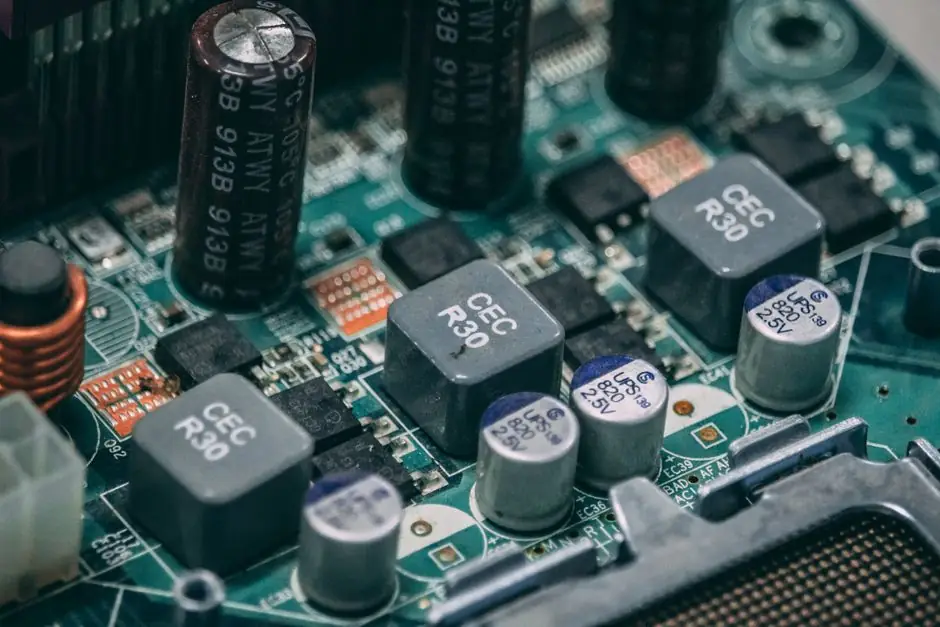
Global MEMS sensor revenue is estimated at USD 20.33 billion in 2026, up from USD 18.43 billion in 2025, and is forecast to reach USD 49.12 billion by 2035 at a 10.30% CAGR [S2]. The competitive landscape is being redrawn by foundry consolidation, rising per-vehicle MEMS content for ADAS, and the migration of signal processing onto the die itself for AI-edge workloads [S2][S4].
Two independent trackers bracket the market within a tight band: Omdia's MEMS & Sensors Market Tracker (2H25 database, released 27 January 2026) segments revenue across data processing, wired and wireless communications, consumer, automotive, industrial, medical, and aerospace and defense, while a parallel forecast values the broader MEMS sensor market at USD 20.24 billion in 2026 rising to USD 29.08 billion by 2031 [S1][S7]. Aerospace-grade MEMS is a smaller but faster-growing slice, projected from USD 1.36 billion in 2025 to USD 3.21 billion by 2034 at an 11.33% CAGR, with a cumulative addressable market near USD 21.75 billion over 2026 to 2034 [S3].
Market sizing and segment growth rates in 2026
The MEMS pressure sensor sub-segment alone is valued at USD 2.95 billion in 2026, growing to USD 4.60 billion by 2034 at a 5.7% CAGR, with Asia Pacific holding roughly 49% of 2025 share [S5]. The broader MEMS sensor market is reported at USD 20.24 billion in 2026 against USD 18.61 billion in 2025 [S7], with one house projecting a 10.30% CAGR from 2026 to 2035 [S2].
Segment growth is not uniform: ADAS-driven automotive MEMS, AI-enabled edge devices, and aerospace-grade inertial and pressure parts are growing faster than the headline average, while consumer-electronics motion and microphone MEMS remain volume-heavy but lower in unit revenue contribution [S2][S8]. Yole's 2026 status report frames the year as one where foundry activity and wafer production increased while M&A reshaped the supplier list, although the full report remained behind a 403 paywall on the publication date [S4]. The two largest 2025 national markets reported are the United States (USD 6.07 billion in 2025) and the broader North American region, while Asia Pacific is flagged as the fastest-growing region for 2026 to 2035 [S2][S5].
Competitive structure: IDM, fabless, and foundry consolidation
Omdia's competitive analysis tool tracks revenue across 160 IDM and fabless MEMS and sensor manufacturers, with a dedicated consumer-electronics and mobile sub-database that breaks shipments and revenue by device type, application, and smartphone OEM [S1]. Yole's 2026 status update identifies the year's defining structural move as M&A-led consolidation, paired with rising foundry activity and wafer production [S4].
Three competitive archetypes now coexist. First, integrated device manufacturers continue to dominate high-volume motion, microphone, and pressure parts, leveraging captive fabs and decades of process IP. Second, fabless challengers and design houses ride foundry capacity expansions, often specializing in application-specific niches such as chemical, environmental, or biosensor MEMS. Third, foundry service providers are emerging as a strategic fourth tier, serving fabless customers and licensing process platforms, a model accelerated by the wafer-production increases Yole highlights [S4]. The Insight Partners' aerospace tracker names Merit Medical, MEMSCAP, Collins Aerospace, Japan Aviation Electronics, Micralyne, Sensata Technologies, TE Connectivity, Hyper Tech, BAE Systems, and Sumitomo Precision Products as profiled participants in that sub-segment, illustrating how vertically integrated aerospace primes sit alongside pure-play MEMS specialists [S3].
Selection criteria for buyers: matching MEMS type to duty
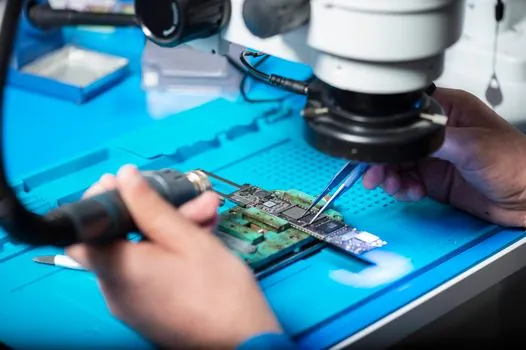
MEMS pressure parts split into silicon piezoresistive and silicon capacitive types, and selection typically hinges on media compatibility, required accuracy band, package size, and whether the application demands absolute or differential sensing [S5]. Buyers specifying for medical catheter monitoring or implantable cardiovascular devices prioritize miniaturization and biocompatible packaging; those specifying for tire pressure monitoring systems prioritize low power, automotive AEC-Q qualification, and cost per node.
Automotive ADAS applications, including electronic stability control, rollover detection, and inertial measurement for autonomous platforms, are pulling accelerometers and gyroscopes into multi-axis IMUs with on-die signal conditioning [S2][S8]. Consumer wearables and hearables are driving MEMS microphones into arrays for voice recognition, acoustic analysis, and biometric authentication, with form factors now under 5 mm squared for leading-edge parts [S2]. The recurring engineering decision is whether to specify a discrete MEMS die plus external ASIC, an integrated module with on-die ASIC, or a software-defined sensor with embedded AI for edge inference. Each path carries trade-offs in NRE cost, qualification burden, and supply-chain control.
AI-edge integration and the sensor-as-data-source shift
The 2026 MEMS & Sensors Executive Congress framed sensors explicitly as the eyes and ears of AI, with the meeting's narrative built around the migration from raw-data capture to on-die inference, anomaly detection, and predictive maintenance [S6]. This is a structural shift in the value chain: MEMS suppliers that previously sold silicon are now selling pre-classified, event-driven data streams to system integrators [S2][S6].
The technical content of that shift is concrete. AI-enabled MEMS sensors are enabling edge processing, anomaly detection, and predictive maintenance capabilities, while MEMS microphones are evolving toward voice recognition, acoustic analysis, and biometric authentication functions [S2]. In the medical domain, emerging MEMS chemical sensors for air quality, environmental monitoring, and gas detection are creating parallel growth pools alongside conventional pressure and motion parts [S2]. The practical consequence for OEMs is that firmware, model quantization, and security attestation now belong on the sensor qualification checklist alongside the traditional mechanical and electrical specs.
Regional capacity: Asia Pacific pulls ahead, US holds design lead
Asia Pacific accounted for approximately 49% of the 2025 MEMS pressure sensor market and is named the fastest-growing region through 2035, supported by assembly, test, and foundry capacity expansions [S5][S2]. The US retains design leadership for high-reliability automotive, aerospace, and defense-grade parts, with a 2025 national market near USD 6.07 billion and a 10.30% projected CAGR through 2035 [S2].
Industrial sensor fusion is the cross-regional trend, with MEMS pressure increasingly co-packaged alongside accelerometers, gyroscopes, humidity, and temperature sensors in the same module [S5]. For buyers, this means the vendor shortlist is shifting from single-function suppliers to multi-physics module houses that can deliver a calibrated, factory-fused output. The April 2026 MSEC agenda and the supplier profiles published by The Insight Partners both reflect that consolidation, with aerospace primes, automotive tier-ones, and pure-play MEMS specialists now competing for the same multi-axis module sockets [S3][S6].
Risks, constraints, and what to watch next
Forecast dispersion remains wide. Three trackers put 2025-2026 MEMS sensor revenue in the USD 18.43 billion to USD 20.33 billion band with a 5.7% to 11.33% CAGR range depending on sub-segment, so single-source figures should be cross-checked before being written into a capex case [S2][S5][S7]. Aerospace MEMS, while the fastest-growing slice, also carries the longest qualification cycles and the strongest incumbent lock-in around DO-160 and MIL-STD-810 environmental test regimes, which the open research does not enumerate in detail.
Two trackable signals to watch through the rest of 2026 and into 2027: the next Omdia 1H26 MEMS & Sensors Market Tracker release, expected in the second half of 2026, and Yole's full Status of the MEMS Industry 2026 report, which was inaccessible on 30 June 2026 due to a 403 error on the publisher's site [S1][S4]. Both will sharpen the M&A count and the foundry wafer-utilization picture that defines the 2026 competitive map. A side benefit for procurement teams is that the same edge-AI pull is reshaping adjacent industrial sensing categories, from flow sensor platforms adding on-die diagnostics to inductive sensor lines gaining IO-Link connectivity, so the MEMS consolidation pattern is a leading indicator for industrial sensor procurement in 2027.
The underlying component specifications are covered under capacitive sensor.
Background reading: FRL unit price 2026: cost drivers, tiers, and what buyers actually pay.