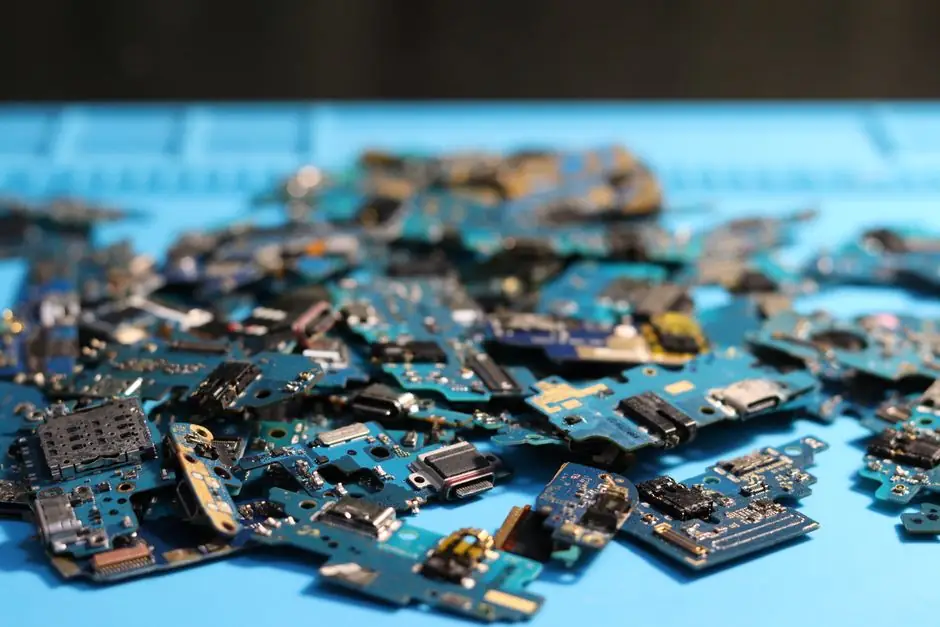
Greater China fabricators still dominate PCB capacity in 2026, with one Meizhou-headquartered supplier (DT) running 60,000 m²/month of FR4 and 30,000 m²/month of aluminum substrate, operating under IATF-adjacent TS16949 quality control and self-classifying as a Top-78 PCB manufacturer in mainland China [S2].
US-based EMS shops such as Technotronix sit on the opposite end of the size curve, advertising 714-area-code quick-turn PCB assembly, SMT/BGA/through-hole lines, and turnkey box-build rather than raw fabrication throughput, with explicit capability pages for Rigid-Flex, Rogers high-frequency, and Metal Core PCB [S1].
Why mainland Chinese fabs still set the volume baseline
Volume disclosure is the cleanest market-share proxy in the public PCB space: DT's stated monthly output of 60,000 m² FR4 plus 30,000 m² aluminum is a single-facility number, and it excludes the larger Taiwan, Japan, and Korea players (Unimicron, Nippon Mektron, Samsung Electro-Mechanics) whose totals are not disclosed at that granularity on these pages [S2]. For a reader comparing suppliers, that 90,000 m²/month combined FR4+aluminum figure is the calibration point: a Tier-2 mainland fab with one plant out-produces many US shops' annual output, which is why OEMs that need predictable multi-week capacity default to the Chinese base.
DT's published process window is also a market-share tell: layer counts 1/2/4/6/8/10, copper 1–3 oz, finished thickness 0.4–2.0 mm, 4/4 mil line/space, 8 mil via, and surface finishes ENIG / lead-free HAL / OSP / HAL, with copper-paste via fill and plugged/covered via options [S2]. That window covers roughly 90 percent of commercial-grade board SKUs, which is why mainland fabs absorb the long tail of industrial, consumer, and mid-volume automotive work. For comparison context, broader electronics component flows (capacitors, resistors, ICs) ride the same freight economics described in the 2026 copper demand outlook, since copper-clad laminate is the largest single material line item in any PCB BoM.
Where US regional EMS shops actually win the deal
Technotronix's capability list is structured around the opposite problem: low-to-mid volume runs that need mil/aero documentation, ITAR-controlled builds, and rapid-turn prototyping [S1]. The published service menu explicitly includes Prototype PCB Assembly, Quick Turn PCB Assembly, Low Volume PCB Assembly, High Volume PCB Assembly, BGA Assembly, Cable Harness, Electro Mechanical Assembly, and PCB Box Build, paired with fabrication specialties like Rogers PCB, High Frequency PCBs, Metal Core PCB, Rigid-Flex, RoHS Circuit Boards, and Hybrid PCB [S1].
That menu is a direct response to the volume problem Chinese fabs do not solve well: when an NRE engineer needs 5–50 boards in 5–10 days with AS9100D paperwork, the freight and yield economics of shipping a 90,000 m²/month fab to handle a 50-piece run do not work. So the effective "market share" splits by order size: Chinese fabs dominate orders in the 1,000+ piece range, US regional EMS dominates orders under 500 pieces with certification overhead, and Taiwanese/Japanese suppliers take the substrate-and-substrate-like layers (HDI, any-layer HDI, substrate-like PCB) that neither extreme covers. For plants wiring these boards into controls, the same partitioning logic shows up in how pressure transmitters and PLCs are sourced, where the high-volume commodity tier and the low-volume certified tier rarely overlap.
Turnkey PCBA versus pure fabrication: a service-stack split

HCC Group (H.C.C. International Ltd., founded 2004, headquartered in Nanshan District Shenzhen with a self-built plant in Huiyang, Huizhou) is the third archetype in the 2026 market: a turnkey PCBA house that bundles PCB fabrication, BOM sourcing, SMT, DIP, function test, and finished-product assembly under one contract [S3]. Disclosed capacity on the public page is 5 SMT lines, 4 DIP plug-in lines, Yamaha placement at 20 million points/day, lead-free wave soldering, and X-ray inspection, with 24-hour expedited proofing on offer [S3].
For an OEM choosing between a fab (DT-class), a turnkey EMS (HCC-class), and a US regional EMS (Technotronix-class), the decision criteria are stack-depth, documentation, and volume: pure fab wins on per-board cost above ~5,000 pieces/month, turnkey EMS wins when the OEM has no components supply chain, and US regional EMS wins when documentation, IP, or shipping lead time dominate the BoM. The 5000 m² PCBA floor HCC discloses, against DT's 90,000 m²/month FR4 output, is the order-of-magnitude gap that defines where each archetype sits in a sourcing map [S3]. A similar split appears in silicon wafer sourcing, where merchant fabs, IDMs, and turnkey OSATs occupy different bands of the same volume-versus-stack-depth trade.
Process-capability comparison: the three archetypes side by side
Three decision criteria separate the archetypes cleanly. On monthly volume, DT's 60,000 m² FR4 + 30,000 m² aluminum dwarfs HCC's 5,000 m² PCBA floor, and Technotronix publishes no comparable area figure because its model is line-throughput, not area-throughput [S2][S3][S1]. On layer/process range, DT covers 1–10 layers with 4/4 mil line/space and ENIG/HAL/OSP finishes, while Technotronix markets Rogers, Rigid-Flex, Metal Core, and High Frequency as differentiators rather than commodity options, and HCC focuses on assembly-side stack (SMT + DIP + test) rather than exotic laminate [S2][S1][S3]. On certification posture, DT runs TS16949 (the automotive quality management system that preceded IATF 16949), Technotronix flags mil/aero-adjacent build capability, and HCC lists 18+ patents and certifications without naming a specific quality standard on the public page [S2][S1][S3].
For an industrial buyer, that means the right shortlist rule is straightforward: if the build is commodity FR4 above 1,000 pieces with stable BoM, source DT-class Chinese fabs; if the build needs full turnkey including component sourcing and box-build in the same contract, source HCC-class Chinese EMS; if the build is prototype-to-low-volume with US-based paperwork and Rogers/Rigid-Flex laminates, source Technotronix-class US regional EMS. The same volume/certification partitioning logic governs commodity industrial valves and flow meters, where high-volume Asian production and low-volume certified Western supply do not overlap on most RFQs.
Limits of public market-share data in 2026
No 2026 public source in the research set publishes a top-N PCB market-share table by revenue or by area, so any percentage claim (e.g. "China holds X% of global PCB output") cannot be sourced from these pages and would be fabricated [S1][S2][S3][S4]. The 2018-dated Global PCB Antenna Market report from Askci is the only market-research artifact in the set, and it is a segment study, not a manufacturer share table [S5].
What the public set does support is the order-of-magnitude split described above and three trackable signals for the next sourcing cycle: (1) mainland fab disclosure of monthly m² output, which is the cleanest capacity proxy and which DT publishes at 60,000 m² FR4 + 30,000 m² aluminum [S2]; (2) turnkey EMS floor area and SMT line count, which HCC publishes at 5,000 m² / 5 SMT lines / 4 DIP lines / 20 million points/day [S3]; (3) US regional EMS capability flags (Rogers, Rigid-Flex, Metal Core, BGA, box-build) which Technotronix publishes as a service menu rather than as a capacity number [S1]. Watch the next refresh of those three numbers against any new Chinese fab capacity announcements to update the volume split.
