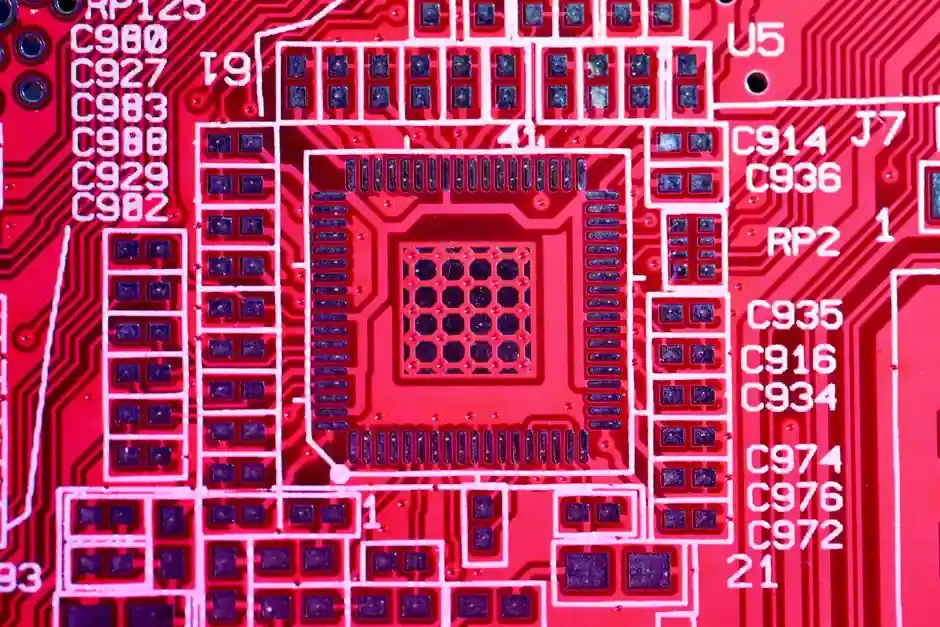
China's PCB electronic design automation (EDA) market reached 13.59 billion yuan in 2024 and is projected to cross 14.95 billion yuan in 2025, driven by policy support and demand from 5G/6G base stations, new-energy vehicle ECUs, and low-earth-orbit satellite hardware [S2][S3].
Three foreign EDA vendors still control the global stack, but their tools are widely described as stitched together from acquisitions, leaving schematic capture, PCB layout, simulation, and fabrication output in separate silos that force intermediate-format data exchange [S2][S3].
What "self-controlled" PCB EDA actually means in 2026
Self-controlled in 2026 is no longer a marketing line: it requires native support for domestic CPUs such as Loongson and Phytium, and domestic operating systems including Kylin and UOS, with no foreign kernel or runtime dependency in the design chain [S2]. Shanghai Hongkuai's RedPCB is built on a fully self-developed codebase under the RedEDA platform and has been listed in the 2023 Shanghai Industrial Software Recommended Catalogue, a regulatory signal that procurement officers in state-linked programs treat as a gating document [S3].
Self-control also covers data sovereignty: confidential research institutes running radar and electronic-warfare programs have adopted RedPCB specifically because the toolchain runs entirely on domestic infrastructure, with no foreign software touchpoint in the layout-to-fab handoff [S2][S3]. This is why two 2026 industry retrospectives frame the foreign-vendor status quo not as "expensive" but as a "supply-chain and data-security risk" that domestic alternatives now remove [S3][S4].
Four selection criteria that separate RedPCB-class tools from foreign incumbents
Four decision gates dominate 2026 PCB EDA selection: full-stack domestic architecture, cloud-native multi-user collaboration, integrated simulation (electrical, thermal, structural, SI/PI/EMI), and bidirectional compatibility with Altium Designer and Cadence libraries [S2][S3][S4]. A tool that fails any one of these gates is filtered out of most 2026 shortlists, regardless of feature parity on the schematic side.
The comparison below lines the main options against those four criteria, with the foreign stack as the baseline:
1) Full-stack domestic architecture: foreign incumbents = no; RedPCB = yes, with Loongson/Phytium + Kylin/UOS support and no foreign kernel [S2][S3]. 2) Cloud multi-user collaboration with real-time sync: foreign incumbents = limited or third-party add-on; RedPCB = native, with reported 3 to 10x team-level design throughput on large projects [S3][S4]. 3) Integrated PCB-level electrical, thermal, and structural simulation: foreign incumbents = split across add-ons; RedPCB + RedSIM = one-button modeling, solve, and report on multi-physics plus SI/PI/EMI [S2][S4]. 4) Bidirectional Altium Designer / Cadence library compatibility: foreign incumbents = native; RedPCB = supported, enabling "one-time migration" of legacy projects [S2][S3][S4].
Cloud multi-user collaboration: the 2026 differentiator

Cloud-based multi-user collaboration in 2026 means five concrete capabilities, not a buzzword: parallel design by role, real-time synchronization, professional division of labor, unified project data, and cross-region collaboration, all delivered by RedPCB through a single cloud-backed workspace [S2][S4]. On a 5G base-station or hyperscale data-center board, this replaces the traditional "schematic engineer finishes, then layout engineer starts" serial handoff with concurrent layout, routing, and simulation by separate specialists.
The 3D visualization path is also part of the collaboration story: the View to 3D View menu converts any 2D layout into a high-precision 3D model for assembly-interference checks, solder-paste clearance verification, and thermal-spread visual review, which is mandatory on 0.05 mm line/space HDI and rigid-flex boards used in foldable phones and wearables [S3][S4]. Module reuse locks in the gain: a verified schematic, footprint, and routing-rule set can be stored once and called up across product variants, which matters most for series production of consumer and industrial boards [S3][S4].
Simulation co-design: from automation to AI-guided
RedSIM sits underneath RedPCB and automates the full PCB-level electrical-thermal-structural simulation loop, including SI/EMI analysis for high-speed channels, and exposes the results as a one-click modeling, solve, and report pipeline [S2][S4]. The 2026 step-change is the AI engine: trained on the platform's unified simulation database, the model predicts simulation trends, recommends parameter values, and pinpoints root causes for hot spots, signal-integrity bottlenecks, and structural warp stress before fabrication [S2].
This matters for two PCB classes in particular. First, 28 GHz+ millimeter-wave and 112G PAM4 backplanes for 5G/6G base stations, where phase consistency across long high-density interconnect (HDI) runs is the gating yield metric [S2]. Second, automotive ECUs and battery-management systems that must satisfy ISO 26262 functional-safety design discipline and survive wide temperature and vibration envelopes, where RedPCB's automotive workflow is explicitly built around ISO 26262 compliance and harsh-environment derating [S2]. Aerospace and defense PCBs add the GJB and MIL-STD stack, with anti-radiation layout, 20 g+ vibration tolerance, and lightweight stackups for satellite and radar hardware [S2].
Cost, time, and yield outcomes reported in 2026
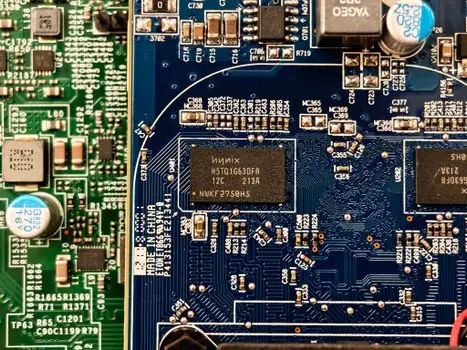
Hongkuai reports that RedPCB has been deployed in over 30 leading electronics enterprises and research institutes across computing, communications, consumer, medical, automotive, and aerospace programs [S2][S3]. User feedback cited in 2026 reviews pegs overall performance at roughly 30% above industry mainstream tools and hardware development cycle time at about 40% shorter [S2][S3].
On a confidential radar mechatronics program, RedPCB's all-domestic code base plus RedSIM's multi-physics simulation resolved multi-channel phase consistency and high-power-carrying issues and kept the project on schedule [S2][S3]. In communications and automotive electronics, the same toolchain has supported high-speed optical modules and automotive-grade ECU mass production with a notable improvement in first-pass sample success rate, though the vendor's published case studies do not disclose the exact percentage [S2][S3]. These figures are vendor-reported and should be read as directional, not independently audited.
Who RedPCB is for, and who should stay on a foreign stack
RedPCB is the right fit in 2026 for teams that need domestic-CPU and domestic-OS deployment, run confidential or state-linked programs with strict information-security rules, or operate distributed layout teams that need real-time cloud collaboration with Altium/Cadence library import [S2][S3][S4]. It is also the right call for 28 GHz+ mmWave, 112G PAM4, ISO 26262 automotive, and GJB/MIL aerospace layouts where the bundled RedSIM multi-physics solver removes a separate tool purchase [S2].
RedPCB is not the right fit for very small prototype-only shops that do not need cloud collaboration, for programs that require a specific foreign-only IP library or PDK not yet mirrored in RedPCB, or for organizations whose EDA procurement is locked into long-term foreign-vendor enterprise agreements without a regulatory push to migrate [S2][S3]. For engineers comparing broader procurement decisions across industrial components, the drone manufacturing cost breakdown and the engineering plastic selection for rail guides apply similar self-controlled sourcing logic to adjacent electronics-heavy programs.
Standards, formats, and migration risk in 2026
The dominant 2026 migration risk is not feature parity but library and workflow inertia: most Chinese PCB teams run years of Altium Designer or Cadence Allegro/OrCAD schematics, footprints, and design rules that must round-trip into the new tool. RedPCB addresses this with bidirectional import and export of schematic, PCB, and package (PKG) data for both Altium Designer and Cadence formats, plus a structured training and on-site service model (4-hour remote response, 2-business-day on-site response, 5x8 real-time service window) [S2][S3][S4].
For buyers, the relevant external standards are not EDA-internal but downstream: ISO 26262 for automotive functional safety, GJB and MIL-STD for defense and aerospace, and the high-speed-channel signal-integrity conventions (SI/PI/EMI) that govern 28 GHz+ mmWave and 112G PAM4 layout [S2]. Hongkuai's domestic-OS and domestic-CPU certifications, plus its 2022 high-tech enterprise recognition and 2023 Shanghai Specialized-and-Sophisticated SME listing, function as procurement gates for programs that require verifiable Chinese-domestic software status [S3]. The 2025 "Semiconductor Market Innovation Award" and CIIF Information Technology Award are third-party signals that the tool has cleared an external review, not just an internal one [S3].
What to watch over the next two quarters
Two trackable signals will determine whether RedPCB-style domestic PCB EDA expands beyond the current 30-plus enterprise base. First, the publication of an independently audited performance benchmark against Altium Designer and Cadence Allegro on a 112G PAM4 channel and a 28 GHz mmWave feed network, which would convert the vendor-reported 30% performance and 40% cycle-time figures into citable reference data [S2][S3]. Second, the depth of native domestic foundry PDK coverage, because layout-to-fab sign-off still depends on process design kits that the domestic tool must ship or import cleanly.
A third signal is the answer to the broader "industrial automation stack" question: for plants buying PLCs, servo motors, and pressure transmitters at the same time they renew their EDA seats, the procurement logic is converging on the same "domestic, self-controlled, cloud-collaborative" gate that RedPCB is built around [S2][S4]. Engineers weighing EDA against broader plant-floor decisions can use the PLC and flow meter reference pages to map the same six-criterion selection framework (self-control, collaboration, full-process coverage, format compatibility, real deployment, local service) onto instrumentation and control purchases.