
Aluminium and aluminium-core composite panels are the workhorses of the 2026 metal curtain wall market, with Made-in-China wholesale listings on 2026-05-24 showing FOB bands of US$20.00–65.00 per square metre at 100 m² minimum order quantity across Guangdong factories [S1]. Standard thicknesses cluster at 2.0–4.0 mm for solid aluminium, with surface treatments split between PVDF, polyester powder coating, and 3D-engraved finishes for decorative façades [S1][S5].
For spec-driven procurement the decision tree is short: pick an alloy/temper, lock the coating system, confirm fire grade (A2-s1,d0 for non-combustible cores vs FR-B1 standard cores), then validate the panel-to-curtain-wall interface against the metal curtain wall panel reference geometry. Buying teams also need to weigh OEM/ODM customisation, since most Chinese suppliers on Made-in-China list "customised size" as a baseline option rather than a premium add-on [S2][S3].
Panel Types and Substrate Choices
Aluminium solid panel (single-sheet) is the default specification for metal curtain wall projects where flatness and impact resistance outweigh weight, typically delivered as 2.0 mm or 3.0 mm AA3003/AA5005 sheet with PVDF coil-coat or post-powder finish [S1][S2]. The Okorder 2026-06-03 listing for an "Aluminum Engraved Cladding Curtain Wall panel" specifies a flat 2 mm profile with customised dimensions, 30% TT advance + 70% TT balance payment, and monthly supply capability of 80,000 m² — a useful upper bound for capacity planning on large façade packages [S5].
Aluminium composite panel (ACP) with an A2 fire-rated core is the spec to write when the building code or insurer calls for non-combustible cladding; Made-in-China 2026-05-28 listings show 4 mm A2 exterior decoration boards explicitly marketed for curtain wall applications [S6]. A2-class cores replace the older FR polyethylene-core ACPs that have been restricted in many jurisdictions after high-rise fire incidents; procurement language should call out the A2 mineral-filled core by name, not just "fire-rated". Honeycomb aluminium panels (factory catalogue items at the same Made-in-China OEM/ODM factories [S2]) are specified for large unit panels where weight must stay below ~15 kg/m², common on high-rise spandrel zones.
Coating Systems: PVDF vs Polyester vs Powder
Three coating families appear on virtually every 2026 RFQ response: PVDF (polyvinylidene fluoride) for exterior durability, polyester powder coat for budget interior or soffit applications, and 3D-engraved decorative finishes for feature walls [S1][S5]. PVDF (typically Kynar 500®-based 2-coat or 3-coat systems) is the default for sun-exposed façades because of its chalk-and-fade resistance; 70% of PVDF resin content is the widely quoted threshold below which coating warranties drop sharply, though specifiers should validate resin loading on the manufacturer's PDS rather than rely on that figure alone.
Polyester powder coating carries a lower unit cost and tolerates thicker build (60–80 µm vs 25–35 µm for PVDF), making it the right pick for back-of-house cladding, soffits, and sun-louvre components like the "aluminum sun louvers" product line at the curtain wall OEM factory [S2]. For decorative projects, 3D-engraved solid aluminium panels with pattern depth of 0.5–2.0 mm are now listed as a standard SKU rather than a custom run, with 2 mm base thickness as the catalogue norm [S1][S5]. The glass curtain wall reference page covers the parallel specification track when the façade is vision-glass-led with metal trims and accent panels only at spandrels and fins.
Fire Performance and Code Mapping
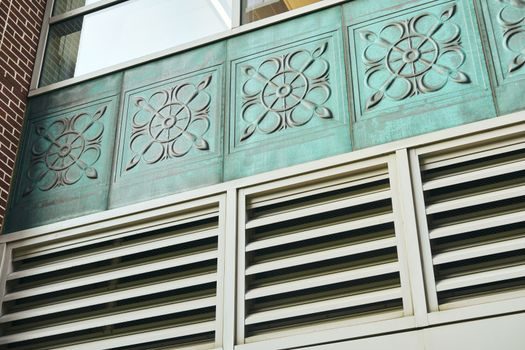
A2-s1,d0 (non-combustible, low smoke, no burning droplets) per EN 13501-1 is the European designation specifiers reach for on high-rise and assembly occupancies, and A2-core aluminium composite panels from the Made-in-China 2026-05-28 catalog are explicitly tagged with the (A2) designation in the product name [S6]. Where the local code is the Chinese GB 8624-2012 scheme, the equivalent A2 classification is the route to specify; cross-referencing to EN 13501-1 helps when shipping to European projects.
For non-high-rise projects, FR-B1 grade ACP (the older polyethylene-core-with-fire-retardant variant) remains a budget option in many Asian and Middle East markets, but it is no longer accepted on many tower projects over 24 m in the UAE, UK, and Australia. Procurement language should always pin down both the fire-test standard and the resulting classification rather than relying on a vendor's "fire-rated" marketing claim. The fire-rated door vs glass curtain wall spec cut article covers the parallel rating logic that runs through adjacent envelope components.
Dimensions, Tolerances, and MOQ Economics
Most Chinese OEM factories list panel width up to 1,500 mm as a standard envelope, with custom lengths up to the trucking limit (typically 6 m on standard 40 ft flatbed) [S2][S3]. The Made-in-China factory data for "Metallic Wall Panel" and "Curtain Wall Clading" both surface "customised size" in the main product list, indicating that non-standard widths and lengths are a routine engineering conversation rather than a tooling exercise [S2][S3].
MOQ economics matter: the Brilliance China listing on 2026-05-24 anchors MOQ at 100 m² across both the US$20–65 solid panel band and the US$28–48 carved profile panel band [S1]. For 2.0 mm PVDF-finished flat panel, expect FOB pricing in the US$20–32/m² band; 3.0 mm PVDF or 2.0 mm 3D-engraved decorative panel falls into the US$28–48/m² band; thick (≥3.0 mm) specialty finishes and honeycomb sandwich panels push into the US$45–65/m² band [S1]. Below 100 m² the unit price can move 20–40% higher as the factory amortises the same coil-changeover cost across a smaller run. Okorder's aluminium-engraved panel at 100 m² MOQ with 80,000 m²/month supply capacity is a useful capacity sanity-check when scaling a single project to 5,000–10,000 m² [S5].
Decision Matrix: Solid Aluminium vs ACP vs Honeycomb
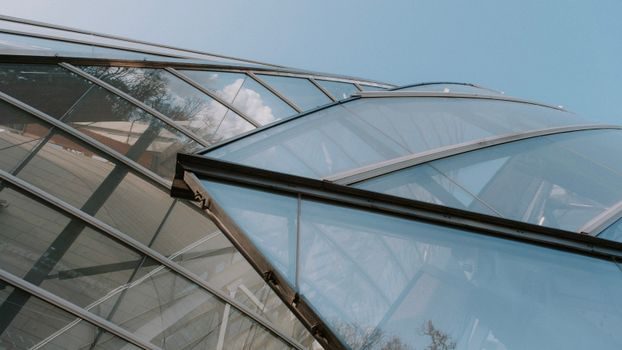
Three criteria usually drive the final call: fire rating requirement, panel weight budget, and unit cost. Solid aluminium (2.0–3.0 mm) wins on impact resistance and is the lightest fire-safe option (A1 non-combustible) at the highest unit cost in thin gauges; aluminium composite panel (4 mm A2-core) wins on flatness over large unit areas and is the lowest cost for a fire-rated façade; honeycomb aluminium panel wins on rigidity-to-weight ratio for spandrel and large-format applications above ~1.5 m unit width [S1][S2][S6].
A rule of thumb that tracks the 2026 sourcing data: when the project is below 4 storeys and the spec does not require A2-core, polyester-powder solid aluminium at 2.0 mm hits the lowest total cost. Between 4 and 24 storeys, A2-core 4 mm ACP is the dominant specification. Above 24 storeys or for assembly occupancies, specify solid aluminium (or A2-core ACP with documentary evidence of EN 13501-1 A2-s1,d0 test reports) and validate the panel-to-curtain-wall bracketry against the metal curtain wall panel reference geometry for thermal movement and wind-load transfer. Specifiers should also factor in the glass curtain wall interface at vision-glass transitions, since bracketry for the two systems is rarely interchangeable.
Quality Control and Sourcing Verification
Four documents are non-negotiable on a 2026 metal panel RFQ: mill test certificate (alloy/temper per EN 573-3 or ASTM B209), coating warranty letter (PVDF 20–25 year fade/chalk, polyester 10 year typical), fire classification test report to the destination market's scheme (EN 13501-1, GB 8624, ASTM E84, or NFPA 285 for assembly-tested systems), and a project-specific sample with measured colour (Delta E) and gloss at 60° [S1][S5]. Factories on Made-in-China that hold "Gold Member" or "Audited Supplier" status have on-site verification records on the listing page, which is a useful first-pass filter when shortlisting new vendors [S1].
Payment terms across the catalogues cluster on 30% TT advance + 70% TT balance before shipment, with LC accepted on larger orders [S5]. For a 5,000 m² order at US$30/m² FOB (US$150,000 contract value), expect a 30% deposit (US$45,000) on PO confirmation and the balance against copy of B/L after pre-shipment inspection clears. Third-party inspection (SGS, BV, or TUV) is standard on export orders above 1,000 m² and is the right hook to inspect PVDF film thickness (typically 25–35 µm for 2-coat, 30–40 µm for 3-coat systems) and colour consistency before container loading. The skylight price & cost guide covers a parallel FOB-and-install envelope that often appears on the same envelope package.
For component-level specifications, see linear guide.