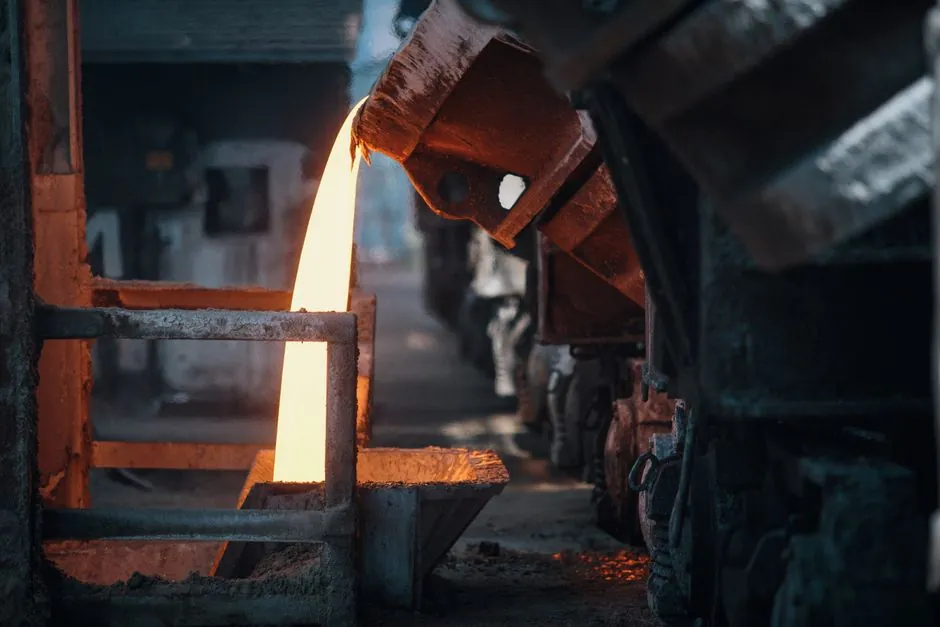
Metal AM powder is a process-qualified raw material, not a commodity: the same Ti-6Al-4V or 316L grade will deliver different density, surface finish and mechanical results across PBF-LB/M, DED and binder jetting, because each process has its own particle size distribution (PSD), morphology and interstitial-oxygen window [S1][S2].
The two industry-standard PSD bands are 15-53 µm (fine, for laser powder bed fusion) and 53-105 µm (coarse, for DED and electron-beam PBF), with laser diffraction now the dominant measurement method on instruments like the Mastersizer 3000 and the LA-960V2 [S2][S3][S5]. Buying the wrong band, or a powder with off-spec oxygen, flow or satellites, is the single most common cause of porosity, cracking and rejected builds.
Process-to-Powder Match: Why "Metal Powder" Is Not One Spec
ASTM/ISO 52900 process categories set the powder envelope, and a single alloy will not pass all three envelopes cleanly [S1]. Laser powder bed fusion (PBF-LB/M, the formal name for SLM/DMLS) needs a tight 15-53 µm PSD with high sphericity, Hall flow under ~30 s/50 g, and apparent density above roughly 4.0 g/cm³ for steels, because thin 20-40 µm layers must spread uniformly without agglomerates or satellites [S2][S7].
Directed energy deposition (DED) accepts the coarser 53-105 µm band because powder is injected through a nozzle into a melt pool, not spread as a thin layer, so flow is less critical but oxygen pickup still has to be controlled to the same CoA limits as PBF [S1]. Binder jetting is the outlier: it uses the same metal powder but does not melt it, so PSD, flow and packing density drive green-part strength instead of melt-pool stability, and a separate sintering shrinkage budget of 12-20% by volume has to be designed in [S1]. Specifying "15-53 µm" without naming the process is the fastest way to receive a quote for the wrong powder.
Alloy Families, Atomization Routes and Oxygen Limits
The five alloy families that dominate AM procurement are titanium (Ti-6Al-4V, Ti-6Al-4V ELI), stainless steels (316L, 17-4PH), nickel superalloys (Inconel 625, 718), aluminum (AlSi10Mg) and cobalt-chrome (CoCrW, CoCrMo), with copper alloys added for thermal-management builds [S1][S2]. Each is paired with a specific atomization route because the route sets oxygen and nitrogen pickup before the CoA is even written.
Titanium is almost always gas-atomized or produced by plasma rotating electrode process (PREP) under inert or vacuum, never water-atomized, because titanium's reactivity with oxygen embrittles the final part; aerospace Ti-6Al-4V powder is typically held to under 0.13 wt% O (0.007-0.013% in tighter grades) [S1][S2]. Nickel superalloy powder for hot-section parts is held to roughly 0.006-0.018 wt% O because oxide inclusions become crack initiation sites at service temperature, and 316L stainless for medical and food-contact builds is held to roughly 0.01-0.02 wt% O depending on the OEM [S2]. Aluminum AM powder (AlSi10Mg) sits in a different risk category: it is reactive and must be handled as a combustible dust, but the atomization and PSD logic mirrors other alloys. The procurement rule is to write the alloy by its material standard (e.g. ASTM F3055 for Ti-6Al-4V PBF-LB/M, ASTM F3187 for AlSi10Mg), not by trade name.
Particle Size Distribution: The Two Bands and Why They Matter
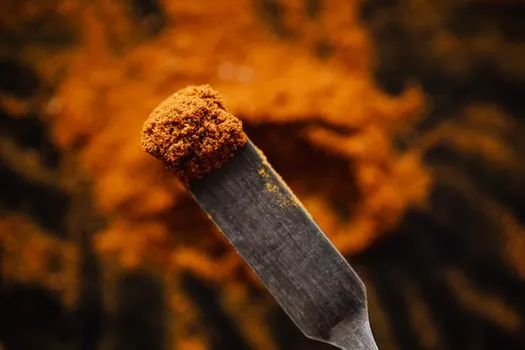
PSD is the most specified and most audited property on a metal-powder CoA, and the data behind it should always carry method, dispersion (dry vs wet) and D-values (D10, D50, D90) so the result is reproducible across labs [S3][S5][S7]. The two industry bands are 15-53 µm and 53-105 µm, with most laser PBF-LB/M suppliers tightening to 20-45 µm for finer layer thicknesses and 45-105 µm used for coarser layer or EB-PBF builds [S2][S7].
PSD drives three coupled properties: packing density, flowability and apparent density, and all three are required for a stable PBF build [S5]. Packing density is maximised by a broad but controlled distribution (typically D10 around 15-20 µm, D50 around 30-40 µm, D90 under 53 µm for laser PBF), because bimodal distributions pack more efficiently than narrow ones, the same logic as fitting different-sized balls in a box [S5][S7]. A narrow monomodal PSD can flow well but pack poorly, leaving inter-layer porosity; a too-broad PSD flows poorly and causes recoater streaking. Hall flow under ~30 s/50 g and apparent density above 4.0 g/cm³ for steels are typical acceptance gates, although OEM-qualified ranges vary by machine.
Measurement Methods: Laser Diffraction vs Dynamic Image Analysis
Laser diffraction (LD) is now the workhorse technique for metal AM powder QC, because it measures dry powder in its natural state, gives a full volume-weighted distribution in 1-2 minutes, and resolves sub-micron fines that screening cannot [S3][S5]. Wet dispersion is used when the powder is cohesive or prone to agglomeration, but for most AM alloys dry dispersion on instruments such as the Malvern Mastersizer 3000 or the Horiba Partica LA-960V2 is the default and is the method named in most OEM CoA templates [S3][S5].
Dynamic image analysis (DIA) on instruments like the Microtrac CAMSIZER X2 complements LD by giving per-particle shape data: aspect ratio, circularity, and the percentage of satellites and irregulars, all on a 0-1 scale, with dual-camera coverage from 0.8 µm to 8 mm [S4]. DIA can resolve very low levels (down to ~0.002%) of oversized or irregular particles that LD averages out, which is why it is increasingly specified for aerospace CoAs in parallel to LD PSD [S4]. Sieving (typically to ASTM B214 or ISO 4497) is still used for the coarse 53-105 µm DED band and for quick line-of-flight checks, but it cannot resolve fines below ~20 µm and is no longer accepted as the sole PSD method for PBF-LB/M powder.
Selection Criteria Comparison Across the Main Process Routes

For a buyer comparing options, the four criteria that actually decide a powder shortlist are PSD band, atomization route, oxygen limit and morphology/sphericity, applied against the target process [S1][S2][S7]. On those four, PBF-LB/M with gas-atomized 316L, PBF-LB/M with PREP Ti-6Al-4V, DED with plasma-atomized Inconel 718, and binder jetting with water-atomized 316L behave very differently and are not interchangeable.
Use this table to shortlist, then validate the candidate powder against the specific OEM parameter set for the build chamber you actually run, not the generic process [S1].
Who This Powder Is For, and Who Should Pick a Different Route
This guide is for procurement engineers, process engineers and lab managers who are about to issue a PO for AM feedstock, qualify a new supplier, or troubleshoot porosity, cracking or recoater problems on an existing machine [S1][S7]. It is also for buyers at medical-device, aerospace Tier-1 and energy-turbine shops, where the CoA oxygen, PSD and morphology limits are tighter than for general prototyping.
It is not the right fit for buyers sourcing powder for thermal spray, hardfacing, MIM feedstock, or conventional press-and-sinter PM, all of which use different PSD, flow and oxygen envelopes and are covered by different ASTM/ISO standards (e.g. ASTM B214 for sieving, MPIF standards for MIM). Buyers who only need a "cosmetic" finish for a non-critical prototype can usually drop down to a coarser, cheaper 45-105 µm cut, but anyone building fatigue-loaded, biocompatible or hot-section parts should stay inside the tighter OEM-qualified PSD band and treat any lot-to-lot drift above roughly ±5% on D10/D90 as a reject.
Standards, Safety and Reuse: The Procurement Checklist
Every AM powder lot should ship with documentation against recognized standards: ASTM F3055 (Ti-6Al-4V PBF-LB/M), ASTM F3187 (AlSi10Mg), ASTM F3301 (post-processing) and the ISO/ASTM 52900 series for process naming, plus the underlying powder-metallurgy standards for PSD, flow and apparent density [S1]. For PSD specifically, ASTM B822 (light extinction, laser diffraction) is the cited method, and ASTM B964 for PSD of refractory metals; sieve analysis falls under ASTM B214 / ISO 4497 [S3][S5].
Two procurement items that get ignored and then bite at audit time are combustible-dust safety and powder reuse. Aluminum, titanium and magnesium powders are Class A combustibles and must be handled under NFPA 484 (and ATEX 21/22 zone rules in Europe) with grounded equipment, inert-purge cycles and no water on a titanium fire [S1]. On reuse, every sieve-and-blend cycle adds oxygen and shifts PSD, and OEM-qualified reuse limits are usually 5-10 cycles for titanium and 10-20 for 316L before the powder has to be downcycled or scrapped; track reuse count per lot in your MRP system, not on a whiteboard [S1][S2].
For teams that already buy stainless, copper and aluminium stock for non-AM forming, the same 304/316L/aluminium trade-off logic from food-grade metal selection carries over into AM feedstock, and the metal material reference on alloy families is a useful cross-check on grade naming. A practical next step is to lock your CoA template (alloy standard, PSD method and D-values, oxygen method and limit, Hall flow, AD, morphology) and reject any lot that does not report D10/D50/D90 with method and dispersion stated; the next signal worth tracking is the OEM parameter-set updates for 2027 machine builds, which are expected to tighten PSD upper limits further as layer thicknesses drop below 20 µm.
Component reference pages worth checking: metal powder, and linear guide.