
For food and beverage process equipment, 304L and 316L austenitic stainless steel powders cover roughly the bulk of hygienic service duty, while aluminium and tin-coated steel powders dominate can-stock and lightweight container production [S1][S6]. 316L is the default pick once chloride, acidic beverages (fruit juice, beer, dairy whey), or cleaning chemicals above 50 °C enter the service loop, because the 2–3% molybdenum addition lifts pitting resistance well above 304 [S2].
The food-grade powder decision is not a single number, it is a stack: alloy family, particle size distribution for the forming route, surface roughness that determines cleanability, and the regulatory framework of the destination market (US FDA 21 CFR, EU Regulation 1935/2004, GB 4806.9 in China). Walk through this stack wrong on any layer and you either fail the migration test or buy a powder that fouls your additive manufacturing bed.
Food-Contact Alloy Families and What They Cover
Austenitic stainless steels (304/304L, 316/316L) are classed as food grade and dominate packaging and process equipment: 304 carries roughly 18% Cr and 8% Ni (the classic 18/8 grade) while 316 adds about 2% Mo to that 16% Cr / 10% Ni base [S2]. 316L is the workhorse where chlorides or acid pH are present, including marine-process water, brine injectors, and WFI (water for injection) skids upstream of pharmaceutical-grade gear pumps where trace contamination is non-negotiable.
Aluminium and tin-coated steel (tinplate, TFS) powders cover can-making and foil wraps: aluminium alone holds an estimated 75% of beverage-can market share by 2014 figures tracked in packaging reviews, and global metal-can production reached 364.4 billion units in 2014 with a 2.9% CAGR projection toward 2020 [S1]. Ferritic 430 stainless powder shows up on cost-driven kitchenware and induction-capable cookware surfaces, but its lower Cr content (around 16–18% with no Ni) puts it behind 304 in corrosion-critical food contact [S2].
Selection Criteria: Matching Powder to Process
Particle size distribution and morphology decide which forming route a powder is fit for. Spherical gas-atomised 316L in the 15–45 µm range is the workhorse for laser powder bed fusion (LPBF) of hygienic valves, fittings, and custom spares; coarser 45–150 µm cuts suit direct energy deposition of repair cladding on mixers and pump housings [S3][S5]. Sieving into discrete fractions is the practical gate that controls downstream defects, and vibratory sieves with ultrasonic deblinding are routinely applied to cut oversized agglomerates that would otherwise seed lack-of-fusion defects in printed parts [S4].
Surface finish and cleanability follow from the alloy and the post-print step. Bright-annealed, brushed, and mirrored 304 surfaces are the standard three finishes cited for commercial kitchen equipment, with bright-annealed easiest to clean but most prone to fingerprint marking, brushed most popular in back-of-house service areas, and mirrored reserved for visible customer-facing surfaces [S2]. For powder-bed parts, the equivalent decision is post-print electropolishing to a Ra below 0.8 µm, which is the level hygienic food-contact surfaces typically need to avoid bacterial holdout. 316L is preferred when the cleaning regime uses hot caustic or chlorinated sanitizers above 60 °C because of its higher pitting resistance equivalent number.
Where 316L Wins, Where 304 Is Enough, Where Aluminium Takes Over

316L is the call when chloride concentration in the process stream exceeds roughly 200 ppm, when pH drops below 4 in beverage or sauce service, or when the cleaning protocol uses hypochlorite or hot caustic cycles [S2][S6]. 304 is the right pick for dry goods handling, general washdown equipment, conveyor frames, and most beverage storage where chloride exposure is limited and the powder cost saving (often 15–25% versus 316L) matters on large fabrications.
Aluminium powder (typically 1xxx and 6xxx series, atomised to 10–100 µm for AM, or paste-grade for can-end coatings) is the call when weight is the design driver: aluminium beverage cans represent the bulk of the global can market, and aluminium powder is also used in pigmented coatings, decorative finishes, and additive-manufactured heat exchangers where its thermal conductivity near 200 W/m·K is exploited [S1][S5]. 17-4 PH martensitic stainless and cobalt-chrome (CoCrMo) powders are common in AM but sit outside food contact: 17-4 PH is typically reserved for cutting tools and dies, while CoCrMo is a medical/dental alloy, not a food-contact choice.
Particle Morphology, Sieving, and Why Spherical Powder Matters
Spherical powder is not a nice-to-have for LPBF, it is a flowability requirement. Hausner ratio below about 1.25 and apparent density above 4.0 g/cm³ for 316L are typical targets that vendors hit with gas atomisation; deviations create uneven layer spreading and porosity above 0.5%, which on a food-contact surface is unacceptable because crevices trap bioburden [S3][S4]. Sieving is the de facto quality gate: vibratory separators with mesh cut-points at 63 µm or 45 µm screen out the satellite-bearing fines that printer recoaters hate, and ultrasonic deblinding keeps the mesh apertures from blinding when humidity rises in the AM build room [S4].
For binder jetting and sintering routes, finer powder in the 5–25 µm range unlocks higher green density but demands tighter PSD control, and sintering shrinkage in the 12–18% linear range must be designed into tooling. For direct energy deposition of repair or feature-build on food-grade housings, coarse 50–150 µm 316L wire-and-powder cuts are more forgiving and tolerate higher contamination pickup. In all cases, lot-traceable certificates covering ASTM B212 (Hall flow), B213 (PSD), and B822 (laser diffraction) are the minimum spec to demand, alongside a Cr/Ni/Mo chemistry check against the original AISI 304/316 nominal.
Real Use Cases: Brewers, Dairy, and Beverage Cans
304L is widely used for brewery bright tanks, keg fittings, and grain handling; 316L is specified for fermentation vessels that see acidic wort and chlorinated CIP. In dairy, 316L dominates whey processing and cheese-melt lines because lactic acid plus chloride from brine drives pitting in 304 within 1–3 years of service. For process skids where chemical reagents get dosed inline, 316L also keeps its surface passivity when acid or alkaline CIP solutions are pushed through at 80 °C. [S2]
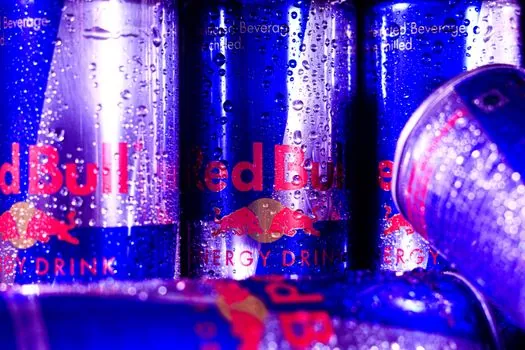
Beverage can production is the other end of the food-and-beverage powder story. Aluminium cans made from can-stock aluminium alloy (typically 3004/5182) account for the bulk of beverage-can output, and global metal cans hit 364.4 billion units in 2014 with a 2.9% CAGR projection toward 430 billion by 2020 [S1]. Stainless steel powders show up in the brewery and dairy process side, while aluminium and tinplate powder routes dominate the can and closure side. The 3D printing angle: breweries and dairies are now printing custom 316L spare parts (valve seats, sensor bosses, pipe clamp brackets) on demand to keep lines running, where lead time on a replacement fitting from a foundry would have been weeks.
Limitations, Failure Modes, and Sourcing Standards
The first limitation is regulatory, not technical. A powder that meets ASTM, ISO, or AISI chemistry can still fail a migration test for lead, cadmium, nickel, or aluminium if the source batch is contaminated; the published review on metal packaging flags migration of bisphenol A, lead, cadmium, mercury, aluminium, iron, nickel, tin dissolution, blackening, and corrosion as the dominant safety concerns in metal food contact [S1]. Powder producers and powder-part fabricators should hold a current EU 1935/2004 declaration of compliance or US FDA 21 CFR food-contact statement, with the Cr/Ni/Mo values matching AISI 304/316 nominals within the standard tolerance bands.
The second limitation is mechanical: LPBF 316L prints show tensile strength often above wrought 316L but typically with 10–20% lower elongation, and fatigue performance in cyclic CIP service is sensitive to surface roughness, requiring post-print electropolishing for high-cycle parts. Pricing is a real constraint: 316L powder in the 15–45 µm LPBF grade typically runs 2–4× the price of 304L in the same cut, and gas-atomised food-grade lots with full traceability are tighter still.
Standards, Sourcing, and What to Demand on the PO
Trackable signals worth watching through 2026: a) the share of food-and-beverage additive-manufactured spare parts versus cast or machined equivalents, b) tightening of nickel and chromium migration limits in EU 1935/2004, and c) the move of major powder producers into certified food-contact atomisation lines. The metal cans market was valued at US $ 47.88 billion in 2018 and was tracked toward US $ 58.25 billion by 2024 at a 3.39% CAGR, and the powder side of that industry will track the same growth direction as additive-manufactured process spares move from pilot to production line [S1].
Component reference pages worth checking: metal powder, metal material, and construction machinery and equipment.