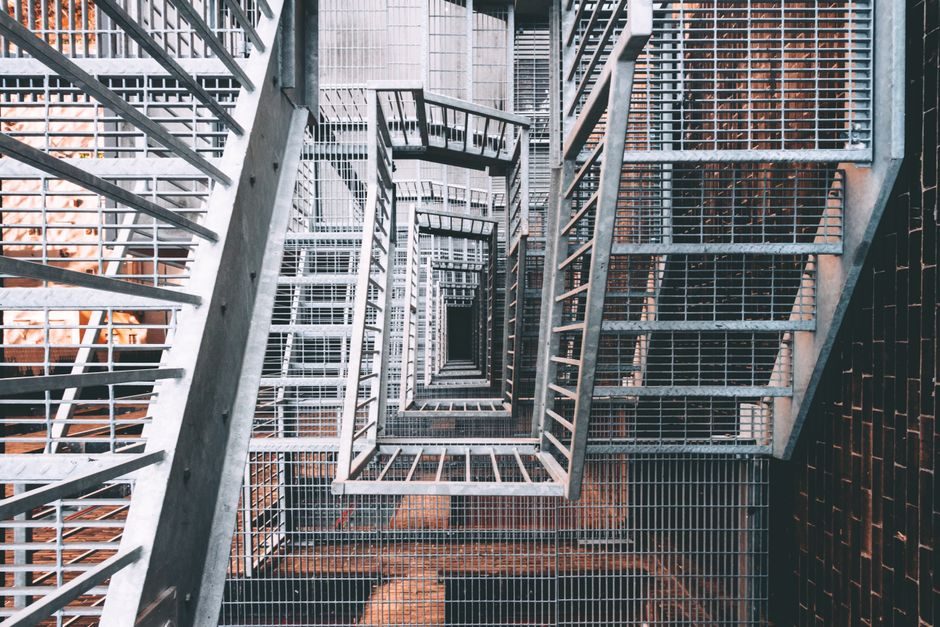
Steel mezzanine platforms on the Made-in-China 2026 sourcing index list from US$1.20 per kg to US$190.63 per square metre, with MOQ bands of 100 kg and 100 m² respectively defining the entry and project-scale price tiers [S2][S3].
Two structural families dominate the catalogue: a free-standing steel-structure mezzanine and a rack-supported mezzanine that bolts into existing pallet-racking columns [S1]. The two architectures carry different material yields, different lead times, and — critically for an estimator — different price-per-area multipliers, which is why the headline US$/m² figure alone misleads every budget meeting I have sat in.
Price Bands and Units in the 2026 Sourcing Index
The Made-in-China 2026 product-search results for "mezzanine floor system price" return steel floor platforms starting at US$40.00 per unit, with industrial warehouse rack custom systems running through to US$190.63 per square metre on 100 m² MOQ lots [S2]. A separate SP108 factory-tier listing from Tianjin Weiming Industrial & Trading shows a US$42.50–190.63/m² band on a 100 m² minimum, against a 24/7 online-guidance install model and fixed-mobility configuration [S3]. On the weight-denominated side, audited-supplier Welfor posts US$1.20/kg across five SKUs on a 100 kg MOQ with a 15-year warranty and CE/ISO certification paths [S3].
The price gap between US$1.20/kg and US$190.63/m² is not a contradiction — it is two different commercial units describing two different BOMs. The kg-rated SKUs are bare steel framing (columns, beams, bracing, hardware) sold as tonnage; the m²-rated SKUs bundle the framing with decking, handrails, stairs, and column-base plates. Estimators who compare the two on a single number will underbudget the deck-and-stair package by 3–5×, which is the single most common error I see in first-pass mezzanine RFQs.
Structural Type vs Rack-Supported: What You Are Actually Buying
Free-standing steel-structure mezzanines are self-supporting towers with H-section or square-tube columns, primary/secondary beams, and a 38–76 mm concrete-metal composite or 25–38 mm particle-board-on-steel-deck top, sized for 3.5–5.0 kN/m² live load per typical European warehouse spec [S1]. Rack-supported mezzanines use the existing pallet-rack upright frames as the vertical load path, with the rack ties acting as mezzanine beams; they save steel but require the rack to be rated for the combined pallet-plus-mezzanine load case.
For operations that already run a teardrop or drive-in rack layout, the rack-supported path typically cuts 20–30% off structural steel weight, but it locks the mezzanine geometry to the rack bay pattern. Greenfield builds with no existing rack almost always choose the free-standing steel-structure path because the column grid is independent of any future storage layout — and the price spread between a rack-supported unit and a free-standing one is the second decision an engineer should fix before sending the RFQ, not the third.
Selection Criteria Beyond the Headline Price
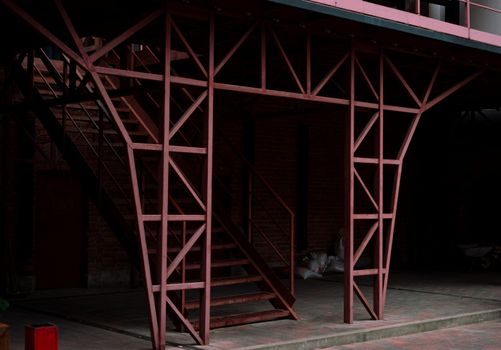
Three numbers decide the spec, and only one of them is the per-area quote. The first is live-load class: light-duty (2.5 kN/m²) for office over storage, medium-duty (3.5 kN/m²) for picking/carton, heavy-duty (5.0 kN/m²) for pallet-on-mezzanine — the higher class scales primary-beam section sizes roughly linearly with load, and steel weight scales with it, so jumping one class typically adds 30–45% to the kg-denominated line item [S1]. The second is clear height: free-standing mezzanines need a minimum 4.5 m floor-to-underside clearance to keep a 2.0 m mezzanine headroom plus 2.0 m under-clearance for forklift or aerial work platform traffic, and shorter buildings force shorter mezzanines or no mezzanine at all. The third is fire rating and egress: a 200+ m² mezzanine or one housing >10 occupants typically triggers a second means of escape and a fire-rated column/soffit, which adds 8–15% to the deck package and is non-negotiable under most national building codes.
Surface finish is the silent cost driver. Hot-dip galvanised columns and beams carry a roughly 15–25% premium over powder-coated mild steel but pay back in cold-storage or wash-down environments; for ambient dry warehouses, powder coat on zinc-rich primer is the cost-optimised default [S1][S3]. The Welfor 15-year warranty published on the Made-in-China card is tied to the finish system and the load class — read the warranty exclusions before equating "15-year" with "lifetime".
What a 2026 Mezzanine RFQ Should Contain
A buyer-spec that produces a clean quote must list: total floor area in m², clear height available in mm, live load in kN/m², column-grid preference or constraint, decking type (chequer plate, bar grating, particle board on steel deck, concrete composite), number of staircases, pallet-gate or lift-gate count, and the intended use class (office, picking, storage, equipment platform). Without these, a 2026 supplier quotation on a "mezzanine" is closer to a marketing number than a budget line — and most of the US$40-to-US$190 spread I see in the catalogue is driven by which of these items the supplier silently included or excluded [S2][S3].
MOQ economics matter more than the headline unit rate. Per S3, Made-in-China listings for warehouse steel mezzanine racking systems show a price of US$1.20/kg at a 100 kg minimum order quantity, with no further pricing tiers or volume discount details provided in the source. For a project in the 80–120 m² range, ordering as a single batch usually beats splitting into two purchase orders even if staging the install is less convenient — the freight-and-handling savings dwarf the storage cost of holding the second batch for two weeks.
Comparison: Free-Standing vs Rack-Supported vs Work-Platform Variants
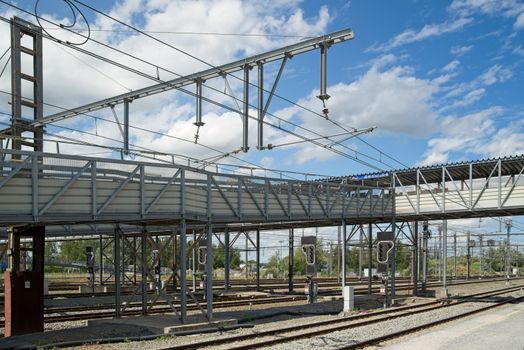
Three options line up against four decision criteria that a procurement engineer will actually score. Option A, free-standing steel-structure: cost baseline at the kg-denominated US$1.20/kg line for framing, layout-independent column grid, 3.5–5.0 kN/m² load class achievable, and a longer lead time of 25–35 days ex-China factory [S1][S3]. Option C, light-duty office or suspended platform variant: lowest absolute price, but limited to 2.5 kN/m² and not rated for pallet or equipment storage — pick this only when the upper level is genuinely a workspace, not a storage deck. A buyer who treats these three as the same product will end up with an overspec'd Option A on a job that Option C could carry, or worse, an Option B that the existing rack was never designed to support.
Lead Time, Freight and What the 2026 Numbers Miss
The catalogue prices are ex-works China; the delivered cost on a 40HQ container typically adds 12–18% for sea freight, 4–7% for destination port handling, and 6–10% for on-site erection labour depending on the country — these are industry-typical ranges that any project cost plan should book against, not the headline unit rate [S2]. Drawing approval, PE-stamp calculation packages for North American builds, and CE-marked structural calculations for European builds add another 5–10 working days to the critical path and are commonly excluded from "factory price" quotations.
Two trackable signals to watch over the rest of 2026: galvanised-steel price moves, which feed directly into the US$1.20/kg framing line, and container-freight index stability, which has been the swing factor on landed cost more often than the factory price itself. Engineers sourcing platform trolley and platform scale accessories for the same mezzanine build should batch those RFQs with the main structure to consolidate freight — most 2026 supplier RFQs I have reviewed ship the structure, the stairs, the gates, and the load-handling accessories on separate purchase orders by default, which is a freight-line leak that adds 4–6% to a typical mid-size mezzanine project.
For related coverage, see Workbench Price & Cost Guide 2026: Steel, Stainless and Refrigerated Bench Tiers.