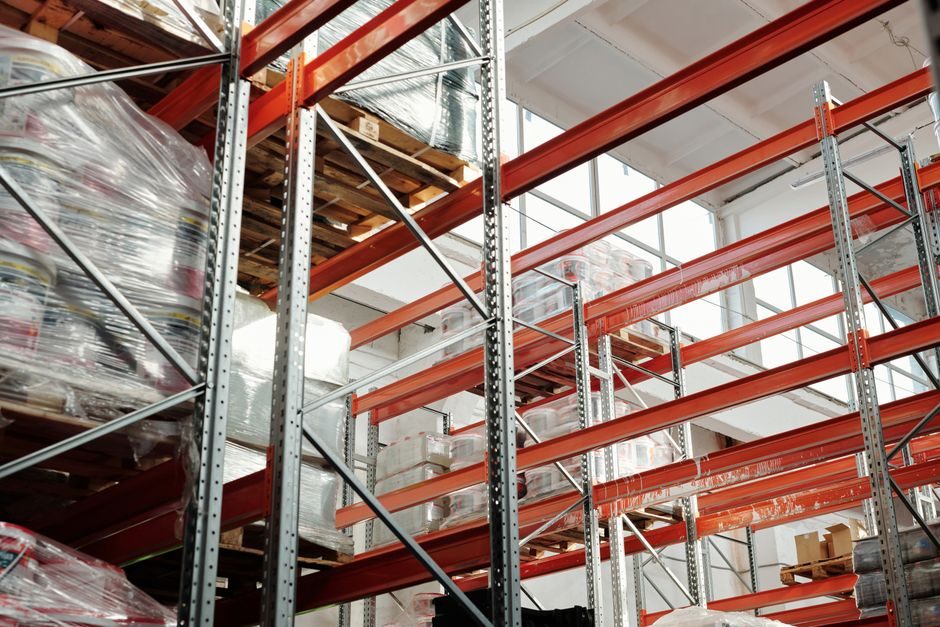
Across the 2026 sourcing landscape, Chinese manufacturers dominate mezzanine platform supply: Jiangsu NOVA Intelligent Logistics Equipment and Jiangsu JISE list rack-supported mezzanines from US$0.80/ton and US$1.00–1.50/kg respectively, while Shandong-based Huazhou Heavy Technology offers prefab mezzanine floors at US$30.00–80.00 per piece on 1-piece MOQ [S2][S4][S8].
The supplier field indexed on DirectIndustry holds 38 manufacturers and 78 products as of 2026-06-07, including Aceally (Xiamen), ACTIWORK, ARMAURIC-LUX-SA, ARTEX D.O.O, CBS srl, CORNIX, DIPLEX, and duwic — a mix of Asian volume producers and European specialist fabricators [S1].
What a Mezzanine Platform Actually Is — and What It Is Not
A mezzanine platform is a partial intermediate floor that doubles or triples usable warehouse area by exploiting clear height, and the structural family splits into three configurations: rack-supported (the racking itself carries the deck), free-standing structural-steel (columns + beams), and FRP-pultruded (corrosion-resistant) [S1][S6].
Free-standing structural variants are typically described as light steel structures with full bolt-together assembly, with floor surfaces formed from flat or pattern steel plate via cold-formed rolling — a definition that separates a true mezzanine from a simple raised storage deck [S6]. For comparison shopping, see the reference entry on platform structural systems and on transport dollies used during installation.
Decision Criteria: Load Class, Decking, and Compliance
Specifying a mezzanine starts with three quantifiable inputs: live load (typically 300–1,000 kg/m² for light office/assembly, higher for palletized storage), clear height available, and the required circulation envelope for manual or powered pallet trucks [S1].
Standard compliance is the second filter: European-supplied FRP/GRP systems are designed to EN ISO 14122 (permanent means of access to machinery and industrial installations) and are paired with ISO 9001 / ISO 14001 quality and environmental certifications; union-type rack-supported systems commonly cap at 3 floors and are dimensioned to customer specification [S1]. Buyers weighing similar turnkey industrial line components may also reference the aerial work platform family for elevated-access decision logic.
Price Bands and MOQ Reality in the 2026 China Market
Made-in-China listings for 2026 show wide price dispersion because mezzanines are project-engineered: rack-supported systems from Jiangsu NOVA start at US$0.80 with 1-ton MOQ; Jiangsu JISE posts US$1.00–1.50/kg with 1-kg MOQ; Huazhou Heavy's prefab capacity mezzanine floor lists US$30.00–80.00 per piece (1-piece MOQ) [S2][S4][S8]. Powder-coated industrial mezzanine floor listings cluster in the US$0.60–1.50 per kg range with adjustable-height options [S9].
A second tier of 2026 wholesale listings for full mezzanine floor systems shows a different pricing floor — industrial rack-custom steel floor platforms at approximately US$40.00 — reflecting fully engineered assemblies rather than component steel [S7]. The comparison below maps the four most common quote shapes a buyer will receive in 2026:
Jiangsu NOVA rack-supported: US$0.80/ton, 1-ton MOQ, beam-supported deck [S2]. Jiangsu JISE rack-supported: US$1.00–1.50/kg, 1-kg MOQ, warehouse storage class [S2]. Huazhou Heavy prefab: US$30.00–80.00/piece, 1-piece MOQ, high load-bearing adjustable [S8]. Industrial floor-system tier: US$40.00 base, steel platform custom-engineered [S7].
Supplier Geography and Certification Signal
Jiangsu province is the densest Chinese cluster (NOVA, JISE), with Shandong (Huazhou Heavy, Qingdao Longxinweiye Steel Works) as a second pole; Guangdong Lijin Storage Equipment appears in longer-tail Alibaba listings from earlier catalog cycles, with square-meter pricing near US$55–75 and 50 m² MOQ [S3].
Hi-Sea Marine (China) publishes mezzanine platform product data framing the structure as a light-steel full-combination system with cold-formed flat or pattern steel plate decking [S6]. European specialist M.M. (featured in DirectIndustry's 2026 industrial-mezzanine catalogue) supplies FRP pultruded-profile systems with stainless-steel accessories against EN ISO 14122 [S1].
Where Mezzanines Fail in Service — and What That Tells Buyers
Multi-tier configurations that allow manual or powered pallet-truck circulation are sensitive to clear height, deck deflection, and column grid; specifying for "up to 3 floors" with rack support (a common Nanjing Fuyuan design) trades flexibility for tighter tolerance on base-plate leveling [S1].
Vidmar's MaxiMezz/MiniMezz modular line markets reconfigurability even when fully loaded, with a lifetime guarantee — useful for sites that re-slot partitions quarterly [S1]. Buyers comparing live-load ratings should not confuse mezzanine capacity (kg/m²) with rack-supported deck capacity (kg per beam level); the two ratings are independent and the lower one governs.
Selection Workflow for a 2026 Procurement Cycle
Buyers working in 2026 should anchor the RFQ on four data points: clear height, target live-load kg/m², deck type (chequer plate, pattern plate, particle board, grating), and required certification set (EN ISO 14122 for European sites, ISO 9001/14001 as a baseline factory audit signal) [S1][S6]. For European chemical or coastal sites, FRP pultruded decks are the corrosion-resistant alternative; for high-cycle distribution centres, rack-supported steel with 3-floor capability is the default [S1].
Two trackable signals for the next quarter: DirectIndustry's 2026-06 industrial-mezzanine index sitting at 38 manufacturers/78 products, and the persistent spread between component-tonne pricing (~US$0.80–1.50) and fully assembled per-piece pricing (~US$30–80) on Made-in-China — a gap that widens further when EN ISO 14122 documentation is bundled in [S1][S2][S8]. Related sourcing context for engineered industrial assemblies sits in the China injection-molded-part supplier map and the urethane casting supplier spec map, which use a similar Jiangsu/Shandong/Guangdong cluster lens.