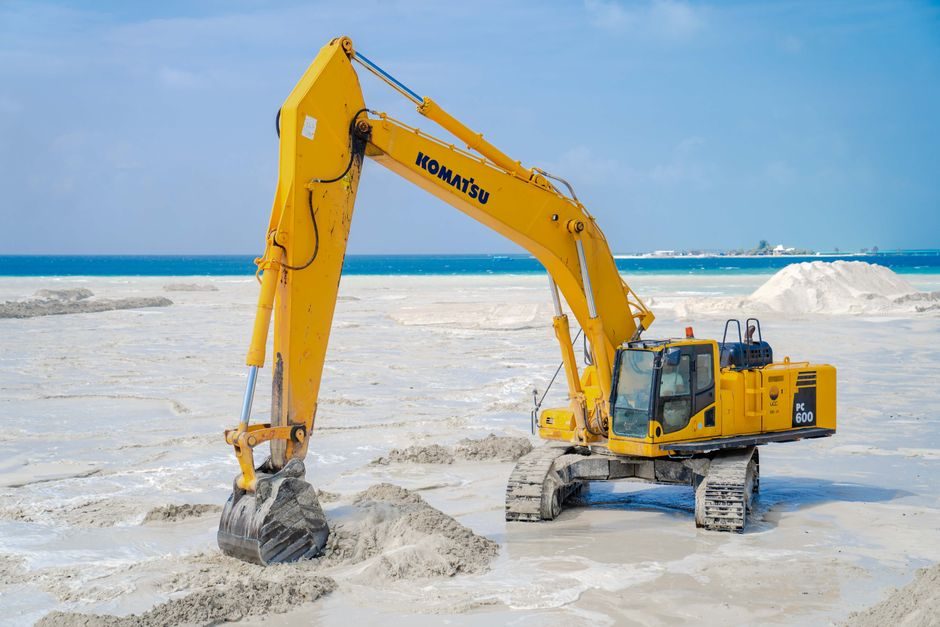
For 2026 fleet buyers, the correct mini excavator is dictated first by operating weight and digging depth, then by emissions tier and undercarriage. The Cat 310 sits at 9,601–10,182 kg operating weight with 5,211 mm digging depth on a Tier 4 Final / Stage V C3.3B diesel [S1]; the Kaiser S12 Allroad pushes the segment to 14,200 kg with 110–140 kW engine options and a 2.45 m wading depth on a wheeled walking chassis [S2].
Caterpillar's current mini-excavator line-up on its official products page includes 23 distinct mini-excavator model pages plus 7 small, 8 medium, and 7 large excavator model pages, giving buyers a 23-model matrix to filter by tonnage and configuration [S3]. Buyers sourcing from China face a much wider catalogue; the Made-in-China mini-excavator portal paginates into multiple listing pages of OEM and trading-company SKUs at varied price points [S4].
Operating Weight Classes and What They Unlock on Site
Three weight bands dominate procurement: 1–2 t micro units for indoor demolition and landscaping, 3–6 t compact units for utility trenching, and 7–10 t mainstream units for residential foundation work. Buyers building a 2026 shortlist can start from the excavator weight and class overview to map operating weight to transport envelope and jobsite access. The Cat 300.9D anchors the sub-1 t micro end of the Cat catalogue and is typically trailered behind a pickup rather than transported on a lowboy [S5]. At the opposite end, the Cat 310 covers the 9.6–10.2 t window with a maximum digging depth of 5,211 mm and engine power of 51.8 kW (70.43 hp) [S1]. Buyers in the 14 t band are no longer buying a "mini" in the strict sense; the Kaiser S12 Allroad at 14,200 kg operating weight and 110–140 kW engine power is closer to a compact wheeled excavator and is sold for road-rail and municipality applications requiring street-legal travel [S2].
The 3–6 t band is where most rental fleets concentrate because the machines fit on a standard tag-along trailer below 3,500 kg axle limits only when stripped of counterweight, and they offer 3–4 m dig depths suitable for utility and drainage work. Operating weight directly governs transport logistics, stability on soft ground, and lifting capacity over the side, so a 10 t class machine such as the Cat 310 at 10,182 kg is the practical ceiling for trailer-mounted deployment on jobsites without lowboy access [S1].
Undercarriage: Crawler vs Wheeled Walking vs Standard Wheeled
Crawler undercarriages dominate the 1–10 t segment because steel or rubber tracks deliver lower ground pressure and better trench-wall stability. The Cat 310 uses a crawler undercarriage and is rated for construction applications where flotation and tractive effort matter more than travel speed [S1]. Wheeled undercarriages enter the picture above 10 t where on-road travel between jobs becomes a procurement factor. The Kaiser S12 Allroad uses a wheeled chassis with hydraulic walking outriggers that lift the machine off the ground, a configuration that increases wading depth to 2.45 m and lets the unit self-load on soft terrain without a lowboy [S2].
Track versus wheel choice cascades into several other specs: tracked mini-excavators typically run 2–6 km/h travel, while wheeled machines like the S12 reach 10 km/h (6.2 mph) for short road moves [S2]. Buyers specifying steel tracks must also plan for transport weight and pavement damage clauses, while rubber-track and wheeled options open up urban and finished-surface work. Within the Cat mini line, multiple variants exist on the same base chassis (e.g., 308 CR, 308 CR VAB, 309 CR, 309 CR VAB, 307.5) where CR denotes compact radius and VAB denotes variable-angle boom configurations for tight-tail-swing urban work [S1].
Engine Emissions Tier and Hydraulic Architecture
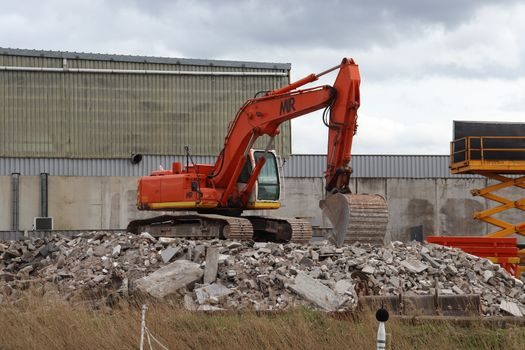
Tier 4 Final paired with EU Stage V is the dominant emissions package on 2024–2026 model-year machines sold in regulated markets. The Cat 310 uses the Cat C3.3B diesel — electronic, turbocharged, with Diesel Particulate Filter (DPF) — and meets both U.S. EPA Tier 4 Final and EU Stage V in a single calibration [S1]. Buyers in non-regulated markets (parts of Africa, South America, Southeast Asia) can still source Tier 3 machines; the Kaiser S10 midi boom is listed as Tier 3 in the Kaiser catalogue, reflecting the export split between regulated and unregulated markets [S2].
Hydraulic architecture is the second engine-adjacent spec that drives productivity. The Cat 310 uses load-sensing / flow-sharing hydraulics with Power On Demand, hydraulic temperature monitoring, and HYDO Advanced hydraulic oil, and pairs the pump to a "Smart Tech Electronic Pump" with a certified accumulator [S1]. The Kaiser S12 Allroad uses a different architectural approach branded "ELIS" (Electronic Load-Independent System) combined with KAISERtronic electronic management, an infinitely variable hydrostatic all-wheel drive, and hydraulically adjustable terrain pads for ground-adaptive stability [S2]. Buyers comparing the two should evaluate which control philosophy their operators are already trained on; the Cat logic is centred on a single electronic pump with load sensing, while the Kaiser logic is a load-independent flow-sharing system with separate hydrostatic drive management.
Digging Depth, Lift Capacity and Bucket Geometry
Vertical and horizontal reach specs are the third filter. The Cat 310 reaches 5,211 mm (205.157 in) maximum digging depth, which covers residential basement digs, utility trenches to 5 m, and most drainage runs in a single pass without benching [S1]. Reach specs below 3 m generally limit the machine to landscaping, shallow irrigation, and pool excavation, while units above 5 m begin to compete with reduced-size conventional excavators on foundation work.
Lift capacity over the side is the spec most often missed by first-time buyers. The Kaiser S12 lists three lift-capacity ratings — 4,000 kg, 6,600 kg, and 9,500 kg — corresponding to different reach and height configurations, with the 9,500 kg (20,943.9 lb) figure representing the maximum load at optimal load point [S2]. Buyers should match lift capacity to the heaviest planned pick (palletised pipe, precast manhole rings, attachment tools) and add 25–30% margin for dynamic loads and uneven ground. The same 9,500 kg figure also indicates the machine's ability to handle larger hydraulic attachments such as sheet pile drivers, vibratory compactors, and tilt buckets without derating.
Site Constraints: Tail Swing, Width and Transport
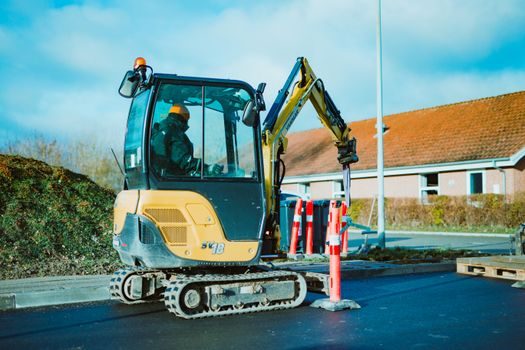
Tail-swing radius is the spec that determines whether a machine can work in a single lane of urban traffic. Compact-radius (CR) variants such as the Cat 308 CR and 309 CR swing the counterweight within the track width, allowing work against a building wall or in a 2 m wide alley without a lane closure [S1]. Standard-tail machines in the same weight class need 1.5–2 m of rear clearance and are typically specified on open residential lots and rural jobsites. Variable-angle boom (VAB) variants add a knuckle between the boom and stick to allow digging parallel to the tracks and to fold the boom against the machine for transport.
Transport envelope governs trailer selection. A 10 t Cat 310 with dozer blade and standard counterweight will exceed 3,500 kg axle-group limits on a tag-along trailer and is commonly hauled on a 12 t rated lowboy [S1]. For a complete reference of how crawler and wheeled undercarriage designs interact with transport logistics, buyers can review the excavator undercarriage and transport overview when matching machine weight to their existing trailer fleet. Micro units such as the Cat 300.9D are specifically designed to fit through 1 m gates and weigh under 1 t so they can be trailered behind a mid-size SUV [S5].
Attachments, Hydraulics and Multifunction Use
Modern mini excavators are sold as carriers for an attachment ecosystem, and auxiliary hydraulic flow determines which attachments will work. The Cat 310 supports multifunction operation with electronically controlled operator settings for lift, swing, travel and multifunction improvements, advertised as "up to 20% more performance" versus prior generations [S1]. Buyers specifying attachments should request the auxiliary circuit specs (single-direction, bidirectional, or proportional) at the order stage because retrofit kits for proportional joysticks on earlier chassis can run 8–15% of machine price.
Common 2026 attachment options across this weight class include hydraulic thumbs, tilt buckets, augers, breakers, vibratory plate compactors, and tilt-rotator units. Hydraulic thumb matching to bucket pin geometry is the most-failed detail on cross-brand attachments; the bucket pin diameter and spacing on a Cat 308/309/310 series are not interchangeable with a Bobcat or Kubota mini of the same weight class. Buyers sourcing attachments from third-party Chinese OEM portals should pin-match against the carrier spec sheet before ordering [S4].
Resale, Service Intervals and Total Cost of Ownership
Total ownership cost on a mini excavator is dominated by fuel, scheduled service intervals, and residual value. The Cat 310 is advertised as delivering "up to 10% lower total ownership costs" with improved fuel efficiency and longer service intervals versus the prior generation, supported by features such as Extended Life Coolant rated to –37 °C (–35 °F), a radial-seal double-element air filter, automatic engine idle, automatic engine shutdown, automatic two-speed travel, automatic swing brake, and an ecology drain for hydraulic-oil changes [S1]. Buyers evaluating these claims should request the OEM-published service-interval hour ratings (e.g., 500 h hydraulic oil, 1,000 h engine oil) and cross-check against local dealer labour rates.
Residual value correlates strongly with emissions tier, brand recognition, and telematics fitment. Tier 4 Final / Stage V machines retain higher resale value in regulated markets because they remain compliant under future jobsite rules, while Tier 3 units devalue faster outside of unregulated export markets [S2]. VisionLink and similar OEM telematics are now standard on new Cat mini-excavators and feed utilisation, fuel burn, and service-due data back to fleet managers [S3]. Buyers with multi-unit fleets should treat telematics as a baseline procurement requirement rather than an optional add-on for 2026 deliveries.
Two signals worth tracking over the next 6–12 months: first, the rate at which Chinese OEM mini-excavator listings on Made-in-China compress pricing on the 1–6 t segment, which historically drives the Tier 3 export market and pressures used residuals globally [S4]; second, the rollout of Stage VI-equivalent emissions packages on EU-bound units above 19 kW, which will push another redesign cycle for the 3–6 t segment currently dominated by Tier 4 Final / Stage V hardware such as the C3.3B in the Cat 310 [S1]. For procurement teams updating specifications on 2026 deliveries, the excavator platform index is a useful starting point for cross-brand and cross-weight comparisons before locking a bid.
For component-level specifications, see linear guide, and crossed roller guide.
For related coverage, see Collaborative Robot Manufacturing Process: Cell Stack, Safety Specs and Line Choices.