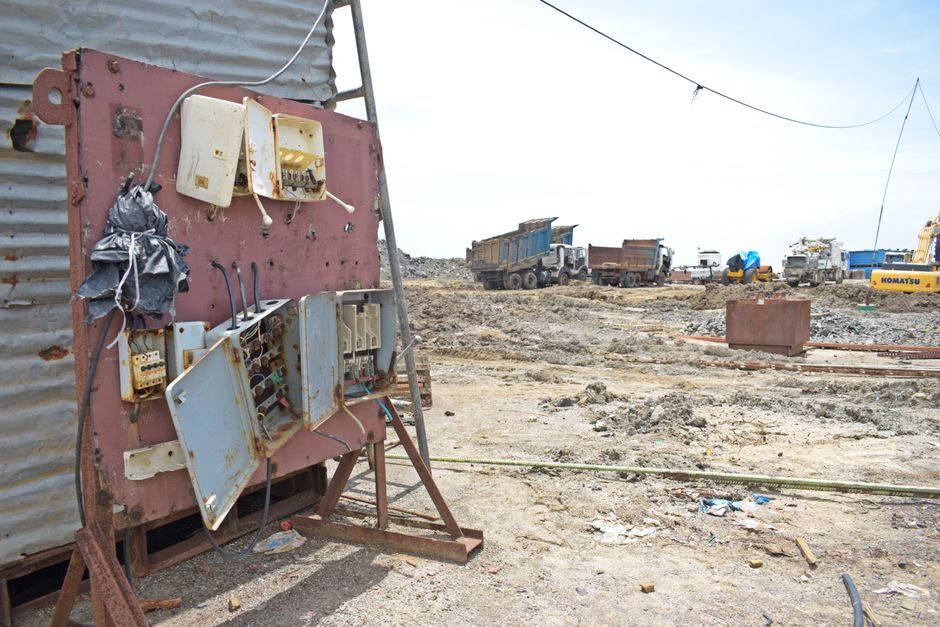
An underground articulated mining dump truck in the 4,200 kg payload / 50 kW motor class — represented by ARAMINE's T500D with a 4x4 articulated chassis and oscillating axle — is engineered for narrow-vein drifts where turning radius and tramming distance dominate productivity math [S1].
For surface operations, the same machine class is irrelevant: a rigid-frame dump truck in the 100-ton-plus payload range is a different installation discipline, with different ramp-grade, tire, and brake-cooling acceptance values. The rest of this guide separates the two paths and lists what to verify on day one.
Match Truck Type to Mining Method First
Selection starts with the haulage loop, not the brochure. Underground narrow-vein drifting favours compact articulated dumpers with payloads from roughly 4 t up to about 25 t, four-wheel drive, and oscillating axles that keep all four tyres on the ground over uneven footwall — ARAMINE quotes a 4x productivity gain at 700 m tramming for its T500D versus a comparable L130D/E miniLoader baseline [S1].
Open-pit hard-rock and coal operations run rigid-frame haul trucks in the 90–360 t class with mechanical or AC electric drive, where installation centers on trolley-assist compatibility, tyre-inflation pressure, and retarder-brake calibration. Springer Link's reference taxonomy lists rigid haul trucks, articulated dump trucks, and underground LHDs as the three principal families to distinguish at spec time [S4].
Pre-Installation Site Survey and Foundation
For an underground unit, the survey confirms drift cross-section (typical narrow-vein drives are 3.0–4.5 m wide), gradient (most OEMs cap recommended sustained grade at 15–18% for empty-loaded direction change), ventilation clearance for the diesel rated power, and refuelling bay containment. [S1]
For a surface rigid truck, the survey is civil: haul-road bearing capacity (target CBR ≥ 8% for 100-t class), turning-radius aprons sized to the truck's outer radius plus 1.5 m clearance, and run-up / run-down berms. A V-process or batching plant sitting on the same site should be commissioned before truck arrival — see the Concrete Batching Plant Installation commissioning map for the parallel acceptance sequence.
Mechanical Assembly and Driveline Alignment
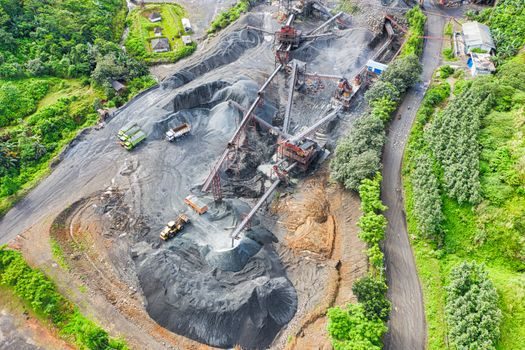
Articulated units arrive mostly assembled; on-site work is articulation-pin torque verification, hydraulic-steering hose routing, and oscillation-cylinder purge. ARAMINE specifies a heavy-duty articulated frame with oscillating axle and a four-wheel-drive driveline derived from its L150D loader power frame — the same components the field crew is already trained on [S1].
Rigid haul trucks require engine-to-transmission alignment within OEM-specified shim tolerances (commonly 0.05–0.15 mm indicator reading at the coupling flange), final-drive oil priming to the prescribed splash level, and torque on wheel-motor mounting bolts to 80% of spec followed by a 100% re-torque after the first 50 operating hours. Service-truck platforms — a parallel product line from suppliers like Fox Equipment — share fastener-grade and hydraulic-hose routing conventions worth aligning for fleet standardisation [S3].
Electrical, Hydraulic, and Telematics Pre-Commissioning
Acceptance testing on a 50 kW-class articulated unit covers battery isolation voltage (24 V system nominal, with cut-out set inside the OEM band, typically 22.8–23.5 V), hydraulic-pressure relief settings on the tipping and steering circuits, and telematics handshake (machine ID, payload-sensor zero, GPS fix). Hydraulic-system verification must confirm the cold-start viscosity curve against ambient mine temperature — most suppliers derate above 3,500 m altitude on naturally aspirated engines [S1].
For larger rigid trucks with AC electric drive, the pre-commissioning list extends to traction-motor insulation resistance (commonly ≥ 500 MΩ at 1,000 V), retarder-grid fan rotation, and trolley-pantograph contact-wire height. OEMs such as those catalogued on mining-dumptruck.com publish 265 kW-class engine packages for ancillary lifting equipment on the same site, which is a useful cross-reference for matching service-truck electrical architectures [S5].
Load, Brake, and Emission Acceptance
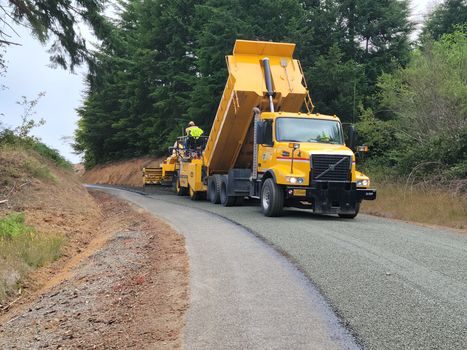
For an underground T500D-class dumper, the acceptance run is a 4x4 articulated load-and-haul cycle at rated payload (4,200 kg), three consecutive loaded climbs at gradient, parking-brake hold test on the OEM-declared grade (typically ≥ 20% static), and a 360° turning-radius check inside the surveyed drift profile. The unit must demonstrate the tramming productivity curve the OEM claims — for ARAMINE's T500D that is the three-times-payload-per-cycle figure versus a comparable L130D/E [S1].
Surface rigid trucks require retarder-brake temperature cycling, service-brake fade testing at GVW on the designated downgrade (commonly 8–10% continuous), and emissions verification to the jurisdiction's tier (EU Stage V for diesel particulate mass and NOx, US EPA Tier 4 Final for North American fleets, China NS-IV for domestic operations). When the mine plans a future trolley-assist retrofit, the truck's electrical architecture should be specified trolley-ready at the procurement stage rather than retrofitted later.
Operator Handover, Spares, and When to Escalate
Handover is not a box-tick: it must include OEM-certified operator training on articulated steering behaviour, payload-distribution on the 4x4 frame, and the dump-body raise/lower interlock. The supplier catalogue lists underground loaders, dump trucks, raise borers, scalers, concrete mixer trucks, jumbos, and blast-hole drills as a typical bundled fleet for narrow-vein mines — operator cross-training across this group is where mines recover the most productivity [S3].
Spares to hold on day one: articulation-pin bushes, hydraulic hoses for the steering and tipping rams, a wheel-motor seal kit for rigid trucks, and a payload-sensor calibration weight. Do not attempt in-frame engine repair before 1,000 hours unless the OEM explicitly authorises it — warranty and emission-tier certification both rely on the prescribed service intervals. Escalate to the OEM when the articulation-pin bore ovality exceeds 0.20 mm or when retarder-brake temperature drift exceeds ±15 °C between identical cycles.
For new procurement planning, track 265 kW engine-package availability and trolley-ready electric-drive options as the two leading 2026 specification signals out of Chinese OEM catalogues [S5], and cross-reference the Concrete Batching Plant Types spec map when the site also runs a batching operation that interfaces with haul-truck fuel logistics.
Spec-level background on the components involved: linear guide.