Concrete batching plants are classified first by mobility — stationary, mobile, or compact — and second by mixer architecture (twin-shaft vs single-shaft), with current 2026 production lines covering 60 m³/h to 180 m³/h nameplate output [S1][S2][S4].
The mix itself is invariant: aggregates (sand, gravel, crushed stone), cement, water, and concrete admixtures dosed by recipe and discharged to transit mixers, but the plant envelope around that mix changes dramatically with site duration and transport constraints [S3].
Three Mobility Classes Defined by 2026 Catalog Data
The PROMAX C60-SNG LINE stationary compact unit ships in two 40 ft open-top containers with full electrical pre-commissioning, and posts a 60 m³/h capacity — the same nameplate figure Ammann publishes for the CBT 60 SL ELBA mobile variant [S1][S2]. Output parity between a stationary and a mobile plant is now a deliberate design target, not a compromise, and it forces buyers to weigh container count, foundation work, and aggregate bin volume rather than throughput when comparing the two [S1][S2].
Stationary plants in the same catalog tier reach 135 m³/h and are positioned for long-duration sites with continuous ready-mix demand, while mobile plants cap at roughly 100 m³/h and trade peak output for relocation speed and zero-foundation installation on a 250 kN/m² soil compaction [S2][S3]. Compact plants sit between the two on footprint and below both on transport cost, since the entire plant fits inside standard ISO containers and skips dedicated civil works [S1][S3].
Mixer Architecture: Twin-Shaft vs Single-Shaft Output
Twin-shaft mixers dominate the higher-output SKUs: the HZS60 pairs a JS1000 mixer at 45–60 m³/h, the HZS75 uses a JS1500 at 60–75 m³/h, and the HZS180 climbs to 150–180 m³/h on a JS3000 — a doubling of nameplate output roughly every mixer step up [S4]. The JS prefix denotes a twin-shaft compulsory mixer, and its litre rating (1000 L, 1500 L, 3000 L) tracks almost linearly with hourly throughput on the published curves [S4].
Single-shaft mixers appear in mobile and compact plants where the priority is folding mechanisms and transport envelope over raw throughput: the Ammann CBT 60 SL ELBA uses a CEM 1000 S single-shaft mixer with 1000 L volume and a 30 m² / 50 m³ active aggregate bin, hitting the same 60 m³/h ceiling as the stationary C60-SNG with its twin-shaft [S1][S2]. For process engineers specifying concrete vibrator and discharge hardware downstream, mixer shaft count matters because twin-shaft units discharge faster (4.1 m discharge height is standard on the HZS60/75) and tolerate harsher low-slump mixes than single-shaft paddle units [S4][S5].
Throughput Tiers and Power Footprint
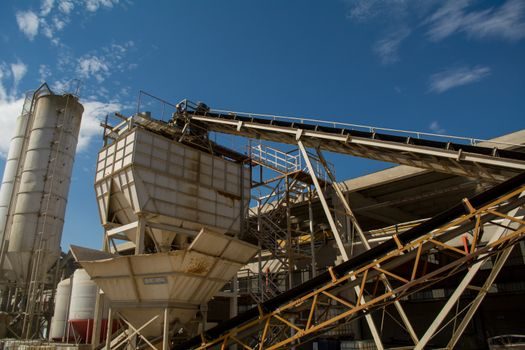
The HZS series published power draws step from 130 kW (HZS60) to 165 kW (HZS75) and beyond, while the PROMAX compact C60-SNG LINE prioritises pre-assembled electrical systems to cut on-site commissioning hours — a different optimisation axis, not a lower power budget [S1][S4]. Aggregate handling also varies: the HZS60/75 take 3 or 3–4 aggregate types at up to 80 mm max size, with belt conveyors rated 200 t/h, so a 60 m³/h concrete line demands roughly 3.3× the aggregate feed rate by mass to absorb waste and recycle [S4].
For higher-output plants, the HZS180 reaches 150–180 m³/h on a JS3000 twin-shaft mixer and absorbs 3 m³ per batch cycle, putting it firmly in the ready-mix supplier tier rather than the job-site contractor tier [S4]. A useful rule when sizing against truck-mixer fleet capacity: nameplate concrete output should sit at 1.3–1.5× the truck-mixer fleet's hourly swallow rate to absorb truck queuing without starving the pour — a constraint covered in detail on the truck-mounted concrete pump selection map [S4].
Selection Criteria: Duration, Relocations, and Transport Envelope
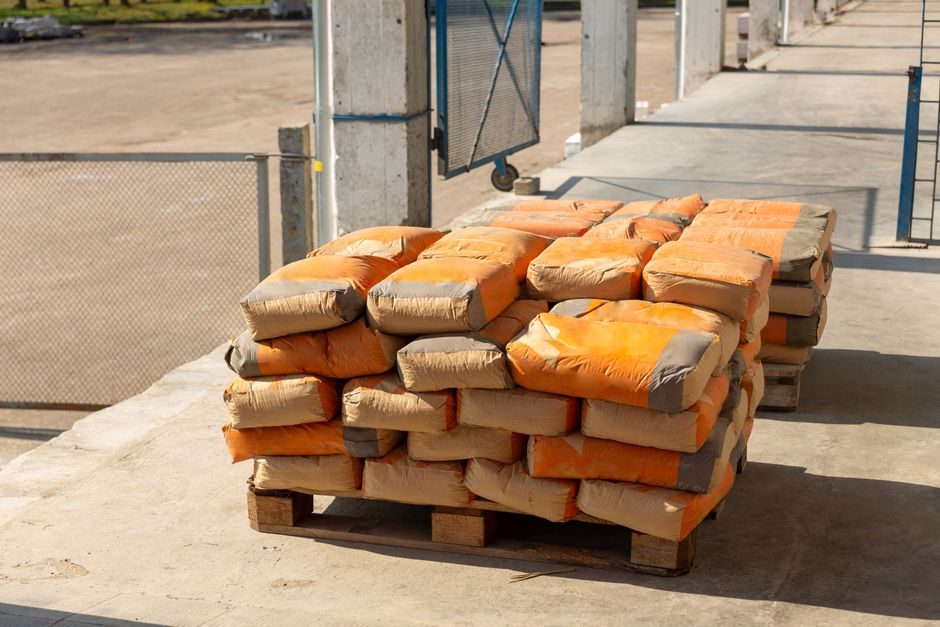
Stationary plants win on projects of 12 months or longer where the 135 m³/h ceiling and dedicated aggregate stockpiles pay back civil-works cost; mobile plants win on 3–12 month relocatable sites where zero-foundation installation on 250 kN/m² compaction and a 100 m³/h ceiling match site logistics; compact plants win on 0–6 month or remote sites where container-only shipping controls landed cost [S1][S2][S3]. PROMAX markets the C60-SNG LINE explicitly on its 2 × 40 ft container envelope and pre-installed electrical harness, which is the contractual definition of a "plug-and-play" compact plant and the single biggest variable in cross-border shipping quotes [S1].
Ammann's CBT 60 SL ELBA markets the same transport story from the mobile side: two open-top containers per move, no foundation, and a folding linear bin that holds 2–4 aggregate types — buyers comparing the two should note the CBT's 30 m² active bin stock versus a typical compact plant's smaller skip, since aggregate bin volume is what governs whether you batch continuously or wait on loader cycles [S1][S2].
Component Stack and Control System Specifics
Across both stationary and mobile 2026 lines, the same component stack appears: aggregate feeding system (belt or skip), cement silo(s), water and admixture scales, a PLC control cabin, and either a twin-shaft JS-series or single-shaft CEM-series mixer [S1][S2][S3][S4]. The HZS150 published spec layers in Italy-sourced SICOMA mixers and a Germany-sourced SIEMENS PLC with a 4000 mm discharge height, plus 12-month post-erection warranty — component-level sourcing that drives the price gap between an entry HZS60 and a flagship HZS150/180 [S7].
For buyers evaluating concrete fiber dosing and concrete curing compound integration, the PLC platform matters more than the mixer name — a SIEMENS S7-class controller can integrate fibre and admixture scales with recipe management, while entry-level PLCs often treat admixture as a single manual trim pot [S7]. Aggregate bin count is the other silent spec: 3-bin versus 4-bin configurations change the maximum number of aggregate fractions you can keep live, which matters on projects blending manufactured sand with natural sand or recycled aggregate [S4].
Who Each Class Is For — and Who It Is Not
Stationary plants are for ready-mix suppliers, precast yards, and infrastructure megaprojects where continuous operation amortises civil works; they are not for contractors who need to redeploy the asset within 6 months because mobilisation cost dominates [S3]. Mobile plants are for road, bridge, and remote energy projects where zero-foundation installation on 250 kN/m² compaction and containerised relocation beat the throughput penalty; they are not for urban high-rise cores where a 100 m³/h ceiling starves the placement rate [S2][S3]. Compact plants are for tight urban sites, island projects, and short-cycle builds where container shipping and pre-commissioned electrical work compress the schedule; they are not for high-output continuous pours where the 60 m³/h ceiling and smaller aggregate bin become the bottleneck [S1][S3].
A practical heuristic from the 2026 catalog data: if the project demands under 200 m³/day, a compact 60 m³/h plant running 4–5 hours covers it; 200–800 m³/day needs a mobile 60–100 m³/h plant running 6–8 hours; above 800 m³/day the stationary 135 m³/h class is the entry point, and twin-shaft JS3000-class plants at 150–180 m³/h take over [S1][S2][S3][S4]. These brackets assume a single-plant deployment; multi-plant sites with parallel mixers scale linearly and are common in metro ready-mix hubs [S4].
Limitations, Failure Modes, and Sourcing Watch-Points

The single most common spec miss on compact plants is aggregate bin live volume: a "compact" label says nothing about how many tonnes of stone you can keep under the bin, and a 30 m³ active stock on the Ammann CBT 60 SL ELBA is roughly half what a comparable stationary plant holds [S2]. The second is cement silo integration — both PROMAX and Ammann publish cement silos as optional on mobile/compact lines, and a buyer who skips this option ends up with bagged cement handling that destroys the labour-saving case [S1][S2]. The third is power: a 130 kW HZS60 needs a 150–180 kVA genset on remote sites, and a 1100 kW twin-genset package is a separate line item that the spec sheet does not price in [S4][S6].
For projects considering a concrete groove cutter workflow on the cured slab, the discharge height parameter (4.1 m on the HZS60/75, 4.0 m / 4000 mm on the HZS150) governs whether you can discharge directly into truck mixers or need a transfer hopper — a small number that controls whether the truck fleet can cycle at the plant's nameplate output [S4][S7]. Buyers sourcing used or refurbished plants should weigh residual mixer liner life (twin-shaft JS liners typically run 8,000–12,000 hours before replacement) against the used-price discount, and vibration meter price benchmarking is the right reference for tracking mixer health on a running plant [S6].
The next 90 days will tell whether the 2026 catalog holds: watch Intermat 2027 (21–24 April 2027, Paris) for PROMAX and Ammann next-generation compact and mobile line announcements, and watch for new HZS-series SKU launches from the Chinese OEM cluster that currently publishes the HZS60/75/150/180 ladder — a new rung above 180 m³/h or a hydrogen/electric-powered compact would both shift the 2027 selection map [S1].