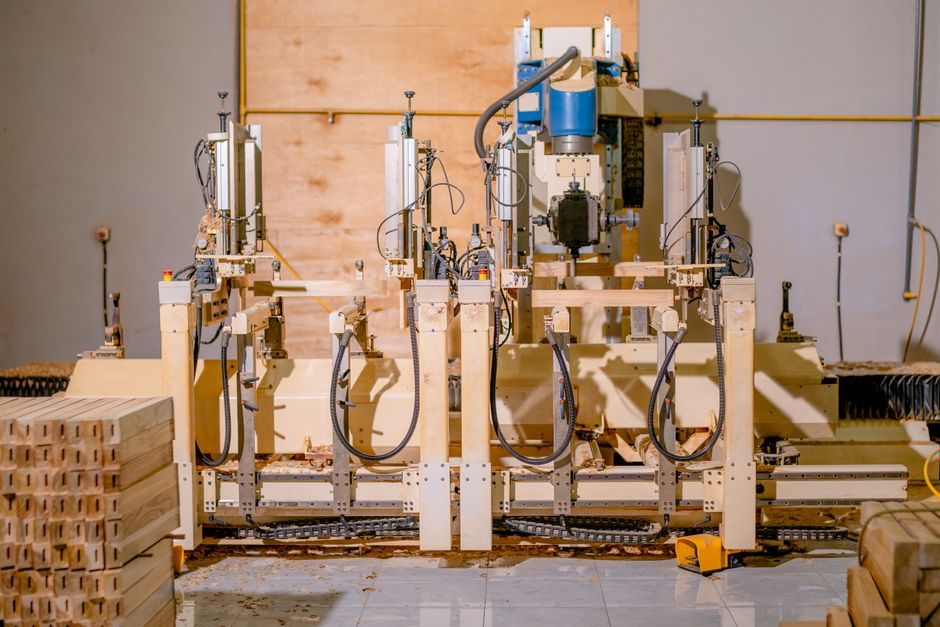
As of 2026-06-27, mining-equipment smart manufacturing sits at the intersection of mechatronics, machine vision, embedded controls, and AI-driven fleet telemetry, with Sandvik's Rock Technology unit publishing an automation and software-systems portfolio covering drills, loaders, and surface equipment fleets.
Rockwell Automation, another Tier-1 controls vendor serving mining OEMs, maintains a public product/selection framework covering NO-language regional sites and a global resource library used by integrators specifying Logix-based control for crushers, conveyors, and hoists [S6]. Parallel peer-reviewed research compiled by Scientific.Net frames the same factory floor: materials applications, mechatronics, industrial robotics, machine vision, sensor technology, micro-electronic controls, fluid transmission, embedded systems, and MEMS/NEMS equipment — all listed as core subject areas of the 2026 peer-reviewed volume on equipment manufacturing technology and automation [S1].
Definition & Scope: What "Smart Mining Equipment" Actually Means
The 2026 manufacturing technology taxonomy places mining-equipment automation inside a stack of seven peer-reviewed subject clusters: materials/applications, mechatronics, industrial robotics, machine vision, sensor technology, micro-electronic control, transmission/fluid control, mechanical control, embedded systems, and NEMS/MEMS equipment [S1]. Concretely that means a modern underground drill or mining dump truck is no longer specified as a mechanical asset alone — it ships with embedded controllers, vision-based fragmentation sensors, and a digital-twin interface to the surface operations centre.
Sandvik's equipment portfolio confirms the same boundary: drilling for development, drilling for production blasting, rock support installation, and material handling are each paired with automation software that "helps you monitor your machines, giving you a full overview of your fleet". Applied SmartFactory, a systems integrator active in 2026, summarises the buy-side value proposition as three measurable outcomes — yield, operational-risk reduction, and productivity — all delivered through "AI-powered automation and integrated" production lines [S2].
Selection Criteria for Automated Mining Equipment
Specifying a smart mining machine in 2026 runs through six decision gates: (1) duty cycle and ground-pressure class; (2) embedded controller and protocol stack (typically EtherNet/IP or PROFINET for greenfield, with legacy PROFIBUS still present on brownfield); (3) machine-vision package, often built around a smart camera — fragmentation, navigation, or collision-avoidance; (4) sensor complement (load, pressure, position, gas); (5) connectivity back to the fleet-management platform; and (6) remanufacturing / rebuild path for end-of-life assets [S1][S6].
Rockwell Automation's public product-management and configuration/selection resources expose the integrator-facing decision tree that mining OEMs use to size Logix controllers, I/O, and variable-frequency drives for crusher and conveyor lines [S6]. On the equipment OEM side, Sandvik groups its automation offer by machine class — development drills, production drills, and rock support — and ties the software layer to the same fleet-monitoring backbone. For buyers comparing greenfield machines against remanufactured units, Metalcraft Mining Equipment's commercial terms are a useful baseline: complete remanufactures carry a 180-day warranty, and the rebuild incorporates the OEM's "latest design changes and updates" rather than a like-for-like swap [S4].
Who This Stack Is For — and Where It Fails
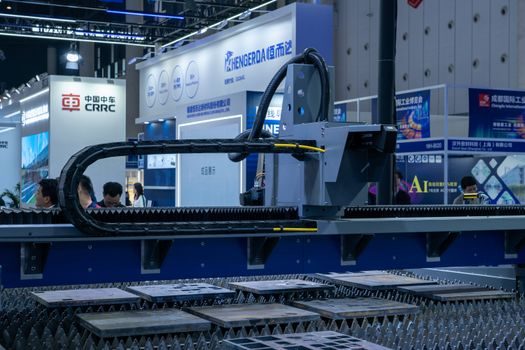
Smart-manufactured mining equipment pays back fastest on high-tonnage, high-utilisation fleets (large open-pit haulage, underground long-hole drills, and continuous conveyor systems) where utilisation, fragmentation quality, and unplanned downtime directly move the mine's cost curve [S1]. Capital intensity is the binding constraint: a vision-equipped autonomous drill or smart valve positioner-equipped slurry line is a multi-million-dollar commitment before the first tonne is moved.
The stack is a poor fit for artisanal or short-life operations, low-budget quarries, and any site without reliable grid power or LTE/5G coverage — autonomy depends on data backhaul that intermittent sites cannot guarantee. Sensor and vision packages also degrade in dust-laden or water-flooded headings, which is a hard environmental limit rather than a firmware issue [S1]. Operators running mixed-fleet brownfield sites should expect integration cost: legacy PROFIBUS segments, third-party VFDs, and proprietary loading-shovel controllers each need protocol translation before the same fleet-management dashboard can ingest their data [S6].
Comparison: Remanufactured, OEM-New, and Integrator-Supplied Smart Mining Equipment
Three sourcing channels dominate the 2026 mining-equipment smart-manufacturing market. Side-by-side on the four criteria that most affect total cost of ownership: [S1]
<b>OEM-new (Sandvik-class):</b> highest capex, longest support life, fully integrated automation and software stack from the factory, warranty and parts pipeline owned by the OEM.
<b>Remanufactured / rebuilt (Metalcraft-class):</b> moderate capex, 180-day warranty on complete remanufactures, OEM design updates incorporated during the rebuild, and shorter delivery lead times than a new build [S4].
<b>Integrator-supplied retrofit (Applied SmartFactory-class):</b> lowest marginal capex, retrofit of AI/vision/controls onto existing mechanical assets, contract performance framed around yield, risk, and productivity metrics rather than machine throughput [S2].
For new high-tonnage operations the OEM-new line wins on lifecycle cost despite the upfront multiple. For mid-life fleets where the mechanical asset is sound, a remanufactured core with current-generation controls is often the highest-IRR path. For brownfield sites that must extend the life of installed mechanicals, an integrator retrofit is the only path that avoids a full machine replacement.
Supply Chain & Manufacturing Process
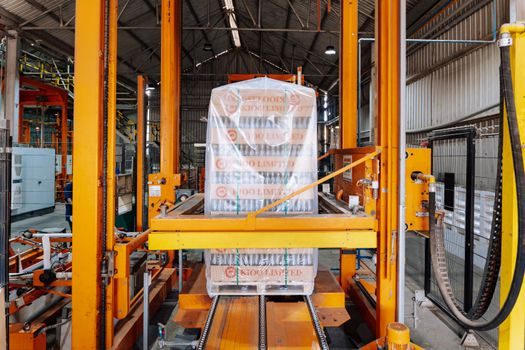
The mining-equipment build sequence is a cut-cast-assemble-certify flow that has not changed in shape, but the controls layer has: every welded structure, gear set, and hydraulic cylinder is now paired with a sensor, a controller node, and a configuration record held in the OEM's product-selection system [S1][S6]. This same pattern is visible in adjacent heavy-equipment lines — for a fuller process map of cut, cast, assembly, and certification in the same equipment class, see the related reference on mining equipment manufacturing process: cut, cast, assemble, certify.
Indian and Chinese OEM/ODM supply remains the dominant cost-down route for mining-equipment components: Made-in-China lists mineral-exploration-equipment factories operating under ISO 9001:2015, ISO 14001:2015, and ISO 45001:2016 management certifications, with revenue bands running from under USD 1 million to over USD 10 million per supplier [S5]. On the distribution side, Miningequipment.in positions itself as a global supplier of underground and quarry equipment — Atlas Copco and Chicago Pneumatic rock drills, pneumatic drifters, DTH hammers, slim drills, and TH/DTH wagon-drill variants — giving buyers a single procurement channel for mixed-brand fleets [S3].
Standards, Sourcing, and Audit Signals
Three verifiable signals tell a buyer whether a 2026 smart-mining-equipment supplier is in good standing. First, look for the three ISO management certifications in the supplier's quality pack — ISO 9001:2015 (quality), ISO 14001:2015 (environmental), and ISO 45001:2016 (occupational H&S) — all three are visible in the public Made-in-China factory profile for mineral-exploration equipment [S5]. Second, verify the automation software is published as a named product line tied to a specific machine class (drills, loaders, rock support) rather than a generic "smart mining" pitch; Sandvik's automation section does exactly this, mapping software systems to development, production, and material-handling duties. Third, check whether the controls vendor (Rockwell or equivalent) exposes a structured product-management and configuration/selection resource — that is the audit trail integrators rely on to defend a specification [S6].
Remanufactured units should ship with a written warranty term (Metalcraft publishes 180 days on complete remanufactures) and a documented list of OEM design updates applied during the rebuild [S4]. Integrator-supplied retrofits should be contracted on measurable outcomes — Applied SmartFactory's stated deliverables are yield, operational-risk reduction, and productivity, not machine count [S2].
Trackable next-node signals for the remainder of 2026: (a) any revision to Sandvik's automation-software module list on the Rock Technology product page; (b) any new ISO 9001/14001/45001 certificate scope extension on Made-in-China-listed mineral-exploration factories [S5]; (c) any Rockwell Automation product-configuration tool release note that adds a mining-specific workflow [S6]. Compared with the broader process-industry automation cycle — for example, the cryogenic flow spec work in LNG smart manufacturing 2026 — mining-equipment smart manufacturing is moving on a longer capex horizon but the same ISA-95 reference model.