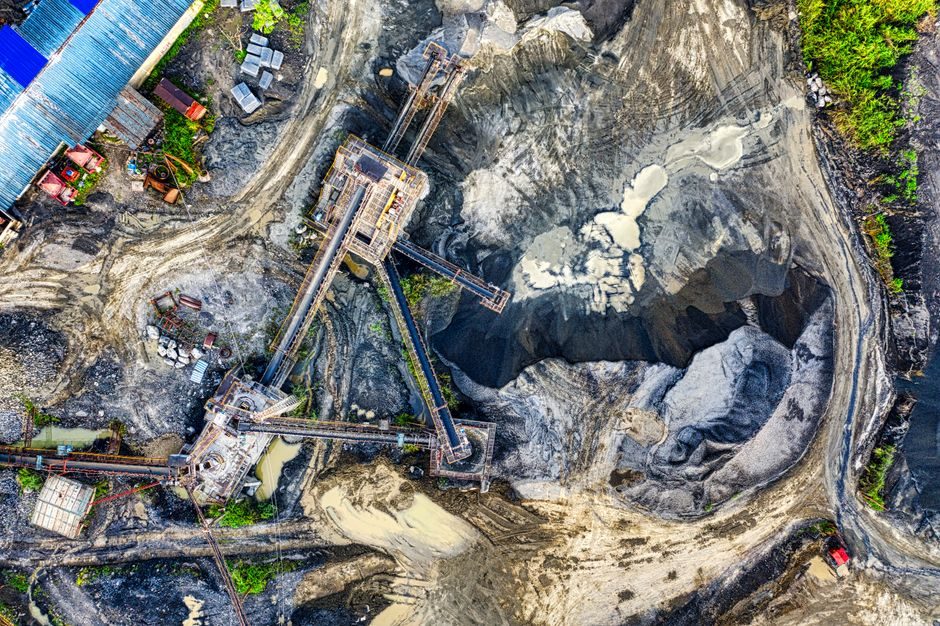
Heavy mining equipment manufacturing in 2026 is dominated by four discrete workstreams: structural steel fabrication via CNC plasma and oxy-fuel cutting, foundry and forging supply for chassis and wear parts, OEM assembly of rock-drill and powertrain modules, and ISO 9001-aligned quality control covering welding, NDT, and load test before dispatch [S1][S3].
The end product set spans open-pit mining dump trucks, underground LHDs and drill jumbos, crushing and grinding mills, flotation cells, and concentrate dewatering systems. Global suppliers such as Atlas Copco, Chicago Pneumatic, and Indian-system integrators run this stack as modular build programmes rather than one-off fabrication, with material and cutting-process choices driving most of the unit cost [S2][S4].
Structural Steel Fabrication: Plasma vs Oxy-Fuel vs Laser
HyPerformance-class plasma systems are routinely specified for heavy mining equipment because they cut mild and wear-resistant steel up to ~50 mm thick at high traverse speeds with a narrow kerf and a small heat-affected zone, reducing downstream milling on dump-truck body liners and crusher frame plates [S3]. For plate above ~50 mm, oxy-fuel remains the cost-effective default; for thin gauge and high-tolerance gearbox and hydraulic-tank brackets, fiber laser is the preferred path even though its hourly cost runs higher than plasma at the same thickness. The decision is governed by material grade (e.g. Hardox 450, SS400, Q345B), required cut tolerance (typically ±0.5 mm for laser, ±1.0 mm for plasma, ±2.0 mm for oxy-fuel on 25 mm plate), and bevel requirement for subsequent robotic welding. The same plasma source used to cut dump-truck beds and shovel boom arms is also applied to hardfacing overlays and to cutting wear liners that feed back into mining dump truck rebuild shops [S3].
Foundry, Forging and Wear-Part Supply Chain
Mining equipment OEMs do not vertically integrate casting in most cases; the manufacturing process instead depends on a tier-2 supply chain delivering wear-resistant castings (Mn-steel crusher jaws, high-chrome white-iron grinding mill liners, Ni-Hard slurry pump volutes) and forged components (crankshafts, track links, drive axles). Yantai Jinpeng Mining's published build flow explicitly couples the casting/forging procurement gate into the same ISO-managed quality system that later signs off the assembled equipment, with material certificates and heat-treatment records held against each serial number [S1]. Standard mill certificates (EN 10204 3.1) are the typical delivery format, and traceability runs back to furnace batch and ladle chemistry. Buyers should expect a 6-10 week lead time for cast wear parts and 12-16 weeks for large forged shaft forgings, with these windows visible in most 2026 supplier catalogues.
Drill, Powertrain and Hydraulic Module Assembly
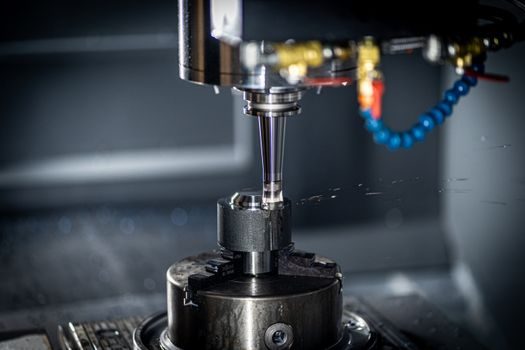
The third workstream is the integration of OEM rock-drill modules — Atlas Copco and Chicago Pneumatic drifters, DTH hammers, slim drills, and TH/DTH wagon drills — into carrier chassis, together with diesel powertrains, hydraulic tanks, and the electrical harness. Indian-system integrators publicly advertise the full Atlas Copco / Chicago Pneumatic rosters on their procurement pages, indicating that for underground drills, the OEM module is treated as a bought-in subassembly rather than a designed-in-house item [S2][S4]. Final assembly steps include: alignment boring of the boom pivot, hydraulic flush to NAS 1638 class 6 or ISO 4406 18/16/13, electrical loop test against the schematic, and a no-load functional test of all actuators. Any deviation escalates into a rework loop before the machine enters the load-test bay.
Ore-Dressing and Concentrate-Handling Subsystems
Where the delivery is not just a machine but a processing line — flotation cells, thickeners, filters, screens, pumps — the manufacturing process extends into mineral-processing equipment build: rubber- or polyurethane-lined tanks, agitator shaft and impeller machining, and on-site erection. The Chinese OEM reference flow for "ore dressing equipment" treats the flotation cell, ball mill, and classifier as a single assembled package, with a multi-stage inspection covering welding, dynamic balancing of the mill rotor, and a wet-run test of the flotation impeller at nameplate RPM [S1]. For buyers comparing line suppliers, the differentiator is rarely the mechanical build (most follow similar Q345/SS fabrication practices) and more often the metallurgical control of wear parts and the process-engineering package attached to the line.
QA, Welding Procedure and NDT Discipline
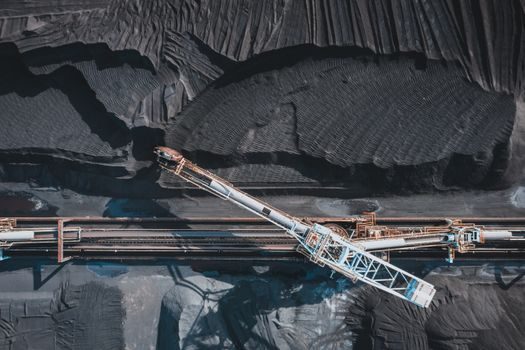
All four workstreams converge on a documented quality management system. Published OEM build flows reference strict procurement control, in-process inspection, and final acceptance testing, with welding procedure specifications aligned to ASME Section IX or ISO 15614-1 and NDT scope covering MT/PT on wear-critical welds and UT on thick plate [S1]. Critical chassis welds on a 100-ton class dump truck are typically 100% MT or UT inspected; non-critical fabrications are sampled against an AQL table. A documented FATP (Final Acceptance Test Procedure) — including a loaded function test on a calibrated dynamometer or a portable load bank, with pressure-loop verification on a multifunction process calibrator — is the standard gate before the machine leaves the shop. Buyers should request the FATP, the weld map, and the NDT report set as part of any technical handover, since these documents are what the OEM later references for warranty and rebuild support [S1].
Buyer Decision Lens: What to Specify vs What to Leave to the OEM
A specifier for heavy mining equipment in 2026 has to control four variables and leave the rest to the supplier: (1) material grade for wear surfaces (Hardox, Bisalloy, or a domestic equivalent — not just "abrasion-resistant steel"), (2) cutting process and bevel tolerance for chassis plate, (3) OEM module identity for the drill or engine (do not accept "equivalent" wording on the brand line), and (4) the QA document set at handover. Plate thickness, paint system, and routings of hydraulic hose are reasonable places to give the OEM latitude, since they rarely change operating cost. Where the supply is a whole line rather than a machine, steel mill origin and lead time become the binding constraint, and the drone smart-manufacturing pattern of vision-guided cut lines plus MES loop is the most visible 2026 cost-down template being copied into mining-equipment fab cells. [S1]
For component-level specifications, see additive manufacturing material.