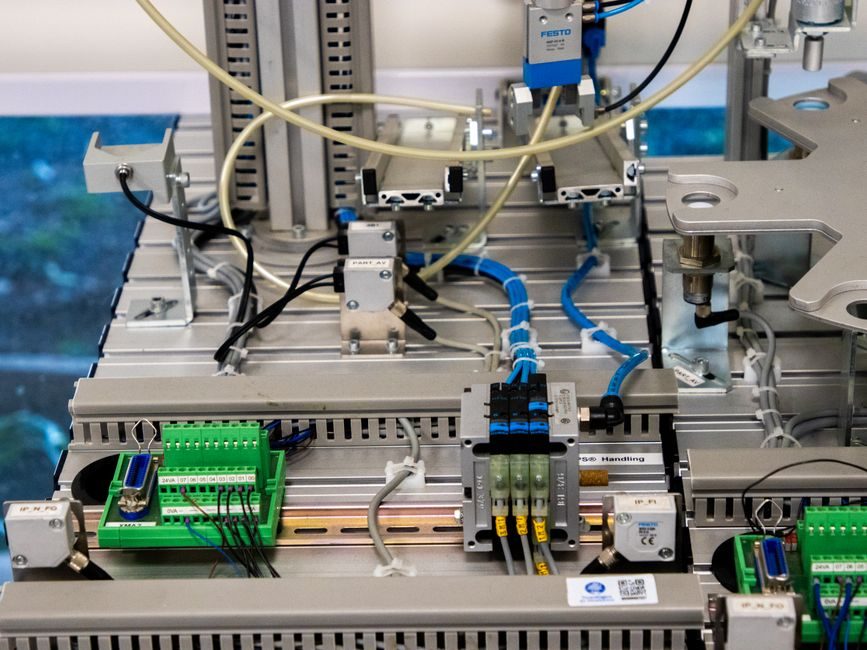
Liquefaction trains in 2026 are being re-engineered around a converged ISA-95/ISA-88 control backbone, with a single Distributed Control System (DCS) layer managing MR1-compressor anti-surge loops, MR2-liquefaction heat-exchanger temperature staging, and MR3-utility balance, all exposed to a level-3 Manufacturing Execution System (MES) for recipe governance and lot traceability [S1][S5].
Yokogawa and Rockwell Automation are the two automation vendors most cited in 2026 LNG plant reference architectures, both promoting certified-assessor programs (S.I.R.I., CMMI) and integrated OT/IT stacks that push cryogenic process data into enterprise analytics layers [S1][S5][S2]. Practical scope of the topic covers liquefaction trains, regasification terminals, BOG re-liquefaction skids, LNG bunkering, and small-scale modular LNG — all of which need the same deterministic control, ESD, and metering fundamentals scaled to the plant size.
Cryogenic Flow Metering and Custody-Transfer Specs
LNG custody transfer is dominated by Coriolis meters for ship-to-shore and shore-to-tank applications, and by ultrasonic flow meters on large-diameter transfer lines where pressure drop is the binding constraint — ultrasonic meters add <0.1 bar at line sizes above 16 in., versus 0.3-0.5 bar for orifice-plate runs at the same Reynolds number, and they have no moving parts exposed to cryogenic embrittlement [S1][S5]. The first architectural decision in any LNG metering skid is the allocation between Coriolis (accuracy, two-phase tolerance, smaller line sizes) and ultrasonic (lower pressure loss, no moving parts, larger line sizes).
Comparing the two options on a single line: Coriolis wins on accuracy and gas-in-liquid tolerance but adds 2-5× the pressure drop; ultrasonic wins on pressure loss and zero moving parts but degrades fast above ~2 % GVF and is more sensitive to upstream pipe configuration (typically 10D upstream, 5D downstream straight-run).
Temperature and pressure transmitters on the same skid need to operate down to −196 °C and to cryogenic-impact-rated housing standards; engineers specifying these should consult the pressure transmitter reference for the full −40 to −196 °C envelope, and the flow meter entry for two-phase and Reynolds-range behaviour.
Process Automation Architecture: ISA-95, ISA-88 and ESD/SIS Split
Smart LNG plant architecture follows the ISA-95 functional hierarchy: Level 0 (field instruments), Level 1 (basic control — DCS), Level 2 (supervisory control, HMI, alarm management per ISA 18.2), Level 3 (MES, batch/recipe tracking, lot genealogy), Level 4 (ERP) [S1][S5]. On a liquefaction train, the DCS handles closed-loop regulatory control of the mixed-refrigerant compressor, the main cryogenic heat exchanger (MCHE) temperature profile, and fractionation column pressures; the Safety Instrumented System (SIS), separate from the DCS and certified to IEC 61511 SIL 2-3, handles ESD-1 (full plant depressurisation), ESD-3 (compressor shutdown), and HIPPS on the acid-gas removal inlet [S5].
ISA-88 batch/recipe control is layered over the continuous liquefaction process for BOG re-liquefaction, truck-loading, and bunkering operations, where the physical model is discrete (a tank fill, a vessel cool-down) but the underlying equipment is continuous. Vendors supporting both paradigms on the same engineering workstation are converging: Yokogawa's CENTUM VP and Rockwell's PlantPAx both expose ISA-88 procedure logic natively, with module libraries for pumps, valves, and heat exchangers pre-built [S1][S5]. For auxiliary skid instrumentation, LNG operators typically pair the DCS with a smart valve positioner to get HART-based partial-stroke testing, and a smart meter layer for non-fiscal utilities and HVAC.
IIoT, Ethernet-APL and the OT/IT Convergence Stack
Field-level connectivity in 2026 LNG projects is shifting from point-to-point 4-20 mA + HART to Ethernet-APL (Advanced Physical Layer, per the 10BASE-T1L single-pair Ethernet profile ratified through the IEEE/IEC ecosystem), which lets a single two-wire run carry both power (up to ~1.2 A per segment) and 10 Mbit/s Ethernet into the field device, with intrinsic-safety options for Zone 1 / Class I Div 1 [S4][S5]. Compared to legacy HART, Ethernet-APL raises the available bandwidth by roughly three orders of magnitude (10 Mbit/s vs 1.2 kbit/s), which is the precondition for streaming raw vibration, acoustic, and Coriolis density waveforms to edge analytics rather than just the engineering variable. The practical effect on an LNG plant is that NAMUR NE 107 diagnostic categories (failure, function check, out-of-spec, maintenance required) can be reported at sub-second intervals, and that valve partial-stroke tests can be time-stamped to the millisecond against ESD-1 events for SIL evidence.
At the network edge, private 5G and private LTE are being evaluated for LNG terminal yards where cable trays across the jetty are expensive to install and hazardous-area zoning rules push wireless as the lower-risk option. Verizon's 2026 industry framing ties Industry 4.0 outcomes to private wireless and edge compute, which mirrors what LNG terminal EPCs are scoping for video analytics, drone-based stack inspection, and AR-assisted field work [S4]. For low-power wireless inside Zone 1, WirelessHART and ISA 100.11a are still the mainstream choice; for higher-bandwidth non-hazardous zones inside the control room and admin buildings, Wi-Fi 6E and private 5G dominate [S4].
Advanced Process Control, Soft Sensors and Energy-Intensity Reduction
The mechanism is tighter constraint control: MPC holds the MCHE closer to the cryogenic pinch, drives the demethanizer closer to its minimum reflux ratio, and coordinates multiple compressor anti-surge valves in parallel. Soft sensors (virtual analysers) running on DCS-embedded machine-learning models are used where a physical analyser is slow, expensive, or impossible — typical application is inferring LNG composition (C1/C2/C3 ratio) from upstream temperature, pressure, and flow measurements, replacing a gas chromatograph that may have a 3-6 minute cycle with a 1-5 second inferential read [S1].
Digital twins of the full liquefaction train — built in AVEVA PI System, Aspen HYSYS, or Honeywell UniSim — are now standard on greenfield projects, with two scopes: (a) operator-training simulators (OTS) certified against the real DCS, and (b) engineering twins used for commissioning logic checks and what-if APC tuning before the plant is built.
Addictive Manufacturing and Robotics: Where They Fit in LNG Plants
Additive manufacturing in LNG is not yet a process-layer technology — the cryogenic, pressure-bound piping and rotating components are still wrought or cast — but it is real at the spare-parts and prototyping layer, with qualified additive manufacturing material stock in 316L, Inconel 718, and 17-4 PH used for valve trim, impeller replacements, and custom bracketing on skid packages [S4]. The qualification path is governed by ASME BPVC Section VIII and by the operator's own MRO standards; parts for pressurised service still need coupon-level mechanical testing, but the lead-time gain is the point: a 6-8 week forged-part lead time can drop to 1-2 weeks via AM for low-volume replacements.
None of these replace the DCS, but they feed it — robot telemetry is published into the same plant-data historian (PI System, Wonderware, or Honeywell PHD) that hosts the rest of the level-2 data, which is what makes the “smart” claim auditable rather than marketing.
Standards, Certifications and the 2026 Compliance Map
LNG smart manufacturing in 2026 sits on a stack of standards that an engineer needs to keep straight: IEC 61511 for functional safety (SIL targeting on ESD/SIS), IEC 60079 / ATEX 2014/34/EU for hazardous-area equipment in Zone 1 / Zone 2, ISA 84.00.01 as the US equivalent of IEC 61511, ISA 18.2 for alarm management, ISA 88.00.01 for batch control, ISA 95 / IEC 62264 for the OT-IT integration hierarchy, API 620 / API 650 for tank design, ASME B31.3 for process piping, and the IGF Code for LNG bunkering vessels [S1][S5]. Cybersecurity is governed by IEC 62443, with Zone & Conduit definitions required in the plant's CSMS (Cyber Security Management System) before any external network is connected to the Level 3 MES.
Most operators now specify ATEX / IECEx dual certification on new cryogenic-area instrumentation, and NEC Class I Div 1 / Div 2 for North American builds, even where the local code would accept only one; the cost premium is small, and it simplifies spare-pooling across geographies [S1][S5]. A practical 2026 procurement gate is that every instrument on the cryogenic bill of material should carry an explicit low-temperature impact test rating per EN 13445 / ASME BPVC, with documentation referenced to the −196 °C service envelope, not a generic "cold service" statement. EPCs and operating companies that fail this gate during FAT typically see field rework, and that is where 2026 LNG capex leaks.
Failure Modes, Limitations and What Smart Manufacturing Does Not Fix
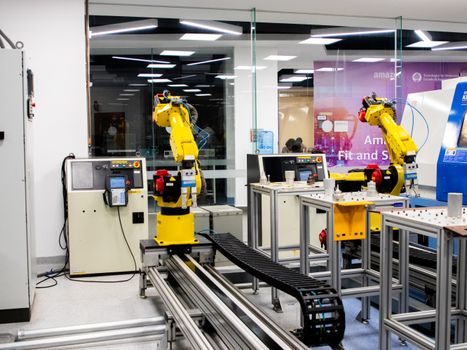
Smart manufacturing is not a substitute for process safety, mechanical integrity, or operator competence — and an honest 2026 view has to call this out. The most common failure modes on automated LNG trains are still (a) sensor fouling in the acid-gas removal section, (b) hydrate plug formation during cooldown, (c) cryogenic embrittlement on incorrectly specified gaskets, and (d) ESD valve stiction; none of these go away because the DCS has an APC layer on top. The smart stack helps detect them faster, but it does not prevent them. [S1]
The second honest limitation is data-quality: an IIoT or AI initiative built on a 4-second scan class, un-calibrated instruments, and a historian that drops timestamps at network outage will produce nice dashboards and wrong decisions. A third limitation is cyber-attack surface: every Ethernet-APL segment and every OPC UA bridge is an exposure, which is why IEC 62443 zone-conduit modelling is now an EPC deliverable, not an optional add-on. The smart-manufacturing lift is real, but only inside a competent base-engineering envelope.
Verifiable signals to track over the next two quarters: (1) additional 2026 LNG EPC awards disclosing named DCS vendors and ISA-95 level-3 MES platforms in their bids, with the same naming pattern that satellite smart manufacturing 2026 reference projects use; (2) the next round of operator case-studies quantifying APC energy savings on operating trains in percent per ton-LNG; (3) the first IEC 62443-certified Ethernet-APL LNG skid deployments entering commissioning. A related read on metal-supply constraints that feed the cryogenic piping chain is in the nickel suppliers and manufacturers 2026-06-26 map, which covers 9 % Ni and Inconel stock for LNG tank and trim work.