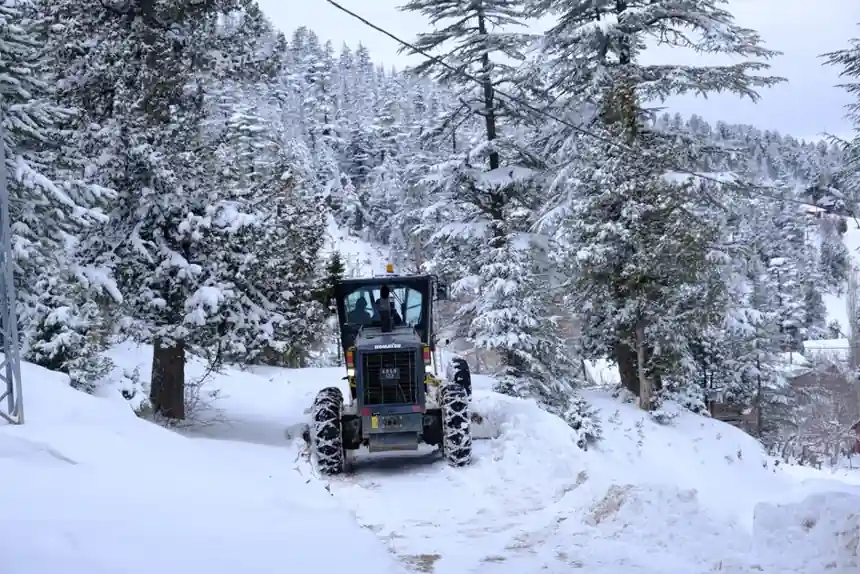
For property-scale and contractor-scale snow clearing in 2026, the workable combination is a 48 to 60 inch steel or poly plough blade, a 3,500-lb or heavier winch, and a carrier with at least 400 to 500cc of displacement [S1]. The shield machine here is the wheeled or tracked prime mover that pushes, lifts, and absorbs reaction force, not the blade itself.
Across the U.S. and Nordic markets the carrier classes scale from ATV (400 to 500cc, 6 to 8 inch fresh-snow capability) up through compact wheel loaders fitted with modular snow ploughs, with each step adding weight, lift capacity, and ground clearance at proportional cost [S1][S5].
Carrier class and minimum engine displacement
Industry guidance sets 400 to 500cc as the floor for an ATV-class carrier used as a snow shield machine: smaller engines stall in wet, heavy slush and the operator ends up shaving the same patch four times instead of once [S1]. Above that, the practical ladder runs ATV → UTV (typically 600 to 1000cc) → compact tractor or compact wheel loader (25 to 50 hp class) → full-size wheel loader (75 hp and up).
On the contractor side, Fronteq lists 28 wheel loader attachments alone in its snow-clearing catalogue, with the Siljum M-line Multi Snow Plough described as a modular system with maneuverable side wings, confirming that 2026 production lines target multi-machine fleets rather than single-vehicle buyers [S5]. The Siljum Multi Snow Plough MP3000 is positioned as a flexible tool for smaller machines, sitting below the M-line in the same brand family [S5].
Plough sizing: width, material, and replaceable wear parts
Standard ATV snow plough blades run 48 to 60 inches wide, and 52 to 54 inches is the practical sweet spot for a typical quad because it matches the machine's track and avoids leaving an untouched stripe down the center [S1]. Contractor-class ploughs scale from there to the multi-meter widths used on wheel loaders and graders.
Two materials dominate. Traditional steel blades are heavier and aggressive on gravel driveways, while polyethylene (poly) blades are lighter and shed snow more easily, which reduces drag and lets the carrier maintain forward speed [S1]. Either type needs replaceable wear bars and skid shoes at the cutting edge, since those parts grind against pavement and protect both the blade and the asphalt or concrete below [S1].
Mounting style: mid-mount versus front-mount

The mount choice is a structural decision, not an accessory decision. A mid-mount plough bracket transfers pushing force into the central frame of the carrier, which is the strongest load path; a front-mount bracket instead loads the front suspension A-arms, which are tuned for steering and wheel travel, not for 6 to 12 inches of packed snow [S1]. Bending an A-arm in a blizzard is the kind of failure that ends the day.
For wheel loader class carriers the equivalent is a quick-coupler or dedicated snow-plough coupler that lets the operator swap between plough, bucket, and forks without leaving the cab, which is the workflow the Fronteq product line is built around (ploughs, buckets, forks, asphalt cutters all on common machine types) [S5].
Lift system: winch on small carriers, hydraulics on loaders
On ATV-class carriers, a factory-equipped 3,500-lb winch is the minimum that reliably lifts a steel or poly blade off the ground for reversing and turning, and going heavier is cheaper than the downtime of an under-spec winch dragging in a storm [S1]. On compact and full-size wheel loaders the lift is hydraulic through the third-function valve, with lift capacities in the several-thousand-pound range and angle cylinders dedicated to the mouldboard.
The pairing question for shield machine selection for snow removal is whether the winch or hydraulic circuit can cycle the blade fast enough at idle. A slow lift cycle means the operator spends measurable minutes per hour waiting for the blade, which over a 10-hour storm is the difference between a finished lot and a half-finished one.
Operational envelope: snow type, depth, and surface

An ATV shield machine with the right blade easily handles 6 to 8 inches (15 to 20 cm) of fresh, fluffy snow, and with a bigger engine and more machine weight it will push over a foot (roughly 30 cm) of wet snow, but the practical limit is density rather than depth [S1]. Hard, ice-crust layers must be shaved in multiple passes or attacked at an angle rather than pushed head-on, or the blade will skate over the surface and the carrier will dig ruts trying to find grip.
Surface matters as much as snow type. Poly blades and well-tuned skid shoes are mandatory on finished asphalt and concrete because a steel edge without skid shoes will gouge the surface within a season, and gouged asphalt collects water and accelerates freeze-thaw damage, which ties the equipment choice to a longer pavement-life question [S1]. A related reference on shield machine selection for pipeline construction walks through the same carrier-class logic for a different working envelope.
Compliance, software, and crew-side decisions for 2026
On the contractor side, snow removal in the U.S. is a regulated commercial activity: most jurisdictions require a general business license, liability insurance, and workers' compensation coverage, and operators of heavy plow trucks typically need a commercial driver's license [S2]. Pennsylvania is cited as not requiring a special permit beyond a standard business license, while New York adds a liability-insurance requirement; rules vary by county and city, so the same machine pairing can be legal in one town and under-licensed in the next [S2].
Slip-and-fall liability is the financial tail that drives equipment and software choices. Snow removal management software such as Entuitive Workforce's Snow Tracker is built around continuous contractor COI verification, workers' comp clearance checks, and GPS-timestamped service records, and as of 17 July 2026 the platform is priced from $699 CAD per season with unlimited properties, against competitors Yeti (from $95 USD/mo), LMN (from $297/mo), CrewTracker (from $200/mo), and Jobber (from $29 USD/mo for one user) [S4]. A service provider running 10 employees across 30 properties in a season will see list-price totals in the low four figures USD on the budget tools and several times that on the compliance-led platforms, and that gap is the cost of audit-ready proof of service for slip-and-fall defense [S4].
What this rules out and where the limits sit
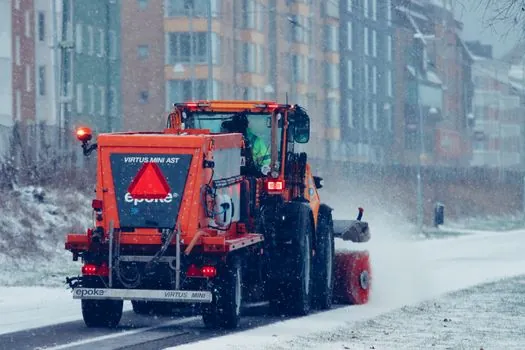
An ATV shield machine is not the right answer for commercial parking lots, municipal roads, or anything beyond a private drive or farm lane; the engine, weight, and blade width simply do not match the volume of snow or the cycle time a contractor needs. A compact wheel loader with a Siljum-class modular plough is the right next step, and a full-size motor grader or front-line plow truck is the step after that, with each step roughly tripling the capital cost. [S1]
Watch for two trackable signals into the 2026 to 2027 season: the 17 July 2026 vendor-feature snapshot in the Snow Tracker comparison page (which is explicitly dated and will move as competitors update their public pages) and the Fronteq product line as it adds new M-line modules and HD variants for Nordic-series ploughs [S4][S5]. If poly blade pricing falls relative to steel on the 48 to 60 inch ATV size, expect the de facto default to shift from steel to poly on finished-pavement routes, with the wear-bar and skid-shoe replacement cycle as the downstream parts demand. The broader spec map for gear selection for material handling covers the same modular-attachment logic from a different angle and is worth cross-reading for any fleet manager scaling from one machine to a mixed fleet.
The underlying component specifications are covered under shield machine, face shield, and coding machine.