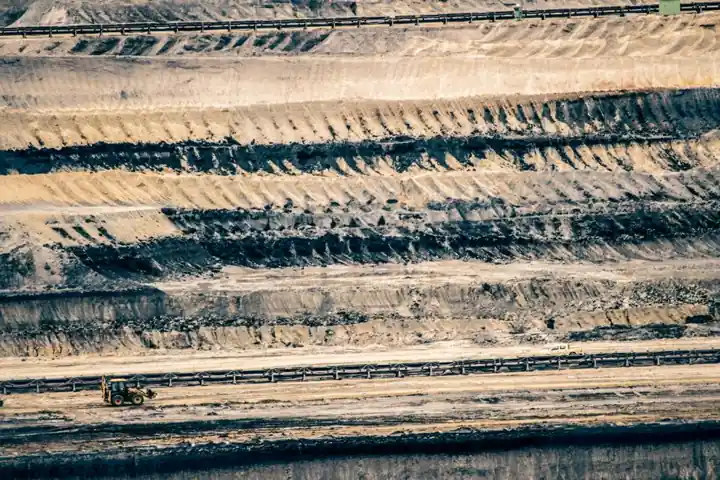
Mining safety glasses selection hinges on five spec-driven criteria: certification to AS/NZS 1337.1 [S1], impact-rated polycarbonate or Trivex lenses [S5], a positive-seal frame for dust environments [S3], anti-fog plus anti-scratch coatings [S4][S5], and lens tint matched to the lighting zone (clear, polarised, or amber) [S1][S5].
The practical job of the specifier is to translate that hazard list into a frame, lens, and coating combination that a 12-hour-shift worker will actually keep on [S1].
Standards Anchor: AS/NZS 1337.1 and Site Risk Assessment
AS/NZS 1337.1 is the primary Australian/New Zealand standard governing personal eye protection for many industrial applications, including mining, and the correct impact level is selected from the site risk assessment rather than chosen by default [S1]. Safe Work Australia guidance, cited within the standard-selection workflow, requires PPE to be suitable for the work, properly fitted, reasonably comfortable, and compatible with other PPE on the worker [S1].
That last clause matters on a mine site because safety glasses routinely share the head with a lab safety helmet, hearing protection, and a respirator; a frame that conflicts with any of those effectively becomes non-compliant in practice even if it carries the right marking [S1]. Specifiers should request the manufacturer's declaration of conformity and the actual lens marking, not just the box label [S1].
Hazard Map: What the Glasses Must Defend Against
Five hazard families drive every lens and frame decision in mining: flying debris from drilling, grinding, cutting, and maintenance; UV and welding-arc radiation during blasting and hot work; respirable and nuisance dust that fouls the lens and the eye; chemical splash in processing plants; and glare off open-pit walls, haul roads, and water in process sumps [S1][S5]. Polycarbonate, used in most mining-rated safety glasses, offers inherent UV protection and high impact resistance, while Trivex provides lighter mass for extended wear with comparable impact performance [S5].
For chemical and dust-heavy zones, the frame choice matters as much as the lens: a positive-seal design with a close-fitting wrap keeps fine particles out of the eye orbit, whereas an open-bridge spectacle will leak dust and defeat the lens [S3]. Where splash is the primary concern, specifiers should escalate from safety glasses to goggles or a face shield per the site risk assessment, because spectacles alone do not seal against liquids [S1].
Lens Spec Comparison: Polycarbonate vs Trivex vs Glass
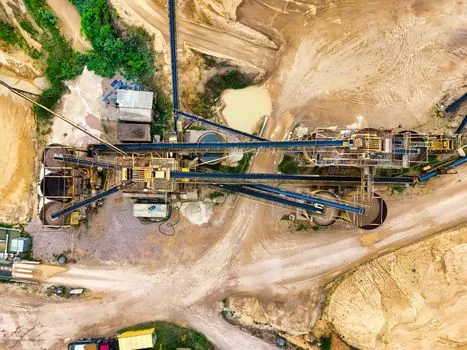
Polycarbonate is the default mining lens because it combines high impact resistance, built-in UV blocking, and low weight at the lowest cost [S5]. Trivex is roughly 10-15% lighter than polycarbonate at the same thickness with comparable impact rating and slightly better optical clarity, which is why it is preferred for full-shift comfort programs [S5]. Glass (mineral) lenses offer superior scratch and chemical resistance but are heavier and shatter into fragments on extreme impact, so they are not used in modern mining PPE specifications.
Across the three main mining lens tints, the decision matrix is straightforward: clear lenses suit workshops, underground headings with artificial light, and low-light processing areas; grey (smoke) lenses reduce glare in bright open-pit and surface conditions while preserving true colour perception; amber/yellow lenses boost contrast in low-light, foggy, or dusty underground air [S1][S5]. Polarised lenses are an option in extreme outdoor glare, but polarisation is not a substitute for impact certification, and the polarised layer must be laminated inside a certified impact lens [S1].
Coatings and Comfort: Why Workers Actually Keep Them On
Anti-fog and anti-scratch coatings are the two specifications that most directly determine whether a worker wears the glasses correctly through a 12-hour shift, because fogging and surface haze are the leading reasons miners push glasses up onto a hard hat or remove them mid-task [S1][S5]. Anti-reflective coating adds value in mixed-lighting processing plants where overhead metal-halide or LED fixtures create distracting reflections off the lens [S5].
Comfort is a spec, not a soft benefit. The fit checklist is concrete: lightweight frame, comfortable nose piece, smooth temple arms, secure fit without slipping, minimal pressure around the ears, and a face shape matched to the workforce [S1]. A safety glass that pinches or slides is a glasses that gets pocketed, and pocketed PPE is the same as no PPE in an audit [S1].
Selection Criteria by Work Zone
Underground hard-rock and coal: positive-seal frame, clear or amber lens, anti-fog coating mandatory due to high humidity and temperature swings, medium-to-high impact rating per AS/NZS 1337.1 [S1][S3][S5]. Open-pit and surface: grey or polarised lens for glare control, anti-scratch coating to handle dust abrasion, UV-blocking polycarbonate lens [S1][S5]. Processing plant and workshop: clear lens, anti-fog plus anti-scratch, chemical-splash-rated frame or escalation to goggles where acid/alkali handling occurs [S1][S5].
Maintenance and hot-work areas add a third dimension: welding shade or IR-rated flip-fronts over the safety lens for grinding and cutting, because a standard mining safety glass is not a welding filter and will not protect against arc radiation on its own [S5]. For workers who already wear prescription glasses, Rx-compatible safety frames or Rx adaptor inserts are required, since wearing untethered prescription spectacles under safety glasses is generally not accepted on Australian mine sites.
Common Failure Modes and Audit Traps
The four recurring audit findings on mine sites are: lenses without visible certification markings purchased as look-alike products; frames replaced by workers with non-compliant alternatives because the original was uncomfortable; coatings worn off after months of pocket storage, leaving fog-prone lenses; and safety glasses worn over prescription spectacles without an Rx rating, which breaks the impact path [S1][S2]. Specifiers can close all four by tying the purchase order to AS/NZS 1337.1, requiring the declaration of conformity, and standardising one or two frame models across the site so spare lenses and parts stay in stock [S1].
Reference buyers guides for adjacent PPE categories use the same logic, and the specifier can borrow the format directly: framing the requirement by hazard, then by standard, then by material and coating, and finally by comfort. A useful adjacent read is the confined space safety shoes spec workflow, which applies the identical standard-plus-hazard-plus-task structure that AS/NZS 1337.1 selection requires.
Decision Checklist for a Spec-Compliant Purchase Order

A mining safety glasses purchase order should lock down, in writing: AS/NZS 1337.1 compliance with the impact level stated (medium impact for most surface tasks, high impact for grinding/cutting/chipping); lens material (polycarbonate or Trivex); required coatings (anti-fog, anti-scratch, anti-reflective where applicable); lens tint per zone (clear, grey, amber, or polarised); frame type (positive-seal for dust, ventilated for comfort in lower-dust zones); and compatibility statements with the site's hard hat, hearing protection, and respirator models [S1][S3][S5].
Next signals worth tracking: any revision to AS/NZS 1337.1 that changes the impact-level marking convention, and site-level incident-trend data linking fogging or comfort complaints to PPE non-compliance, since both are leading indicators of where the next lens specification should be tightened.
Spec-level background on the components involved: safety glasses, mining dump truck, and fire safety.