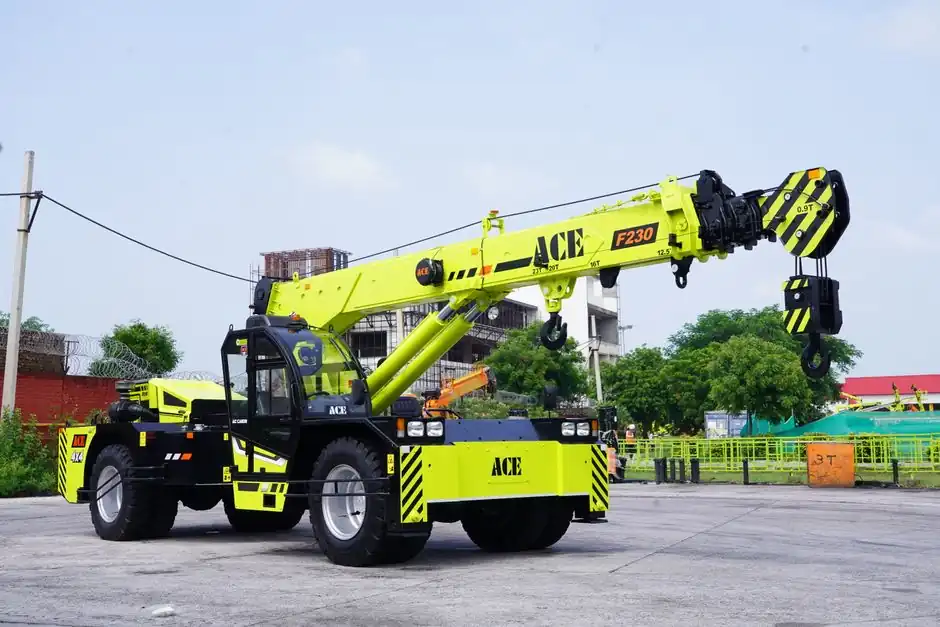
Mobile crane selection starts with three numbers: maximum load, working radius, and ground pressure. The Kegiom 200 Panda mini crane delivers 1,200 kg at a working height of 6.5 m on a 1,550 kg chassis with 25° rotation capacity [S1]. The Terex CSE 32 self-erecting unit lifts 4,400 kg to a 27.5 m hook height with a 32 m horizontal jib and 56,000 mm/min hoisting speed at full load [S3]. At the heavy end, the XCMG XCR120 rough-terrain crane rates 120 t (132.3 us ton) lift capacity from a 221 kW diesel, driving at 30 km/h with 70% maximum grade ability [S2].
Selection hinges on which combination of capacity, mobility, and reach the lift demands. Crane Compare groups rental mobile units into telescopic, crawler, rough-terrain, and mini categories, with operated hire bundling machine, operator, lift plan, and insurance [S4]. For a buyer or renter, the decision is less about brand and more about how each variant's chassis, boom geometry, and counterweight interact with the site.
Four mobile variants and where each one wins
The 200 Panda operates on a 2070x850x1750 mm footprint, fits through standard doorways, and is offered with optional radio remote control, winch, and forks, which is why it dominates indoor mechanical-room and glazing jobs where a 1,200 kg pick is the heavy lift [S1]. A Terex CSE 32 runs a 4.4 t maximum with 1,050 kg at full 32 m jib radius, rising to 1,150 kg with the Terex Power Plus (TPP) function, and its 2.25 m swing radius lets it sit close to a structure during self-erect setup [S3]. The XCR120 pairs a 5-section 48 m main boom with 9.2 m to 16 m jib sections at 0°, 15°, and 30° offsets, extending combined reach to 61 m for oilfield and bridge work [S2]. Crawler and mini variants on Crane Compare's mobile list fill the gap between 1 t indoor picks and 100 t+ rough-terrain telescopics, with crawlers chosen when ground pressure, not road speed, is the limiter [S4].
Decision logic in one line: pick the smallest machine whose load chart covers your heaviest pick at your worst radius, then check ground pressure and transport width. A crawler solves soft-ground duty where outriggers would punch through; a rough-terrain telescopic solves one-job mobility on unpadded sites; a self-erecting unit solves repeated vertical lifts on a tight footprint.
Load chart, radius, and capacity: the real boundary
Capacity is a function of radius, not a single number, and the load chart is the only document that defines it. The CSE 32 specifies 4,400 kg at minimum radius dropping to 1,050 kg at 32 m, with TPP boosting tip load to 1,150 kg at the same radius [S3]. The XCR120 reaches 61 m with jib fitted, and its 5-section 48 m main boom is described by the manufacturer as the longest in its class at the time of catalog publication [S2]. Roysson, Sitompul, and Lindell (EANN 2021) trained an artificial neural network on 90% of two official load-chart datasets and reproduced capacity from boom length, load radius, and counterweight; deviation rates stayed small except when both boom length and radius approached their maximum states, which is the regime where operators most need the chart, not an estimate [S5].
Practical rule: read the chart at the planned radius, then apply a margin for dynamic loads, wind, and pick-and-carry cycles. If the chart at the planned radius shows capacity below 1.25 times the rigged weight of the load, the crane is wrong for the lift regardless of headline maximum.
Power, drivetrain, and site efficiency
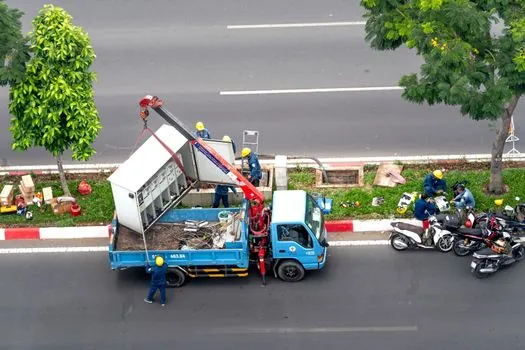
Diesel remains standard for outdoor mobile cranes: the XCR120 uses a 221 kW (300.5 hp) diesel with a dual-variable plunger pump and a load-sensing valve, with ECO mode cutting fuel use by 5% to 9% under varying duty and a lockup torque converter cutting driving fuel use by 20% [S2]. The CSE 32 self-erecting unit runs an 11 kW (15 hp) engine driving electric motion subsystems, with a swing speed of 0.9 rpm, which suits precise placement rather than cycle-rate work [S3]. The 200 Panda's hydraulic-plus-electric drivetrain at 1,550 kg machine weight targets indoor emissions and noise constraints, with electric operation removing exhaust concerns on enclosed sites [S1].
Selection should match the engine and pump architecture to duty cycle. High-cycle telescopic work rewards load-sensing hydraulics and ECO mapping; low-cycle precise placement rewards electric hoist and slow swing; indoor or restricted-ventilation work rules out diesel unless the site has verified exhaust capture.
Standards, training, and the operator side of the selection
Mobile crane selection is inseparable from operator competence. The EANN 2021 paper's premise, that novices trained in simulation transfer skill only when virtual capacity mirrors real load charts, applies directly to any buy-or-rent decision: specify operator qualification alongside machine specification [S5]. XJCM publishes a 30-year product line covering rough-terrain, truck, and tower cranes, reinforcing that supplier support and parts availability are part of the spec [S6]. For UK sites, hire fleets such as Southern Cranes publish separate access-hire and contract-lifting phone lines (01403 790874 and 01403 339105), which is the operational signal that contract lifting, with method statement and appointed person, is treated as a distinct service from bare machine hire [S7].
For buyers comparing mobile crane variants, the procurement spec should bundle machine, operator proof, and lift plan. A useful cross-reference for indoor and restricted-space lifts is the crawler crane class, which shares the low ground-pressure advantage of the 200 Panda at higher capacity. Heavier oilfield and infrastructure picks sit in the rough-terrain crane category, where reach and ground-clearance trade off against road speed. Buyers new to the broader lifting ecosystem can also review the crane scale page to spec the load-monitoring instrument that should ride on any of these machines.
Who should NOT pick the mainstream option
A rough-terrain telescopic in the 80 t to 120 t class is the wrong choice on three common jobs: indoor mechanical-room lifts above 1,200 kg, repeated slab pours on a 3 m by 3 m pad, and any site where the ground cannot take an outrigger pad. For indoor picks, the 200 Panda at 1,200 kg on a 2070x850x1750 mm chassis is the ceiling, and any heavier indoor lift should be reviewed by a structural engineer for slab capacity before a larger wheeled crane is allowed on the floor [S1]. For repeated slab pours, a self-erecting unit like the CSE 32 with a 2.25 m swing radius and 27.5 m hook height is more productive than a wheeled telescopic that must be repositioned each cycle [S3]. For soft ground, a crawler spreads load over a track footprint that a wheeled outrigger cannot match, which is the entire reason the crawler category exists in the Crane Compare mobile list [S4].
Shortlist logic: matching crane class to lift class
Use this 4-row decision frame to shortlist before requesting quotes. (1) Pick below 1,500 kg, indoor or restricted access: mini crawler or mini mobile, machine weight under 2 t, electric or hybrid drive acceptable, e.g. 200 Panda at 1,200 kg and 1,550 kg [S1]. (2) Vertical-build lift to 27 m, repeated cycles, footprint under 3 m: self-erecting tower on mobile chassis, 4 t to 5 t class, 32 m jib, e.g. CSE 32 at 4,400 kg and 32 m reach [S3]. (3) Single heavy pick on unpadded industrial site, 30 t to 130 t at 10 m to 40 m radius: rough-terrain telescopic, 48 m to 61 m combined boom-plus-jib, 200 kW+ diesel, e.g. XCR120 at 120 t and 221 kW [S2]. (4) Soft ground or tracked mobility required: crawler crane at the required capacity class, selected on ground-bearing pressure rather than road speed [S4].
Final acceptance gate before signature: confirm the load-chart value at the planned working radius covers the rigged load with margin, confirm ground pressure or outrigger pad reaction against the slab or soil data, and confirm operator qualification plus lift-plan appointment per the relevant national standard. A useful adjacent spec to lock at the same time is a linear guide or crossed-roller guide if the lift involves a jib extension or telescoping section that must be pinned against lateral load, since guide selection on those subassemblies is what keeps the boom within its charted deflection limits. Track the next node by re-checking manufacturer load-chart revisions in Q4 2026, since chart values, not headline tonnage, are the controlling number on every mobile crane selection.
Related analysis: Hopper Scale Buying Guide 2026: Spec-First Selection for Batch, Silo, and.