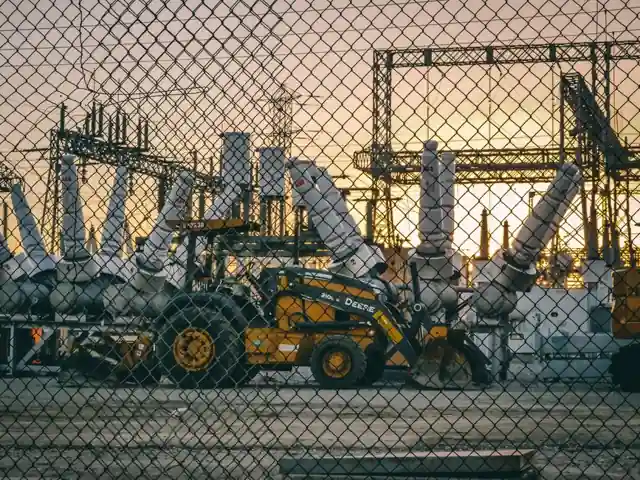
Mobile transformer and mobile substation availability in 2026 depends on configurable voltage, transformer capacity, transport logistics, and proven factory testing.
Delta Star offers mobile transformer solutions featuring best-in-class designs with a customer-focused approach [S3].
What Determines Mobile Substation Availability
Mobile substations are transportable systems intended to restore electrical service where fixed equipment has failed or cannot be repaired within the required outage window. The U.S. Department of Energy identified equipment failure, natural disasters, acts of terrorism, and war as event classes for evaluating mobile transformer and substation deployment [S1].
Availability is not limited to a manufacturer's production capacity. It also depends on the availability of suitable voltage, MVA, protection, switchgear, transport permits, cranes, and commissioning crews for the intended site. Hitachi Energy describes its mobile transformers as factory-built and tested units for fast recovery, while Delta Star identifies emergency response, routine maintenance, and grid support as separate operating uses [S3][S4].
One market estimate values the mobile substation market at USD 1.3 billion in 2026, rising to USD 1.8 billion by 2033 at a 4.7% compound annual growth rate [S6]. A separate forecast places the market at USD 1.9 billion by 2034 with a 4.45% compound annual growth rate over 2026–2034 [S2]. These forecasts indicate expanding supply channels, but they do not prove that every voltage class, transformer rating, or geographic market has adequate unit availability.
Mobile Transformer, Portable Substation, and Voltage Regulator
This distinction is critical for industrial users comparing equipment packages. A mobile transformer used solely for a transformer-and-protection bypass is not equivalent to a fully integrated substation with medium-voltage distribution, even when both occupy similar trailers.
Selection Criteria for Industrial Buyers
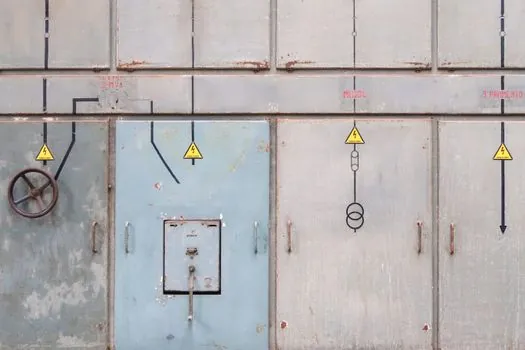
A mobile transformer must match the failed asset's voltage, phase arrangement, frequency, impedance, and required thermal capacity before transport and site work are considered.
The U.S. Department of Energy report addresses the benefits of using mobile transformers and mobile substations to rapidly restore electrical service after blackouts caused by equipment failure, natural disasters, acts of terrorism, or war [S1]. The U.S. Department of Energy study framed mobile equipment around rapid restoration, not simply spare-equipment storage [S1].
Emergency Recovery, Planned Outages, and Temporary Power
Sunbelt Solomon's 24 July 2026 operational article emphasizes inventory availability, technical knowledge, and deployment speed for mobile substations used during unexpected outages [S5]. That distinction separates equipment ownership from effective availability: a parked trailer without compatible protection, spares, commissioning support, and transport arrangements does not provide equivalent restoration capability.
RHONA describes its mobile substations as compact, transportable solutions designed for fast and flexible power deployment across a wide range of industrial applications [S8].
Lead-Time and Supply-Chain Constraints
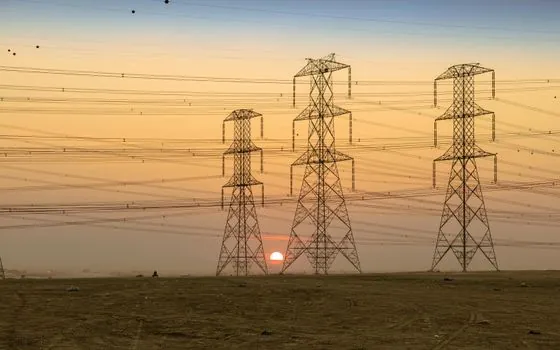
Long-lead power transformers cannot be assumed to match emergency mobilization requirements, so buyers must distinguish manufacturing lead time from delivery readiness of an already manufactured or reserved unit.
Market expansion does not eliminate allocation risk. Fortune Business Insights estimates a USD 1.9 billion market by 2034 at 4.45% compound annual growth, while Market Research Future projects USD 1,963.89 million by 2035 at 4.4% compound annual growth during 2026–2035 [S2][S7]. These forecasts cover different forecast horizons and bases, but both point to measured market growth rather than unrestricted unit availability.
For procurement, the defensible availability metric is the number of acceptable units that can be delivered and commissioned by the required date. Voltage and MVA ceilings provide only the upper limits of published capability. A valid supplier commitment should identify the specific rating, configuration, test evidence, delivery location, and commissioning scope.
Who Should Reserve Mobile Substation Capacity
Utilities, large industrial complexes, hospitals, data centers, mines, and generation plants with a defined restoration plan are the strongest candidates for owned or contractually reserved mobile equipment. These users can define transformer ratings, fault levels, protection interfaces, transport clearances, and site acceptance requirements before a failure occurs [S1][S4].
Small sites with no dedicated protection engineer, no suitable trailer interface, and no contingency operating plan should use a service agreement or shared deployment model rather than procure an untested standalone asset. The relevant equipment is the complete delivery system: mobile transformer, circuit protection, switchgear, grounding, cables, commissioning, and operator training.
Mobile capacity also fits planned outage management, temporary load, and renewable interconnection work. Hitachi Energy identifies fast recovery and multi-voltage capability, Delta Star includes emergency, maintenance, and grid-support uses, and RHONA describes flexible industrial deployment [S3][S4][S8].
Qualification and Acceptance Checklist
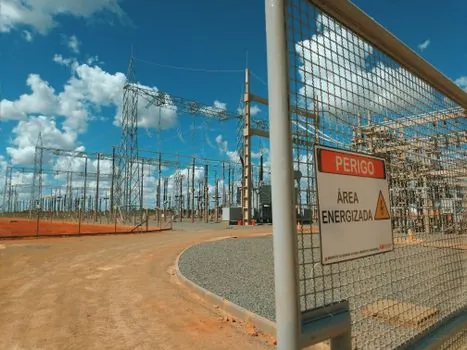
A supplier's product-page range is not the same as a verified unit reservation. Acceptance should require the exact voltage, MVA, connection configuration, impedance, temperature rise, short-circuit withstand data, test records, transport envelope, and commissioning responsibilities in the purchase documents [S3][S4].
The acceptance sequence should cover four stages: factory test review, transport-path verification, site readiness, and energization. Factory testing must confirm the assembled transformer's electrical condition; transport planning must establish trailer weight, crane capacity, road restrictions, and turning requirements; site readiness must cover foundations, grounding, barriers, fire controls, and operating clearances; energization must align protection settings, switching procedures, and qualified personnel.
For multi-asset deployments, include every dependent trailer in the acceptance scope. Delta Star publishes a 15–345 kV range for portable substations, a 13.2–345 kV range for mobile and unitized substations, and separate protection and breaker trailer ranges reaching 345 kV and 230 kV respectively [S3].
Operators can improve trackability by requiring the supplier to state whether the offered equipment is factory-built, factory-tested, reserved for that customer, and available for delivery to a named site. The next procurement checkpoint is therefore a dated offer with the rated configuration, shipping condition, test package, transport assumptions, and commissioning scope.