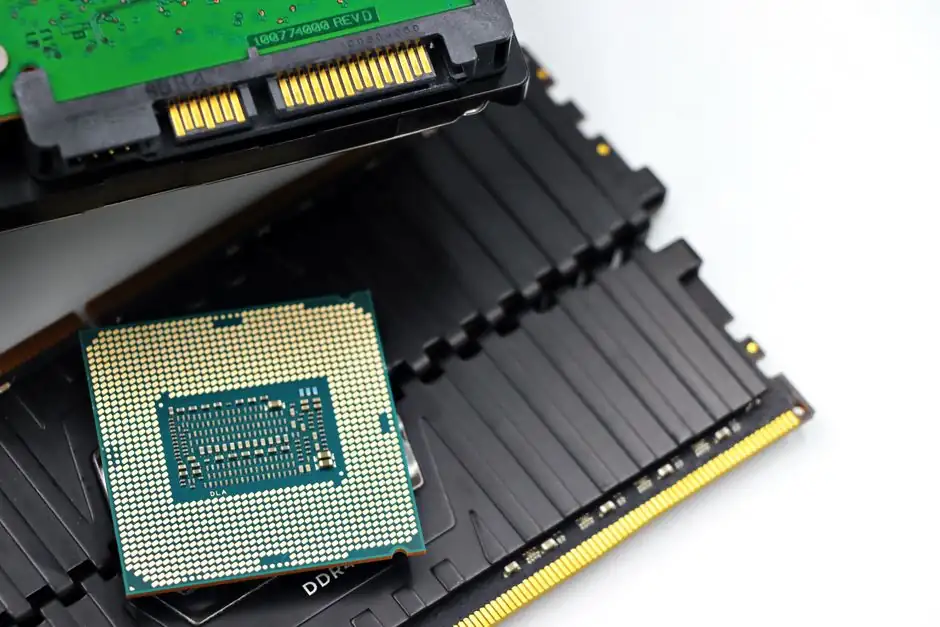
IT teams should budget from total replenishment time rather than relying only on a supplier’s quoted lead time [S4].
The 2026 risk extends beyond memory to servers, storage, networking and other enterprise hardware categories [S2].
Hardware risk now spans the full bill of materials
A server refresh budget based on one generic “standard hardware” lead time misses allocation risk.
Pricing pressure is also moving beyond memory.
IT planners should therefore split refresh budgets by criticality and BOM family. A server, storage array, switch or memory module can face different allocation conditions within the same project, so one project-wide timing assumption weakens the forecast [S2]. The budget model should carry a distinct planned date, likely lead time, downside delay and cost adjustment for each critical line.
Calculate total lead time before setting the cash date
Total lead time is internal processing plus vendor lead time plus transit plus inbound inspection [S4]. Lead time is the latency between the identification of a need and its fulfillment, with procurement lead time measured from requisition to dock receipt [S4].
The cash-flow date should therefore be calculated as follows: Total lead time = internal processing + supplier lead time + logistics and transit + receiving and inspection [S4]. IT teams should consider the full lead-time stages when determining whether hardware will be available by a production or service milestone [S4].
Three internal checkpoints deserve separate budget treatment. First, record the time from requisition to purchase-order release, including approval. Second, record the vendor-confirmed interval from order acceptance to shipment. Third, measure delivery through inspection and system availability, not merely arrival at the loading dock [S4]. Variance should be tracked by phase, because a one-week procurement delay is operationally different from a one-week customs delay.
Choose a delay method suited to the refresh program

Four budget methods address different hardware portfolios. A baseline lead time fits stable, low-impact parts. A delay allowance protects the budget against ordinary variance. A scenario reserve addresses allocation shocks, and a service-level inventory buffer protects critical operations when a stockout cost exceeds carrying cost. [S4]
Separate price inflation from schedule exposure
Hardware risk has two budget dimensions: delivery timing and purchase price. A delayed line that still costs the quoted amount requires schedule contingency, while an available line at a higher price requires a cost allowance. Adding one blended contingency obscures where the exposure actually sits. [S1]
The article states that enterprise hardware quotes are taking longer, prices are higher than budgeted, and lead times continue to stretch [S2].
For each critical BOM line, the working model should contain: quoted unit price, expected price-change percentage, quoted lead time, internal processing time, logistics time, inspection time, scenario delay, and the contingency amount. The contingency calculation can be expressed as expected loss probability multiplied by financial exposure, plus a separate schedule buffer for operational impact.
Extend device life only when the cost is transparent

A longer refresh cycle can release cash, but it shifts cost and risk into security, maintenance and support.
Life extension fits peripherals, non-critical endpoints and equipment with stable performance and supported firmware. It is weaker for end-of-life servers, storage platforms or network devices where capacity, energy consumption and security support constrain the remaining useful life.
Multi-year refresh roadmaps are the practical control. They identify when critical infrastructure and networking equipment must be replaced and allow procurement to place orders before allocation pressure, rather than after a device fails or a price increase takes effect [S5]. The roadmap should include the planned purchase date, latest acceptable order date, fallback supplier, and whether the asset remains supportable through the deferral period.
Set contingency, ownership and review thresholds
Hardware contingency belongs in the same budget as hardware cost, not in an untracked corporate reserve. IT budgeting guidance calls for explicit contingency funding for unexpected events and evolving business requirements, alongside capital expenditure, operating expenditure, cybersecurity, business continuity and lifecycle management [S5].
One defensible structure assigns three budget buckets. The committed bucket covers accepted orders at contract prices. The exposure bucket carries the modeled cost and timing risk for uncommitted lines. The operational buffer covers critical parts that require on-site availability. For industrial assets, the buffer decision can be compared with How Much Does Last-Time Stock Cover a 10-Year Life?, which provides a practical reference for how long a reserve can remain credible.
Ownership must be explicit. Procurement should maintain vendor lead-time evidence, engineering should own approved alternatives, and finance should own the contingency release rule. Review thresholds should be measurable, including quote-to-order age, days beyond quoted delivery, supplier allocation status, and the number of unapproved substitutions. A component that exceeds its planned date by 7 days should trigger escalation before it threatens the milestone.
Confirm the source before the budget is approved

A 2026 lead-time plan needs dated evidence rather than a generic market assumption. Gartner’s February 2026 projections cover memory, PC and shipment effects [S2]. The Sourceability Q3 report, published 14 October 2026, covers component pricing and the Q4 supply-chain outlook [S3]. The industrial total-lead-time model covers procurement, transit and receiving delays [S4].
Hardware sourcing decisions also benefit from component-level checks on memory modules, controllers and embedded processors, including a practical comparison of ball-screw, crossed-roller guide, and linear actuator options for mechanical assemblies whose procurement behavior may differ from electronic components.
Before each refresh gate, verify quoted price, manufacturing lead time, confirmed ship date, transit mode, inspection capacity and available alternates. If any field is blank, do not convert it into a zero-delay assumption. Record the source date with each input so that the budget can be rolled forward as new allocation and price evidence arrives.
The first actionable output is a BOM-level risk table showing base cost, downside delay, incremental price exposure, inventory buffer and escalation threshold for every critical hardware line, followed by monthly variance reviews against the approved refresh roadmap [S3][S5].