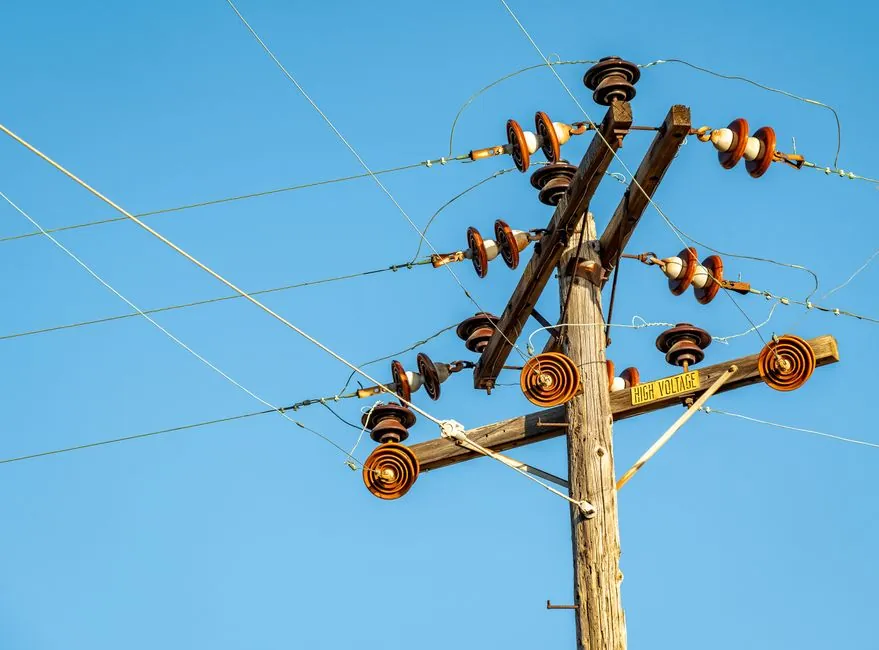
Complex grid developments can require two to three years to procure cables [S3][S5].
Planning must distinguish factory delivery from project readiness, including qualification, route engineering, installation vessels, civil works and interface risk [S1][S3][S5].
Separate factory lead time from project delivery
This range applies to the cable order itself, not the complete transmission scheme.
The IEA reports that procurement of cables can take two to three years, with complexity determining where a project falls within that range [S3][S5]. A utility should therefore place a 12–18 month manufacturing allowance inside a 24–36 month critical-path plan, then separately validate manufacturing slots, accessories, testing, transport, installation and commissioning.
The difference is operational rather than semantic. A project can have cable available before its route permits access, or it can miss the agreed energization date despite receiving cable on schedule. For schedule control, the manufacturer, route readiness and installation contractor should be treated as three separate constraint systems [S1][S3].
Voltage and cable architecture determine the queue
The system selection still has to consider conductor size, insulation level, installation method, thermal rating and circuit configuration rather than voltage class alone.
National Grid operates transmission networks at 275 kV and 400 kV, with approximately 7,200 km of overhead line, 1,400 km of underground cable and about 330 substations [S4]. That operating scale illustrates why cable manufacturing capacity and specialist installation assets are strategic dependencies, not routine purchasing items.
Use four criteria to select the delivery strategy
A 220–500 kV order at 12–18 months is easier to control than a 24–36 month complex-project procurement chain, but factory time is only one of four decision variables [S2][S3].
First, voltage and novelty determine manufacturing and qualification exposure. Second, route type determines installation interfaces: direct burial, ducting, surface trough, deep bore tunnel or cut-and-cover tunnel each introduces different civil dependencies [S4]. Third, installation capacity matters, because land or submarine installation requires suitable vessels, handling systems and route readiness [S1]. Fourth, schedule contingency must reflect the difference between the cable factory order and full project energization.
For complex HVDC links, an integrated EPCI arrangement can place system design, manufacture, installation and commissioning under one contract, reducing interface risk [S1]. For a utility retaining separate contracts, the schedule should not assume that cable delivery automatically releases installation crews, permits or route access.
Offshore and subsea projects carry a different critical path
Submarine cables face constrained manufacturing slots for large diameters and specialized vessel requirements, while offshore wind is expected to absorb 40–50% of high-voltage submarine cable output by 2035, up from about 25% in 2025 [S2]. Projects of this type should not use the 12–18 month land-project benchmark without checking factory loading and vessel availability.
Nexans describes complete land and subsea transmission delivery, including engineering, installation and commissioning, supported by proprietary cable-laying vessels [S1]. Nexans provides complete land and subsea transmission solutions, from engineering to energization, under a single-contractor EPCI model [S1].
Grid developers should secure the vessel and landfall sequence at the same time as the cable slot. Otherwise, a production win can exist without a deliverable project because deepwater equipment, weather windows, permits or shore-side civil works remain unresolved [S1][S3].
Transmission upgrade demand is competing for supply
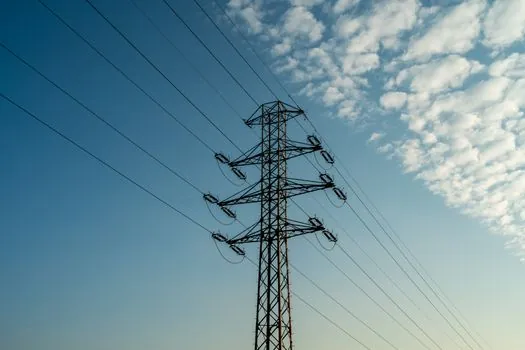
Demand is supported by offshore wind development, replacement of aging grid assets, expansion of backbone transmission networks, and cross-border connections [S1][S2]. The IEA scope covers transmission lines above 66 kV and identifies constrained supply chains, longer component lead times and the need for coordinated planning [S5].
This concentration makes framework agreements, early design maturity and reserved manufacturing capacity more important for qualifying projects. An IEA survey of leading industry players found that it now takes two to three years to procure cables, depending on project complexity [S3][S5].
Procurement should use gates, not a single milestone
A defensible transmission procurement plan separates specification approval, design freeze, type testing, production slot, cable delivery, accessory readiness, installation readiness and energization [S1][S3]. Only the production portion can be compared directly with the 12–18 month range for large 220–500 kV projects [S2].
Raw material exposure requires an additional commercial check. Copper and aluminium represent 50–60% of raw material costs in the cited market analysis, so price-adjustment clauses, conductor design locks and revised material assumptions should be addressed before award [S2]. This exposure can affect both price and the date on which a design change can be accepted without disrupting the production slot.
Owners should also track factory loading, qualification status, route permits, vessel availability, accessory delivery and civil readiness as separate signals. Any one of these can move beyond the nominal cable window, which is why a 12–18 month factory estimate is not a complete schedule contingency [S1][S3][S5].
Build the supply plan around the critical constraint
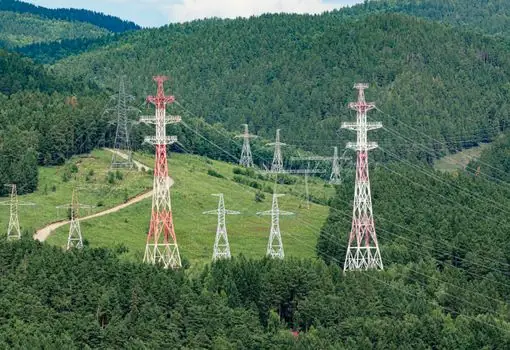
The 2026 planning baseline is 12–18 months for a large 220–500 kV cable order and 2–3 years for procurement on more complex transmission projects [S2][S3][S5]. That distinction should drive early engineering, manufacturing reservations and installation contracting.
For a project exposed to constrained production capacity, reserve the cable slot only after the route and technical specification have sufficient maturity. For a subsea HVDC link, align vessel booking, landfall permits and shore-side construction with the factory slot from the outset [S1]. Track factory loading, certification progress, vessel availability and route readiness as four separate signals, because improvement in one does not remove delay in the others [S2][S3].