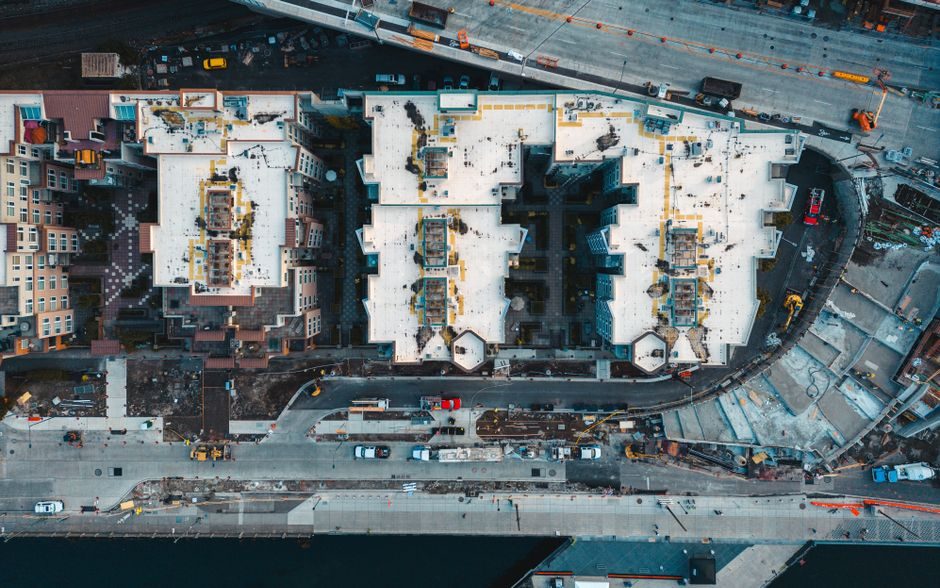
SBS-modified bitumen membrane is built by compounding styrene-butadiene-styrene thermoplastic elastomer into oxidized or straight-run bitumen, then calendering the blend onto a polyester, fiberglass, or composite reinforcement at line speeds of 0-50 m/min for a finished thickness between 1 mm and 5 mm [S3].
Standard production widths run 1 m with 10 m coil lengths, surface options of PE film, aluminum foil, mineral flakes, or colored sand, and a typical MOQ of 2,000 m² against 200,000 m²/month supply capability out of Shanghai under TT or LC terms [S1].
SBS vs APP: Modifier Chemistry and Temperature Envelope
SBS (styrene-butadiene-styrene block copolymer) gives the bitumen rubber-like elasticity and a low-temperature cold-flex rating commonly down to roughly -20 °C, which is why it dominates northern-climate roofing and bridge-deck applications where winter crack resistance is specified [S3].
APP (atactic polypropylene) modifies the same bitumen base but pushes the softening point upward, trading low-temperature flexibility for higher flow resistance and UV tolerance; APP-grade rolls are the default on exposed tropical and subtropical roofs where surface temperatures cross 70 °C [S3].
Both modifiers sit inside a wider polymer-modified family that also includes IPP and rubber-powder grades, all of which improve on oxidized 10/20/30 felts by raising the penetration index and elastic recovery above the base bitumen line [S3].
Reinforcement Mat Options: Polyester, Fiberglass, Composite
Polyester mat (PET) gives the highest tensile and elongation pair, making it the spec for substrates expected to move or crack; fiberglass mat trades elongation for dimensional stability and is the cheaper choice on rigid concrete decks [S3].
Composite and polyester-fiberglass hybrid mats split the difference, supplying moderate tensile strength plus low shrinkage, and are the standard pick for single-ply torch-down systems over metal decks where thermal expansion dominates [S3].
Base-mat weight, in g/m², and the modifier loading in percent of bitumen weight are the two spec knobs the engineer should pin in writing; both numbers drive the published pull-strength, tear, and cold-flex test results on the data sheet [S3].
Where the Membrane Wins: Cost, Track Record, Repairability
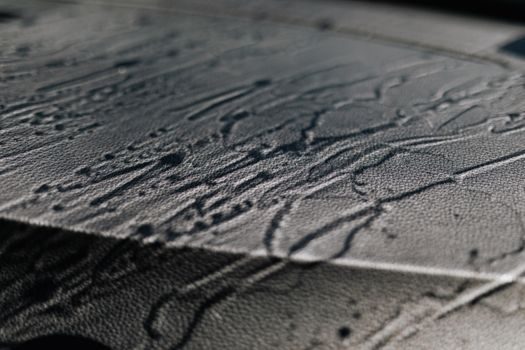
Modified bitumen still underbids most single-ply TPO, PVC, and EPDM alternatives on material cost per square meter at 2-5 mm thickness, and a 20-30 year service life on multi-ply BUR hybrids is the field-proven baseline across parking decks, plant roofs, and plaza waterproofing [S3].
Pairing the sheet with a non-curable rubber-modified asphalt coating (the Chinese market's 非固化橡胶沥青防水涂料 grade) adds creep, self-healing, and damp-substrate adhesion, so any substrate crack stress is absorbed by the coating rather than transmitted into the sheet [S4].
Field repair is straightforward: a torch, a patch, and the same SBS/APP compound will re-fuse laps and penetrations, which is why facility teams keep modified bitumen on the approved-materials list even when newer membranes are spec'd for new builds [S1][S3].
Where the Membrane Loses: Torch Risk, UV, and Seaming Discipline
Torch-applied installation demands open-flame work over combustible substrates, and most project safety rules now require a torch-watch, fire-extinguisher cover, and a hot-work permit per shift; self-adhesive peel-and-stick variants exist but cost more per m² and limit thick (4-5 mm) build-ups [S3].
APP and plain SBS sheets degrade under sustained UV, so any exposed application needs a mineral-granule, aluminum-foil, or painted reflective cap; without that cap, surface embrittlement shows up in 5-8 years on tropical roofs [S1].
Seam quality is operator-driven: cold laps, insufficient bitumen bleed at overlaps, and poorly prepared corners (the yin-yang fillet requirement) are the three repeat failure modes called out on Chinese manufacturer installation guidance, with substrate moisture capped below 8% before primer is rolled [S3].
Selection Criteria: Roof, Deck, Below-Grade, Plant Floor
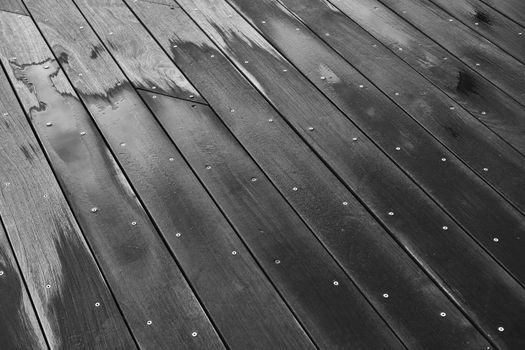
Flat industrial roof in a cold climate: 4 mm SBS on polyester mat, mineral cap sheet, torch-applied two-ply, over primed concrete with substrate moisture under 8% [S3].
Plant roof or plaza deck in a hot climate: 3-4 mm APP on polyester or composite mat with aluminum-foil or mineral finish for UV reflection, single- or two-ply depending on traffic load [S1][S3].
Below-grade foundation wall: 4 mm SBS self-adhesive on composite mat to eliminate torch work in confined spaces, paired with a non-curable rubber-asphalt protection layer to absorb settlement cracks [S3][S4].
For spec-driven cost stack and 20-30 year lifecycle work on insulation-adjacent assemblies, see the polyurethane insulation TCO map; the concrete pump truck reach and chassis map covers the placement side of the deck pour that the membrane will eventually waterproof.
Limitations, Failure Modes, and What to Monitor
Blistering traces to trapped substrate moisture or solvent from cold-applied adhesive; the 8% substrate-moisture ceiling is the single most-violated spec on retrofits, and the failure shows up as interlayer blisters within one to three summers [S3].
Alligatoring and surface checking are UV-driven; a missing granule cap on an APP roof in a 35 °C-plus climate is a 5-year-to-failure schedule, with the cap sheet itself acting as the sacrificial UV layer [S1].
Seam slippage on vertical upturns under 30 cm of hydrostatic head is the third recurring failure mode, and is solved by doubling the lap, switching to a sanded bottom surface for adhesion, or terminating the sheet under a metal counter-flashing [S3].
Sourcing, Standards, and Production Capacity
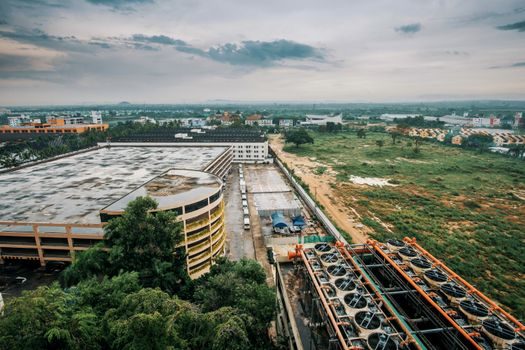
Modified bitumen membrane is governed by region-specific standards covering thickness tolerance, tensile strength, elongation, cold-flex, and heat resistance; the production line spec in [S3] (1-20 million m²/year, 2-5 mm thickness, SBS/APP modifier, PE/Al/mineral surface) aligns with the typical GB 18242 framework used in Chinese supply and most international equivalents for polymer-modified bitumen sheet.
Lead time for a full production line ships in roughly 30-40 days from PO, with overseas installation engineering usually included; MOQ for the finished roll starts at 2,000 m² against a 200,000 m²/month Chinese-mill capability under TT or LC [S1][S3].
For facility teams comparing modified bitumen to other waterproofing chemistries, the broader waterproof membrane spec framework and the modified bitumen membrane reference page anchor the standard product data; the total station advantages and disadvantages spec map shows the same cost-vs-capability trade-off pattern that runs through any torch-applied versus self-adhesive membrane decision.
Track the next sourcing node: 2026 Q3 Chinese-mill price revisions on 4 mm SBS polyester-roll mineral-cap SKUs (a routine seasonal move), and any update to the 8% substrate-moisture primer guidance on self-adhesive grades above 3 mm thickness, as both directly shift installed cost per m² on flat-roof and below-grade bids.
Spec-level background on the components involved: pressure transmitter.