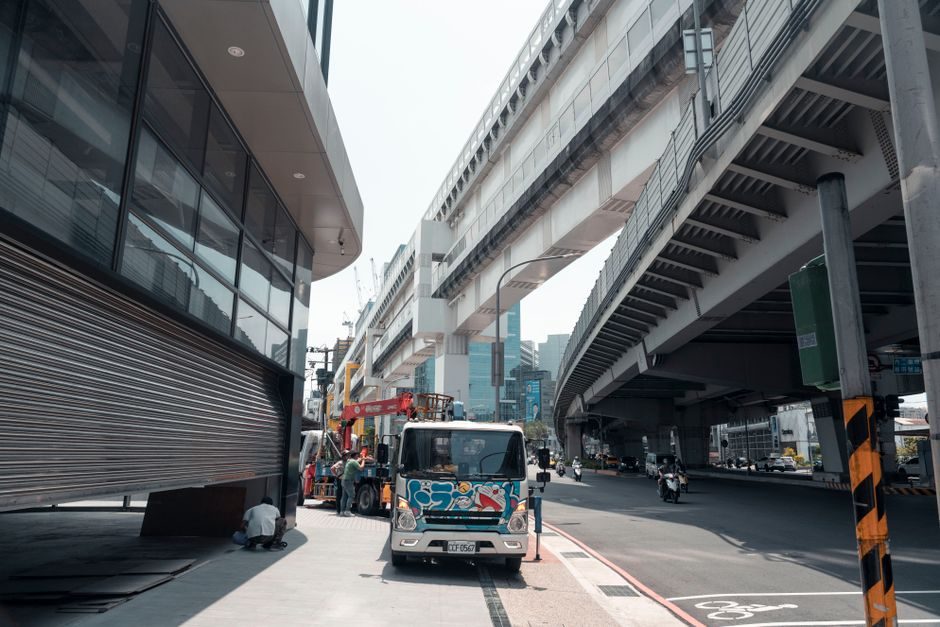
A concrete pump truck is broadly classified by mounting and boom configuration: truck-mounted boom pump, line pump (trailer-mounted), stationary pump, and specialised configurations such as mining or coal-face variants, with reach spanning roughly 17 m to 62 m and total vehicle masses between 21 t and 38 t [S4][S6][S7][S8].
The truck-mounted concrete pump market reached USD 5.19 Billion in 2024, with a projected USD 9.21 Billion by 2034 at 5.9% CAGR, driven by urbanisation in Asia-Pacific and the demand for high-rise, high-efficiency placement [S3].
Truck-Mounted Boom Pumps: 30 m to 62 m Reach Classes
Truck-mounted boom pumps are the dominant type in global specifications, pairing a multi-section articulating boom, an S-valve or rock-valve piston pump, and an open hydraulic system on a purpose-built chassis [S1].
Common OEM configurations include 30 m, 37 m, 47 m, 48 m, and 62 m vertical reach, with the HDL5270THB at 48 m sitting on an 8x4 chassis with manual transmission and Euro 3 emissions compliance [S7], and the 47 m 5-section HZZ5381THB rated at a 38,000 kg total loading mass on a 12,600 x 2,500 x 3,980 mm envelope [S6]. Schwing's 37 m class runs an 8x4 drive, 351-450 hp engine, 21-30 t load capacity, and seats for up to five [S4]. The SANY SYM5180THBES 30C-8 uses ultra-high-strength steel on wear parts and claims a 10% efficiency lift over predecessor boom pumps, with a dual-purpose kit that converts the boom pump into a line pump on the same chassis [S1].
For a detailed treatment of truck-mounted configurations, see the truck-mounted concrete pump reference page.
Line Pumps, Trailer Pumps, and Stationary Pumps
Line pumps (sometimes called trailer pumps) are piston-driven units without a boom; concrete is delivered through a pipeline run manually across the site, making them suited to low-rise, long horizontal runs, tunnels, and foundation pours [S2].
Typical small HBT-series line pumps use an S-tube switching valve, PLC control, air cooling, automatic lubrication, and a remote controller, with high-pressure variants specified for high-rise and long-distance work [S2]. SANY's product tree explicitly lists Trailer Pump, Line Pump, Placing Boom, and Truck-mounted Concrete Pump as separate categories, confirming that line and trailer are not synonymous even though many catalogs use them interchangeably [S1].
Stationary concrete pumps are skid- or trailer-mounted high-pressure units that feed placing booms or pipeline networks on large infrastructure sites, including dam pours, ports, and metro shafts where a boom truck cannot physically reach. Specialised variants include explosion-proof (Ex d) configurations for coal mines and tunnels, with anti-explosion pumps specifically engineered for underground gassy environments and re-pumping function for handling intermittent blockages [S2].
Chassis, Drivetrain, and Load-Class Match-Up
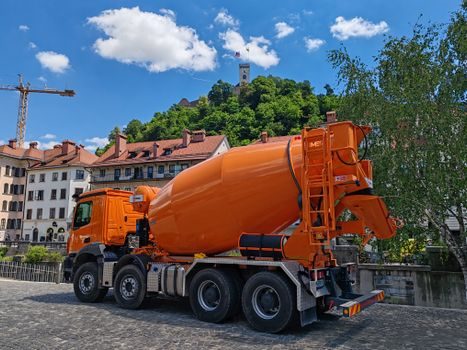
Pump-truck chassis selection follows boom length and counterweight demand, with most 37-48 m units on 8x4 drives rated at 351-450 hp and engine displacements above 8 L [S4][S7].
Sub-30 m units such as the SYM5180THBES 30C-8 are lighter and can be specified on smaller wheelbases, while 47-48 m units like the HZZ5381THB and HDL5270THB push total mass to 38,000 kg with 8x4 configurations [S1][S6][S7]. The 62 m boom class from JUHE GROUP sits at the top of the commercial reach envelope and requires reinforced outrigger pads plus front and rear stabilisers beyond the standard 8x4 layout [S8].
Where the work is hauling wet concrete to the pump rather than placing it from the boom, a concrete mixer truck is the complementary asset; the pump truck takes over once the mix arrives at the placement zone.
Pumping Mechanism: S-Valve, Rock Valve, and Hydraulic Circuit
The two concrete switchgear standards are the S-valve (S-tube) and the rock valve, both used to reverse piston direction without stopping concrete flow. SANY's 30 m class uses an open hydraulic system with high-end control valves, claiming 10% better pumping efficiency and reduced blockage compared to closed-loop predecessors [S1].
Small HBT-series line pumps use an S-valve with wear-resistant alloy plates and manifolds, and add PLC control plus an automatic lubrication circuit to keep the wear parts wetted during long runs [S2]. High-pressure variants for high-rise work push cylinder bore and stroke to maintain flow at heads above 100 m, with re-pumping function as a standard feature for clearing blockages without dismantling the delivery line [S2].
Wear parts such as the Schwing bend-pipe series are made from St52 seamless pipe with 45Mn2 forged flanges, DN125 standard size, 90/60/45/30 degree elbows, and a working capacity of 25,000-45,000 cbm before scheduled replacement, which is the right benchmark to specify for spares inventory on any boom-pump fleet [S5].
Selection Criteria: Reach, Site Access, and Pump Pressure
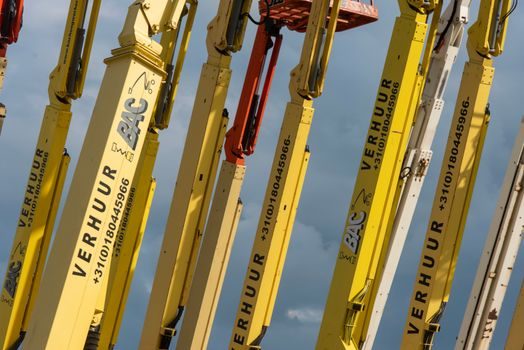
Selection should start with three numbers: vertical reach required, horizontal pipeline run, and hourly output in cubic metres per hour. A 30 m boom covers most low- and mid-rise residential slabs; 37-48 m booms cover commercial high-rise; 56-62 m booms target dam abutments, bridge pylons, and industrial chimney pours [S1][S4][S7][S8].
Site access is the second gate: a 47 m 8x4 with full outriggers needs roughly 11 m of stabiliser footprint, which a narrow urban lane cannot provide, so the same pour may be forced to a stationary pump plus placing boom instead. Third, pressure class: high-rise line pumps in the SANY and Putzmeister families deliver above 200 bar at the cylinder head, which dictates the use of St52 or higher-grade delivery pipe and ZX or F/M flanges [S1][S2][S5].
Who It Is For, and Where It Falls Short
Truck-mounted boom pumps are the right tool for commercial and high-rise pours where reach and repositioning speed matter, and where the site can absorb a 21-38 t vehicle on outriggers [S1][S4][S6][S7]. Line pumps fit tunnel, foundation, and small-site pours where the boom is overkill or cannot fit; stationary pumps plus placing booms are the correct stack for very high-rise, dam, and large infrastructure where boom geometry is fixed but pipeline length must run hundreds of metres [S1][S2].
Where these tools fail: indoor or basement pours with no truck access, low-overhead environments below boom rest height, gassy underground coal faces (use anti-explosion Ex variants) [S2], and very small pour volumes where a dump truck and crane bucket remains the cheapest option. For a related look at the haul-side vehicle mix, the concrete mixer truck classifications map pairs with this article on the placement side.
Specification and Sourcing Standards
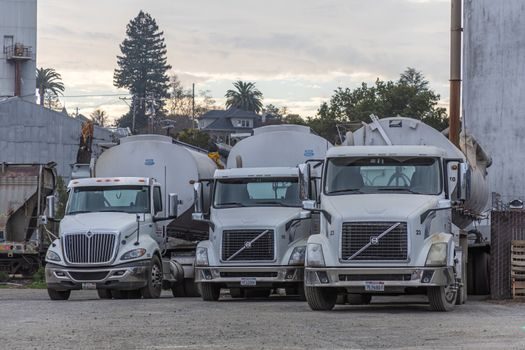
Specifications should lock the boom sections, outrigger spread, theoretical output (m^3/h), concrete cylinder bore x stroke, hopper capacity, and engine emission class on the data sheet before price is discussed [S1][S4][S6][S7].
Wear-part specification should follow the St52 / 45Mn2 / DN125 / ZX-F/M pattern already established for Schwing-class bend pipes, with 25,000-45,000 cbm working capacity as the swap-out benchmark [S5]. Operators should also confirm CE / GB certification, Euro 3 or equivalent emission standard, and CCC for any unit exported to South America, Southeast Asia, Africa, or the Middle East [S7]. Track two signals over the next quarter: the Asia-Pacific share of the truck-mounted pump market within the USD 9.21 Billion 2034 projection [S3], and the rate at which 8x4 chassis supply normalises for the 37-48 m boom class, which currently gates 2026 delivery slots on multiple OEM lines [S4][S6][S7].