
For mold base and metal-mold assembly, epoxy systems lead structural bonding, while ethyl-cyanoacrylate grades (25 MPa shear strength, less than 30 s fixture time, 0.10 mm maximum gap fill) handle instant screw-locking and jigging [S2][S4].
Scope of choice: tooling and mold material adhesives cover three distinct job families: structural mold-base adhesion (model structure surfaces to steel/aluminum mold plates), shell and core sand-mold binders for foundries, and silicone-based bonding, sealing, and patching in flexible silicone molds [S1][S3][S5]. Selection is driven by bond strength, temperature ceiling, and material compatibility rather than by a single product grade.
Structural Bonds on Mold Bases: Why Epoxy Wins for Model Structure Surfaces
Epoxy-based adhesive systems are the widely recommended structural choice for adhering model structure surfaces on mold bases, combining high bond strength, heat resistance, and chemical compatibility with steel, aluminum, and common composite mold materials [S4].
Surface preparation governs epoxy performance: the substrate must be cleaned of dust, oil, and release residue, the adhesive applied evenly, and the joint clamped until full cure per the manufacturer schedule [S4]. Compared with cyanoacrylate, polyurethane, and acrylic alternatives, epoxy retains higher adhesion strength and temperature resistance on metal mold substrates, which is why tooling shops still default to two-part epoxy for the permanent joints on mold base assemblies rather than reaching for faster-curing chemistries [S4]. The trade-off is cure time: epoxies typically need hours at room temperature or a controlled heat ramp, versus the seconds-to-minutes fixture achieved by industrial adhesive cyanoacrylate grades.
Instant Metal-Mold Assembly: Ethyl Cyanoacrylate Performance Envelope
Ethyl-cyanoacrylate instant adhesives formulated for metal mold making deliver 25 MPa cured shear strength, 120 mPa.s viscosity, 1.1 g/cm³ density, fixture in under 30 s, full cure in 24 h, and an operating range of minus 55 to plus 83 °C [S2].
The 0.10 mm maximum gap-fill figure defines the practical joint tolerance: anything looser than a slip-fit and the cure profile shifts, so the spec doubles as a machining-tolerance gate. SD496-grade cyanoacrylates are positioned for screw fixing, metal-to-metal mold assembly, and electronic-component bonding where a fixture in seconds matters more than long-term heat aging [S2]. For faster throughput, a compatible accelerator (SD-32) drops cure time further, and surface preparation with acetone or trichloroethylene after dry abrasion is the documented procedure to reach the published 25 MPa figure [S2]. The 12-month shelf life at below 25 °C storage and 20 g or 1000 g packaging point to bench-scale and production-line use alike [S2].
Sand and Shell Mold Binders: Adhesive Quality Gates for Foundries
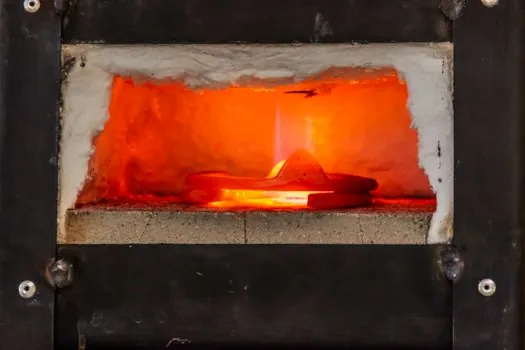
Foundry adhesive systems, typically binder plus resin plus curing agent, hold the sand or refractory particles together and must survive molten-metal pour without decomposing, off-gassing, or losing cohesion [S3].
Adhesive selection in a foundry is a four-axis problem. (1) Binding strength, matched to sand type and poured alloy, determines whether the mold survives thermal and mechanical shock or fails by sand inclusions and misruns. (2) Wetting and controlled viscosity decide surface fidelity: poor coverage yields roughness, blowholes, and washout of fine features, which is especially costly in investment casting and high-precision tooling. (3) Thermal stability at pour temperature prevents decomposition and gas evolution that crack the mold or pinhole the casting. (4) Reusability across curing cycles is the hidden cost lever: consistent cure kinetics across cycles scrap fewer molds and stabilize batch quality [S3]. Water-based, low-VOC binder systems are increasingly adopted for the same binding strength and thermal resistance with reduced workplace exposure and fewer gas defects, a trade relevant to any new casting mold line or sand casting mold facility [S3].
Silicone Adhesives: Repair, Prototyping, and Small-Run Silicone Molds
Silicone adhesive is a one- or two-part moisture- or catalyst-cure material (Shore A 20 to 60 in typical mold grades) used as a mold body, a bonding layer between silicone mold sections, a seam sealer, or a detail-capture coating over a master before backing with rigid structure [S5].
Versus dedicated mold-making RTV silicone, silicone adhesive trades de-gassing compatibility, ultimate detail reproduction, and long-term release life for convenience: no mixing for one-part grades, cartridge-dispensed, and usable straight from the bench for small molds, patch repairs, and short prototype runs [S5]. Oxime-cure (a neutral-cure subset) gives good adhesion to many substrates and is widely used for mold repairs, but cure behavior in very thick sections should be checked because moisture-cure systems skin over and under-cure inside the bulk [S5]. For flexible tooling where the production volume does not justify a dedicated RTV tool, industrial adhesive silicone grades remain a practical path; for high-precision, high-cavity-count production, dedicated RTV still wins on detail and release life [S5].
Decision Comparison: Epoxy vs. Cyanoacrylate vs. Silicone vs. Foundry Binder
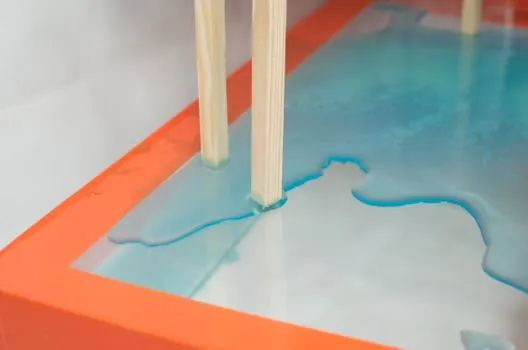
No single chemistry covers all four job families in mold and die work; the spec sheet and the pour temperature decide which one is correct. [S5]
Selection criteria mapped to chemistry: (1) Bond strength on metal mold substrates is highest for two-part epoxy and ultra-high-strength ethyl cyanoacrylate (25 MPa cured shear per [S2]), while silicone adhesive is limited to elastomeric tear strength suited to flexible molds [S4][S5]. (2) Continuous operating temperature favors epoxy and heat-resistant foundry binders for hot-side service, whereas standard cyanoacrylate tops out near 83 °C and silicone adhesive stays stable across a wider thermal band but is not a structural load path [S2][S3][S5]. (3) Cure speed: cyanoacrylate fixtures in under 30 s, silicone moisture-cure skins in minutes to hours depending on section thickness, foundry binders cure on the box cycle, and two-part epoxy is the slowest of the four [S2][S3][S4][S5]. (4) Joint tolerance: cyanoacrylate caps at 0.10 mm gap, epoxy tolerates larger fills with filled grades, silicone adhesive bridges variable gaps, and foundry binder performance is a function of sand coating uniformity rather than a single joint dimension [S2][S3][S4][S5]. (5) Application fit: epoxy for permanent mold-base joints, cyanoacrylate for screw-locking, jigging, and small metal-mold sub-assemblies, foundry binder for sand and shell molds in metal casting, and silicone adhesive for repair and short-run silicone tooling [S2][S3][S4][S5].
Limitations, Failure Modes, and Selection Pitfalls
Cyanoacrylates fail above their published temperature ceiling, lose strength on oily or poorly abraded surfaces, and polymerize rapidly in the bottle tip if the cap is not wiped and sealed after each use [S2].
Cyanoacrylate vapor also irritates mucous membranes and eyes, and skin contact bonds to the epidermis within seconds, so acetone wash plus pumice and medical follow-up are the documented first-aid steps [S2]. Epoxies suffer from mixing-ratio sensitivity and slow cold-temperature cure, and any shortcut on surface prep (residual mold release, oil, dust) collapses the bond line on a mold base joint [S4]. Foundry binders that release volatiles at pour temperature create gas defects and operator exposure, which is why low-VOC, water-based systems are displacing older solvent-borne phenolic binders in new precision-casting lines [S3]. Silicone adhesive cures unreliably in deep sections because moisture-cure systems skin over before the bulk cures, so section thickness and humidity must both be controlled on any mold made from adhesive rather than casting RTV [S5].
Standards, Sourcing, and Practical Acceptance Criteria
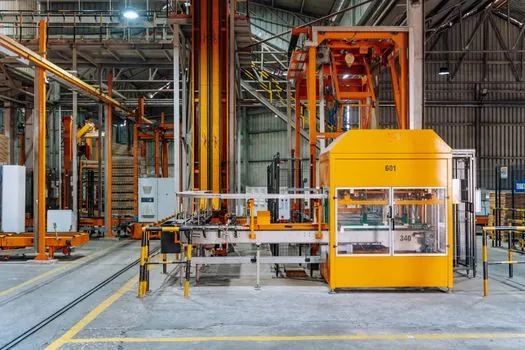
Manufacturer published technical data (shear strength, viscosity, fixture time, temperature range) is the primary acceptance reference for one-part adhesives like ethyl cyanoacrylate, with the explicit caveat that lab data is not a product-acceptance criterion and that user trials are required before release [S2].
For structural mold-base bonds, the published recommendation is to follow the adhesive manufacturer's surface-prep, mix ratio, and cure schedule verbatim, because deviation is the dominant cause of field failures on mold base structure surfaces [S4]. For foundries, the move to low-emission, water-based binder systems is driven by workplace safety and gas-defect reduction without sacrificing binding strength or thermal resistance, a criteria set that any new casting mold line or sand casting mold facility should weigh against the cost of reformulating an existing process [S3]. Trackable signals over the next planning cycle: wider adoption of low-VOC water-based foundry binders in precision casting, more one-part neutral-cure silicone grades labeled for mold repair with verified thick-section cure data, and continued displacement of polyurethane and acrylic structural adhesives by two-part epoxy on hot-side mold-base joints [S3][S4][S5].
Closing note: the next decision node for any tooling buyer is a joint-by-joint adhesive map, separating permanent structural bonds (epoxy), instant metal-mold sub-assemblies (ethyl cyanoacrylate, 25 MPa class), shell and core sand-mold binders (heat-resistant, low-VOC), and silicone repair compounds, before any vendor selection begins [S2][S3][S4][S5].
For related coverage, see Urban Aerial Work Truck Selection: 12 m Spec Bands, Boom Geometry, and Chassis Gates.