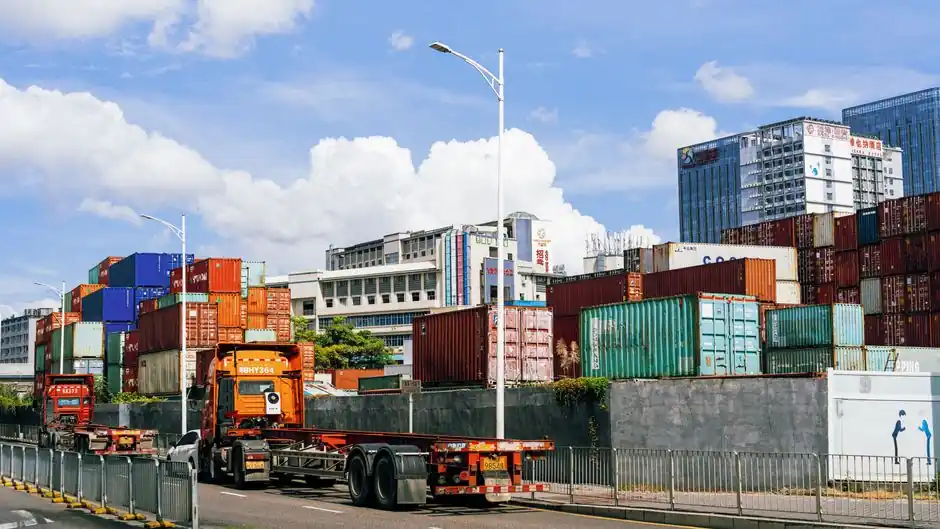
A 12 m truck-mounted aerial work platform on a 5-7 t cab-chassis is the dominant 2026 urban-infrastructure pick, with Okorder-listed China-export supply at 500 unit/month single-source capacity on FOB Tianjin terms and a 1-unit MOQ [S1].
The four hard gates that fix the spec are platform working height (commercial-truck segment spans 8-45 m), platform capacity (commonly 200-500 kg), terrain class (paved urban, indoor slab, or rough site), and power source (electric, diesel, or hybrid) [S2]. Locking those four against the job-site envelope typically halves RFQ rework, because every downstream option (outrigger spread, jib length, turntable slew) is forced into a tighter design window once height and chassis are pinned [S1].
Working-Height Bands by Urban Job Envelope
The 12 m class clears 3-4 storeys with a safe approach envelope, making it the workhorse for street-lighting maintenance, signage install, and telecom node work on constrained urban pads [S1]. Stepping to 16-20 m covers most bridge-inspection and small-warehouse roof-access scopes, while 30-45 m units dominate utility-line construction, large-facade painting, and wind-turbine blade access [S1][S2].
Compact car-license road-truck units commonly reach 16-28 m, while the largest telescopic machines extend to 40-77 m and beyond, with the Chinese national standard GB/T 9465-2018 covering units up to a maximum working height of 100 m [S3]. Pick height by adding the maximum reach-to-target plus the working-altitude safety margin, then round up to the next standard platform class, never down, because truck-mounted booms lose reach as outrigger spread shrinks on tight job sites [S1].
Boom Geometry: Articulated vs Telescopic vs Insulated
Articulated booms with knuckle joints win where the target sits over obstacles (parked cars, parapets, tree canopies) because the joint folds the tip over an obstruction a straight telescopic would have to climb around; a 16 m articulated unit such as the DAWP16SA delivers 7.77 m maximum horizontal extended distance, 360° non-continuous platform swing, and 140° small-arm luffing range (+76° / -64°) on 40% gradability [S1][S2].
Telescopic booms trade that fold-over flexibility for longer clean horizontal reach from a narrow outrigger footprint, dominating the 30-45 m utility band where 32-36 m electric telescopic boom lifts on truck chassis list at 9,800-20,500 USD per piece MOQ 1 in current Chinese export catalogues [S1][S2]. Insulated booms, with an FRP (fibreglass-reinforced plastic) insert section on the upper arm, are mandatory for live-line work on distribution voltages and are the primary electrical barrier in Category A bare-hand work; the rating is expressed as a dielectric-withstand class and the spec should anchor to IEC 61057, which covers aerial devices with insulating booms for live working on AC installations up to 800 kV, with exact test voltages confirmed against the project voltage class [S1][S3]. For the broader machine taxonomy including scissor and spider booms, the aerial work platform reference covers the full family. Choosing among these geometries is one of the core aerial work truck selection gates.
Chassis, GVW, and the Outrigger Trade-Off
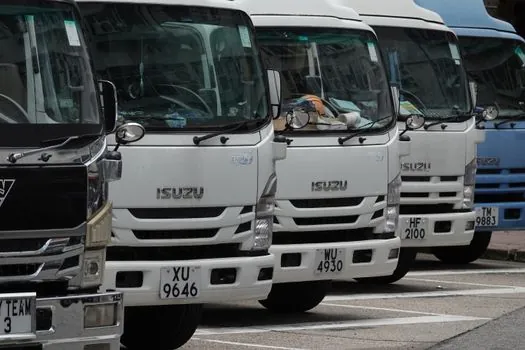
Chassis is the silent spec-killer: a 12 m platform can ride on a 5-7 t cab-chassis, while a 30-45 m unit almost always needs a 16-25 t three-axle or four-axle chassis to handle the live-load moment when the boom is extended over a corner outrigger [S1]. GVW also sets the road-permit envelope; in most EU and US jurisdictions, anything above 18 t GVW triggers a heavier permit class and a different driver-licence tier [S1].
Outrigger spread, not boom length, usually limits real-world reach. Front-to-rear span of 4.5-5.5 m is the urban envelope; full 6-7 m spreads are common on 30 m+ units and need a clear pad [S1]. A self-check worth keeping: the outrigger footprint must be wide enough that the rated platform load stays inside the stability envelope, because the platform load is the binding constraint on corner loading, not the boom hydraulics. A representative compact spec from current catalogues is the CLW5048JGKCDP at 4,495 kg GVW on a JX4D30B6H engine (2,892 ml displacement, 85 kW / 115 HP), 100 km/h maximum speed, 6.50R15LT or 7.00R16LT tires, and Euro 2/3/4/5/6 emission compliance [S5].
Compact Stowed-Dimension Class for Tight Urban Pads
For street-tree pruning, sign install, and last-mile telecom node work, the compact class keeps the envelope inside a typical urban parking footprint: model RRR5046JGKJ6 publishes 5,995 mm × 1,980 mm × 2,990 mm overall, 1,385 mm front track, 1,425 mm rear track, 1,725 / 2,770 kg axle load, 1,075 mm front overhang, 1,546 mm rear overhang, 200 kg payload, 115 HP, 4×2 drive, and a manual transmission on Euro 3 [S6]. The double-cabin JMC 13 m 4×2 variant layers a CANbus-controlled electrical system, automatic interlock for getting on and off, an electric emergency pump, and computer-controlled automatic limiting with a dangerous-work alarm, on a 99 unit/month supply line with 7-30 day delivery [S4].
These compact specs all sit in the same band as a typical 4,495 kg GVW 15-20 m lift on a two-shaft folding-arm chassis with a three-arm jib and 11-13 t maximum lifting weight [S5]. For procurement teams comparing a dump truck chassis donor against a purpose-built MEWP chassis, the salient difference is the outrigger interface and the rear-axle load rating, not the engine or cab. Buyers who already operate utility fleets on Isuzu platforms can match the same 12-16 m envelope against their existing maintenance schedule and driver pool, per Isuzu manlift guidance for street-lighting and power-line work [S7].
Power Pack, Duty Cycle, and Indoor Eligibility
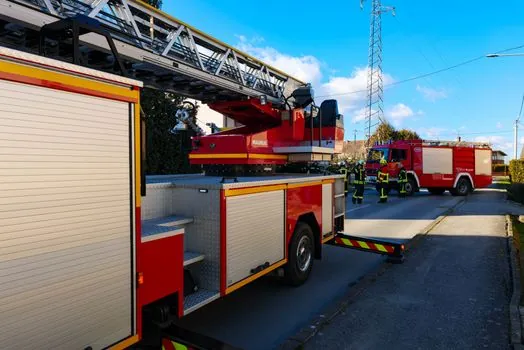
Battery-electric and hybrid power packs are increasingly offered so the boom can be worked with the engine off, enabling emissions-free, low-noise, or indoor operation in environments where running a diesel engine is unacceptable [S3]. The published GTBZ32 datasheet sets a useful benchmark: 33.7 m working height, 250 kg platform capacity, 24.4 m maximum horizontal reach, 0.91 m × 0.76 m deck, 3.66 m wheelbase, 0.43 m ground clearance, 2.49 m axle-retracted width, 4.4 km/h stowed drive and 1.1 km/h raised drive, on 12.00-20 / 8.5 solid tires with 24 V DC controls and full hydraulic platform rotation [S2].
For pre-dawn urban maintenance windows where noise and emissions constraints are tight, the electric telescopic class in the 32-36 m band (9,800-20,500 USD per piece MOQ 1) and the 20 m / 500 kg electric scissor class (1,200-4,000 USD per piece MOQ 1) both fit the duty cycle, with scissor giving the lowest cost per metre of platform area but limited horizontal reach for façade work [S2][S8]. The chassis-engine options on truck-mounted MEWPs mirror those on conventional cab-chassis, e.g. the CLW5100JGKZ on EQ1101GLJ2 chassis with EQB160-20 / YC4E140-20 / YC6J170-21 engines at 160 HP, 9,200 × 2,470 × 3,610 mm overall, 2 t payload, and 4,500 / 4,700 mm wheelbase options [S2].
Selection Matrix: Which Geometry Fits Which Urban Job
For 2026 urban-infrastructure procurement, the four-way trade-off lines up as: (1) vertical height needed (12 m for street-lighting and signage, 16-20 m for bridge soffit and small warehouse, 30-45 m for utility and large façade); (2) horizontal reach needed (scissor = vertical only, telescopic = straight-line, articulated = fold-over obstacles); (3) deck load (200 kg for one-person tools, 250-500 kg for two-person plus materials); (4) drive configuration and emission envelope (truck-mounted diesel for road mobility between sites, electric or hybrid for indoor, pre-dawn, or low-noise zones) [S1][S2]. Cross-referenced against the live-line scope, the insulation class and IEC 61057 dielectric rating become a fifth gate, while for forestry-adjacent urban tree work, basket geometry and reach-over-canopy also enter the spec (see the forestry aerial work truck spec path for the basket and insulation overlay) [S1][S3].
On delivery and after-sales, leading Chinese export groups run six production facilities covering more than 5,000 acres with 100,000 special-vehicles-per-year capacity, ISO 9001 / ISO 14001 / ISO 45001 / ASME / EU ADR certifications, and 12-month or 25,000-50,000 km warranties with overseas technical training and 24/7 support [S5]. Trackable signals worth watching into the next quarter: any update to the 12 m stock-band MOQ and Tianjin FOB lead time, the appearance of higher-capacity battery-electric 16 m units in the same 1,200-4,000 USD price band, and any IEC 61057 test-voltage revisions that would re-anchor the live-line insulation spec [S1][S2][S3].