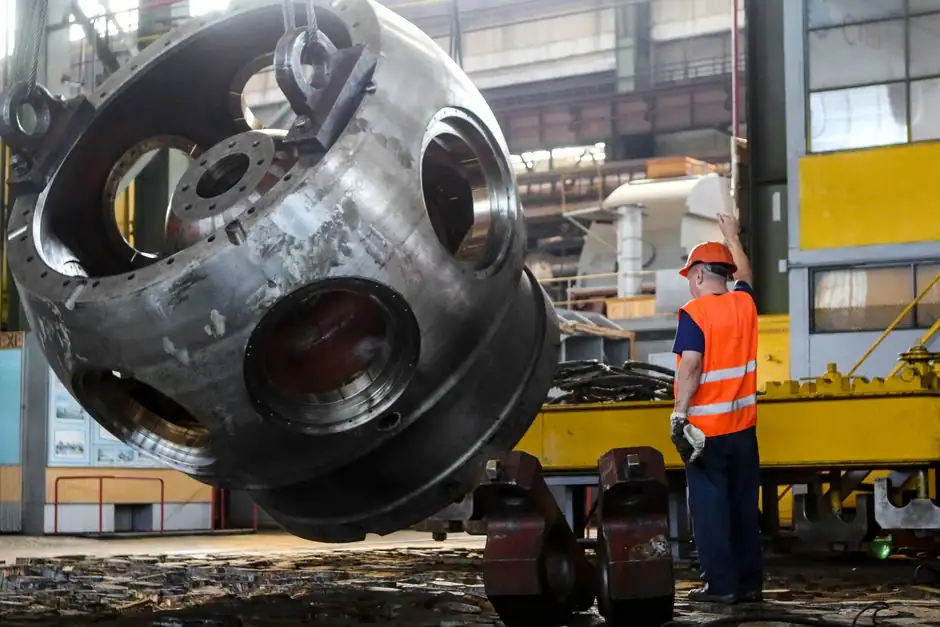
For pump and valve producers, the molding line decision is downstream of the fluid-handling spec: a foundry that cannot hold the geometry, alloy, and surface finish dictated by the pump curve and the fluid chemistry will eat margin on every casting. Industrial fluid-handling infrastructure already numbers more than 180 million pumps and 240 million valves installed worldwide [S2], and centrifugal pumps alone account for 62–67% of those installations, so the bulk of replacement and expansion volume runs through iron and steel casting routes.
Pumps and valves are also unforgiving end-uses: pressure drops, cavitation trim selection, and corrosion class all flow back into geometry and metallurgy, which in turn dictate the molding line that can economically produce them. Pick the wrong molding process and the cost shows up as pattern wear, porosity, or weld-repair rates, not in the equipment quote.
Start with the pump curve, not the machine catalog
Sizing a control valve requires minimum, normal, and maximum flow rates plus inlet and outlet pressures, fluid specific gravity, viscosity, and temperature, and the same parameters that size the valve also constrain the casting drawing [S1]. A linear, anti-cavitation trim is the typical recommendation for clean service, with a shutoff class rating chosen to match the pump deadhead pressure [S1]. That shutoff pressure, multiplied across the casing area, is what sets the minimum section thickness the molding process must consistently fill.
Single-stage centrifugal pumps cover heads up to about 40–50 m while multistage designs reach past 105 m for boiler-feed service, so a foundry mixing municipal-pump casings and high-pressure multistage barrels on one line is mixing two different casting families [S2]. A consistent intake of low-head single-stage casings tolerates a wider process window than a line bouncing between single-stage volutes and high-head barrel sections, which is one reason automatic molding line builders sell productivity by takt and mix stability, not by raw flask size.
Match molding process to part geometry and alloy
Valve bodies above DN50, pump casings, and most fire-protection fittings remain the natural home of green-sand and shell molding machine cells, because the section thicknesses (typically 8–25 mm on body walls, 12–40 mm on flanges) sit inside the comfort zone of both processes. Shell molding earns its premium on the hydraulic and dimensional-consistency side, which matters for valve seat finishes and gasket face flatness, while green-sand keeps winning on cost per kilogram for high-volume commodity cast iron. [S5]
For high-mix pump foundries running short batches with frequent pattern changes, static-pressure molding machine cells give the productivity of a high-pressure line without the hard-tooling cost of a tight flask, and they handle the wide envelope from 50 kg pump casings up to multi-ton valve bodies that characterize a typical pump-and-valve job shop. The trade-off versus a dedicated high-pressure flask line is flask wear and a slightly higher sand-addition rate, so the breakeven is roughly 3,000–5,000 flasks per pattern before a dedicated flask pays back.
For titanium and other reactive-metal valves, the manufacturing-route question is moving away from casting: ColdMetalFusion (CMF) sinter-based additive manufacturing on systems such as the EOS FORMIGA P 110 CMF is positioned as a scalable alternative to titanium casting, with better agility, lower tooling cost, and freedom on features like twisted impeller blades and internal diffusers that cast titanium struggles to produce [S4]. For pumps and valves in chemical, hygienic, and high-pressure service, that trade-off is now part of the molding-line conversation, not a separate prototyping step.
Pump-and-valve families versus molding routes
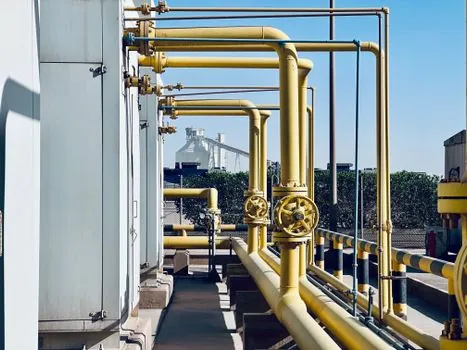
Three casting families dominate a typical pump-and-valve foundry, and each maps to a different molding sweet spot. Cast iron and ductile iron bodies (EN-GJL-200 to EN-GJS-700) make up the bulk of municipal, HVAC, and general-process valve bodies plus most end-suction pump casings, and they run cleanly on green-sand horizontal or vertical flask lines at flask sizes from roughly 600×500 mm up to 1,200×1,000 mm. Cast steel and duplex/stainless bodies (ASTM A216 WCB, A351 CF8M, 2205 duplex) for higher pressures and corrosive service demand tighter sand control, which is where shell molding and high-pressure molding line cells with sand reclamation deliver. [S2]
Titanium, bronze, and high-nickel alloy bodies are a smaller volume but a high-margin slice, and on these the manufacturing-route trade-off between casting and sinter-based additive is sharp: titanium casting forces specialized molds, controlled atmospheres, and advanced melting, and it still struggles with thin walls, tight radii, and internal flow channels common to pump and valve geometry [S4]. The decision rule is straightforward: if the part needs internal flow channels, weight-graded lattice, or a geometry that drives machining scrap above 30%, move it off casting and onto a CMF or equivalent sinter AM route; if it is a standard volute, gate, or body in a section thickness range the foundry already runs, stay on shell or green-sand.
Selection criteria a process engineer can defend
Five criteria reliably separate a good molding-line choice from a regretted one in pump and valve work. First, alloy coverage: the line must handle the iron grade mix first, with steel and stainless as upside; a foundry quoting on green-sand alone will struggle to certify the duplex bodies a chemical plant asks for. Third, sand control: moisture 3.0–4.5% and compactibility 35–45% on green-sand, or shell tensile strength above 3.5 MPa for shell, are the operating bands that hold tolerance across a 40°C ambient swing. [S2]
Fourth, casting yield: aim for 65–75% on pump casings and 70–80% on valve bodies before machining, with weld-repair rates held under 5% on pressure-containing surfaces; if the line cannot deliver that, the lighting equipment and electric lamps and process-control spend that follows will not save it. Fifth, energy and reclamation: a modern high-pressure molding line with sand reclamation typically lands at 8–12 kWh per ton of finished casting, against 15–20 kWh per ton on older green-sand without reclamation, and that delta compounds across the 1.5–3.0 kWh per flask consumption most lines report in pump-and-valve duty.
Centrifugal pump and rotary lobe pump casings are the highest-volume work in the queue, and they respond to a narrow set of process variables; positive-displacement and diaphragm pump housings, by contrast, tolerate higher viscosity and abrasive media, which lets the foundry run them on less tightly controlled sand [S2]. That asymmetry is one reason molding line builders segment their offerings by part family instead of selling tonnage.
Fluid-handling subsystem context changes the upstream demand
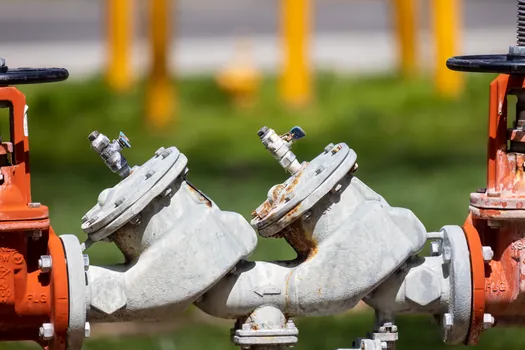
OEMs that previously bought pumps, valves, and sensors separately are now asking suppliers to deliver an integrated fluidic subsystem: one case study integrated close to 100 valves, a pump, and nearly 100 pressure sensors into a single validated, production-ready module with shared electronics and firmware [S5]. For foundries this matters because subsystem buyers want repeatable pressure ratings, surface finishes, and port geometries across hundreds of identical castings, which pushes the molding line choice toward automation and process control rather than toward the cheapest flask.
The same logic applies on the process-plant side: failures are rarely about one defective part, they trace back to a spec mismatch between pump, valve, and piping, and the Joukowsky-spike pressure transients that follow a fast valve closure can tear piping supports and mechanical seals loose in milliseconds [S3]. The molding line that consistently holds flange flatness, wall thickness, and surface finish on every casting is the one that keeps the whole system inside its design margin.
Where the 2026 molding line decision actually lands
For a greenfield pump-and-valve foundry in 2026, the defensible configuration is a high-pressure automatic molding line on a 1,000×800 mm flask for the 60–70% of volume that is cast iron and ductile iron pump casings and valve bodies, paired with a shell molding machine cell for stainless and duplex bodies that need tighter sand control, and a static-pressure or flexible flask line for short-run and emergency work. Titanium and other reactive-metal parts in the 2–10 kg range now go to a CMF or equivalent sinter AM route rather than a casting cell [S4], because the design freedom and lead-time win outweigh the casting process's familiarity.
Two signals worth tracking over the next two quarters: the share of pump and valve OEM RFQs that bundle pump, valve, and sensor into a single subsystem spec, which is rising off a small base [S5], and any tightening of pressure-class certification on ductile-iron valve bodies, which tends to land new green-sand lines straight onto higher-pressure flask tooling. For related selection logic on a different cast-part family, the same spec-first method used for molding line selection for agriculture machinery applies: pick the alloy and the part envelope, then let the molding process follow.