Molybdenum is not a mined-on-spec metal in the way copper or zinc is: it is recovered as a by-product of large-scale copper mining, and roughly 0.5% by weight of those copper ores is molybdenite (MoS2) that must be floated off before being roasted to technical molybdenum oxide at ~600 °C [S2].
That single upstream fact shapes every procurement decision a steel mill, catalyst maker, or refractory buyer makes: the metal you order is the output of a copper mine's tail circuit, with the Chilean operation Molymet alone covering around 35% of global molybdenum demand and 70% of rhenium, a recovered roasting by-product that typically runs at ~0.1% of the concentrate [S2].
Upstream geometry: where the units actually come from
The world's largest molybdenum reserves sit in North America, South America, and China, and the bulk of merchant concentrate is produced as a by-product of Chilean copper mining, where ores carry roughly 0.5% molybdenite by weight and are concentrated by froth flotation to a concentrate averaging about 85% MoS2 [S2]. Procurement teams should treat the supply chain as copper-coupled, not free-standing: a copper mine outage, a smelter maintenance window, or a concentrate offtake reshuffle is what moves Mo prices, not a "molybdenum market" event.
Because the concentrate must be roasted to technical molybdenum oxide (TMO) and then sublimated at ~1000 °C or chemically purified into ammonium dimolybdate (ADM) or MoO3 before hydrogen reduction to Mo metal powder, a serious buyer maps the converter tier separately from the miner tier [S2]. Molymet, with production and sales offices in eight countries, is the single largest processor of molybdenum ore concentrates and supplies downstream fabricators through long-term shareholdings, including the Plansee Group [S2].
Procurement framework: 4-part model applied to a by-product metal
A 2026 procurement strategy framework groups activity into four blocks: (1) a clear category strategy and spend baseline, (2) a structured supplier-selection process, (3) tight contract and SRM execution, and (4) continuous performance measurement with digital enablement, all anchored in stakeholder alignment and change management [S1]. For molybdenum, block 1 means naming whether you are buying FeMo for steelmaking, MoO3 for catalysts, or Mo metal powder for sintering, and which ASTM/ISO grade band applies, because spec drift between these forms is the most common quality dispute.
Strategic procurement is defined as large-volume, long-term purchases with significant financial and operational impact requiring high levels of planning, sitting alongside direct procurement of raw materials, indirect procurement of MRO services, and emergency spot buys reserved for unplanned disruptions [S3]. Molybdenum fits "strategic" almost regardless of tonnage: a single missed FeMo lot can derail a heat-lot of HSLA plate, so contract terms, dual-source clauses, and safety stock belong in the base specification, not in a post-incident review [S1][S3].
Forms, grades, and what to put on the PO
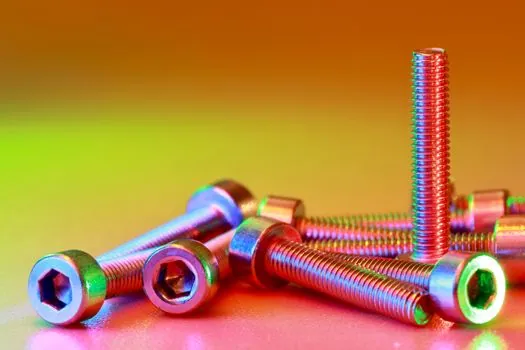
Three merchant forms dominate industrial POs: technical molybdenum oxide (TMO, the roasted concentrate), pure MoO3 or ADM as the chemically purified intermediate, and reduced Mo metal powder, with the converter routing TMO through hydrogen reduction to MoO2 (red-brown "molybdenum red") and then to grey metallic powder [S2]. Each form has different impurity windows, particle size distributions, and packaging requirements, and the conversion from concentrate to powder is the cost step, not the mining.
For steel-mill buyers the working grade is usually FeMo (typically 60% Mo min) with controlled C, Cu, and S ceilings, while chemical buyers specify MoO3 or ADM with tight limits on K, Na, Fe, and heavy-metal residues, and metallurgical powder buyers add FSSS particle size, apparent density, and oxygen content to the PO. A spec-first PO that lists form, grade, impurity ceiling, particle metric, packaging, and Incoterms in one place shortens RFQ cycles and forces converters to compete on process control rather than on the back of an opaque spot index.
Selection criteria: who to qualify, who to keep at arm's length
Procurement should qualify a converter, not just a trading house, because the metallurgical control that determines whether your FeMo meets spec lives in the reduction furnaces and sublimation columns at the processor [S2]. Tier-1 candidates are integrated miners-converters with audited ESG and carbon-footprint data, because Molymet alone reports the lowest carbon footprint of major processors, and a smaller carbon number is becoming a contractual line item, not a marketing claim [S2].
Tier-2 candidates are independent converters in China, the US, and Europe that buy concentrate and sell oxide or powder, and they remain useful for spot cover and second-source qualification. Tier-3, broker-only intermediaries, are a fit for emergency procurement, which by definition trades higher unit cost for short lead time, and should be held in the supplier roster as a contingency channel rather than a primary offtake [S3]. A 4-part supplier-selection process, criteria definition, market analysis, supplier identification, and evaluation/negotiation, applied to this tiered map, removes the "lowest-quote" bias that wrecks by-product metal security [S1].
Risk and sustainability: ESG as a contractual line, not a slogan
In a 2024 survey, 56% of global companies cited ESG risk mitigation and regulatory compliance as a primary driver of their sustainable procurement programs, with corporate sustainability and net-zero goals close behind at 39%, and 64% of investors now prioritize sustainability when evaluating long-term stability [S4]. For molybdenum, that pressure lands on Scope 3 emissions at the copper mine, water use in flotation, and the energy mix of the converter's reduction furnaces, all of which are addressable through contract clauses rather than annual reports.
A working sustainable procurement program embeds ESG criteria into every sourcing decision, from supplier pre-qualification through contract award and renewal, with measurable targets and a feedback loop across the supplier base [S4]. For molybdenum specifically, that means requiring documented carbon intensity per kg of Mo, conflict-mineral and labour-practice attestations, and a circularity plan for scrap, since molybdenum in spent catalysts and machining swarf is fully recoverable back into steel-industry alloying, a closed loop the major processors already operate [S2][S4].
Comparison: strategic vs. spot vs. emergency buying
Three buying modes sit on a spectrum. Strategic procurement uses long-term contracts with integrated miner-converters, locks grade and volume for 12-24 months, prices off a published converter index plus a fixed conversion premium, and carries the lowest unit cost and the highest supply security. Spot procurement uses 1-3 month converter-direct or trader offtake, prices off the live index, suits tactical rebalancing, and trades some security for flexibility. Emergency procurement is shortest-cycle, highest-cost buying triggered by an unplanned outage or audit reject, and should be reserved for genuine disruption, not routine cover [S3].
The right mix for a mid-volume steel or catalyst buyer is roughly 60-70% strategic, 20-30% spot, and 5-10% emergency capacity, with the strategic book split between at least two qualified converter regions so a single copper-mine or converter outage cannot idle downstream production. This same logic is why a membrane procurement playbook for 2026 builds around a primary-plus-secondary supplier split, and why a ferrochrome sourcing map from China grades suppliers on the same three axes: form, grade, and dual-source risk.
Two trackable signals to watch between now and the next sourcing cycle: the annual molybdic oxide benchmark revision by the major converters (the price reference the strategic book resets against) and any new Chinese processor capacity announcements that change the share of merchant concentrate routed through non-Chilean smelters. Either signal will move the risk-weighted cost of every long-term Mo contract on the books.
Spec-level background on the components involved: linear guide, crossed roller guide, and pressure transmitter.