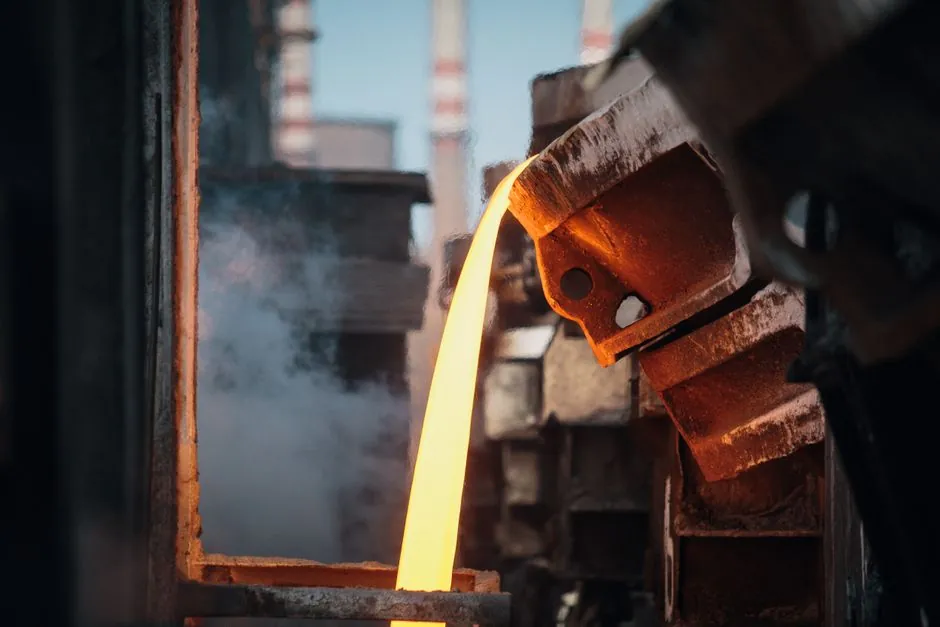
China-origin Special High Grade (SHG) zinc at 99.995% purity carries LME-registered brand codes such as BYXY, and the impurity ceilings for that grade are fixed at Sn 0.001%, Pb 0.003%, Fe 0.002%, Cu 0.001%, Cd 0.003%, and Al 0.001% [S5]. Sourcing these ingots from Chinese producers requires the buyer to lock in three contract parameters before the pro-forma invoice is cut: minimum order, delivery basis, and a deposit structure tied to the LME fixing.
Volza's import shipment tracker logged 173 zinc-ingot import shipments into China through December 2025, with active buyer and supplier rosters, unit pricing, quantities, and direct contact channels published on the record [S1]. A separate B2B marketplace currently lists multiple Chinese buyers and importers actively soliciting wholesale zinc ingot offers [S2].
SHG Purity and LME Brand Registration
Special High Grade is the only zinc grade LME delivers against its registered warrant contract, with a minimum 99.995% Zn and a tight cap on each of six tramp elements (Sn, Pb, Fe, Cu, Cd, Al) [S5]. The LME assigns each approved smelter a three- or four-letter brand code; Chinese-origin SHG material is traded under codes such as BYXY, and only LME-listed brands are good delivery against a warrant [S5]. Outside SHG, commercial zinc ingots are sold at lower purities including 99% (2N), 99.9% (3N), 99.99% (4N), and 99.999% (5N), which serve general industrial, die-cast alloy, and laboratory applications rather than LME warrant delivery [S3].
For buyers who need LME-grade metal, the procurement spec should name the LME brand code, the SHG 99.995% analysis table, and ISO/ASTM test methods used to verify it. For general galvanizing, brass, or zinc-alloy feedstock, a 99.9% commercial grade is usually sufficient and typically prices below the LME SHG quote. Buyers running zinc die casting machine cells should pin the alloy to ASTM B240 (Zamak/Sharpe) or equivalent, not just the Zn% on the certificate.
MOQ, Packaging, and Bonded-Warehouse Logistics
MOQ is the second spec gate and it splits cleanly by delivery mode. Pulls from a bonded free-zone warehouse carry a 20-ton minimum order, while factory EXW pickups drop to 2 tons minimum, and the bonded truck that lifts the warehouse order must carry a Turkish (or local jurisdiction) license plate plus a T1 transit declaration [S5]. Both routes deliver in 3-7 days after payment clears, with sea-freight options out of Evyap, Yilport, or DP World ports for warehouse-side orders [S5].
Standard commercial ingot geometry is roughly 2-3 cm thick by 3-8 cm wide by 6-12 cm long for high-purity refined stock [S3]. Bulk shiploads of LME-grade material are typically 20-25 ton lots per container or break-bulk depending on the smelter. A useful prep step is to confirm the ingot weight tolerance (commonly ±2% per piece) and stacking pattern, because ocean freight is charged per metric ton and stack density drives container utilization.
Payment Structure and Price Fixing
Chinese SHG exporters quoted on this model take 100% by Telegraphic Transfer (TT) on a 30% deposit / 70% before loading schedule, with Letter of Credit and Cash Against Documents explicitly excluded [S5]. The price formula is LME cash settlement plus a negotiated premium, and the LME component is locked only after the deposit confirms; the buyer must send the price-fix instruction at least two hours before the LME daily ring close, and the price is then fixed for the entire order with no re-open [S5].
This mechanic matters because the LME fix, not the pro-forma date, sets the invoice value. A buyer who delays the fix instruction beyond the cutoff accepts the next session's price. For hedging, the standard move is to buy an LME three-month zinc future on the same day the deposit is sent, then lift the future as the physical is loaded; this locks the spread between paper and physical. Companies running flow meter skids on the receiving side should also pre-stage calibration gas and prover loops, since a 20-ton lot discharges in roughly 90 minutes and tank-strapping errors compound fast.
Verifying Counterparties and Import Records
Counterparty vetting starts with shipment history. Volza's dataset covers 173 zinc-ingot import shipments to China through December 2025 and exposes buyer name, supplier name, unit price, quantity, and contact phone/email for each entry [S1]. Cross-checking a new supplier against this shipment list (and against the supplier's export-side record) is the fastest way to filter out shell operations. B2B marketplaces such as go4WorldBusiness publish a parallel stream of buy leads where Chinese importers list active RFQs for wholesale zinc ingots, useful for spotting live demand spikes [S2].
At the smelter end, a useful concentration marker: among large Chinese zinc ingot producers, China Nonferrous Mining Group Co., Ltd. accounts for 84% of the total capital contribution in one major joint venture, with the balance held by Liuzhou state-owned assets, indicating state-level consolidation of the domestic SHG supply base [S4]. Buyers chasing long-term offtake should map which LME brand code is produced at which plant, since brand continuity is a contract-renewal trigger for many galvanizers and die casters.
Specifications Comparison: LME SHG vs Commercial Grades

The choice between grades is a trade between impurity ceilings, cost, and downstream tolerance. On a 2-3 selection-criterion frame, LME SHG 99.995% wins on regulated applications (galvanizing to ASTM A123, die-casting alloys to ASTM B240, battery-grade ZnO feedstock), 4N 99.99% covers high-purity alloy and laboratory work, and 3N 99.9% handles general industrial casting and zinc-alloy prototyping [S3][S5]. On cost, each step down in purity drops the premium meaningfully; on traceability, only SHG carries an LME brand code good for warrant delivery [S5].
Plants running industrial valve bodies in zinc-alloy or producing ZAMAK hardware should default to SHG 99.995% to keep Fe and Pb tramp under control, since Fe above 0.002% embrittles Zamak and Pb above 0.003% violates several drinking-water contact standards [S5]. General galvanizers can usually accept 99.9% commercial grade with documented ASTM A123 coating results. Research and reference-material users pay the 5N premium for 99.999% stock, where the dominant impurity is below 10 ppm each [S3].
Failure Modes and Contractual Pitfalls
The most common sourcing failure is paying SHG prices for 3N material. The certificate of analysis should be matched line-by-line to the SHG impurity table (Sn, Pb, Fe, Cu, Cd, Al) and the lab named on the COA should be a LME-accepted assayer; some Chinese mills will issue an in-house COA that is not LME-recognized even when the metal is technically SHG-grade [S5]. A second failure mode is treating the deposit as optional: the 30% deposit is what triggers price-fixing, and a buyer who wires the deposit late gets the next ring's LME price, which can swing $20-$40/ton on a volatile day.
For multi-container orders, weighbridge tolerance disputes are the third most common pitfall. Net weight on the final invoice governs, and a 20-ton order with a 0.5% weighbridge error is a $200-$400 dispute at SHG premiums [S5]. Insist on a third-party weighbridge certificate (SGS, Bureau Veritas, or Intertek) at both load port and discharge port, and split the tolerance 50/50. Related sourcing references for adjacent commodity decisions are catalogued in this chemical reagent grade selection guide for general fabrication workflows.
Track these three signals over the next 90 days: LME zinc cash stock levels at LME-listed Asian warehouses (a drop below 50,000 tonnes typically tightens physical premia), the SHG vs 3N premium spread reported by Fastmarkets and Argus, and any new Chinese SHG brand registrations or delistings on the LME deliverable brand list. A buyer who monitors these alongside the pressure transmitter calibration cycles on the receiving skid can time offtake against both price and tank-turnover constraints.