
For chemical-processing duty, a motor is rarely the failure point; the protection package around it is, and the most reliable 2026 selections layer a hazardous-location enclosure, a fluoropolymer or electroless-nickel surface treatment, and (for connected instruments) a diaphragm seal with a chemically matched wetted material [S1][S2][S3].
Specifying engineers should treat the motor, the surface coating, and the connected 4-20 mA / HART instrumentation as a single corrosion-and-ignition envelope, because the regulatory classification (NEC Class I/II/III, ATEX zones, IECEx), the coating family (PVDF/Kynar, ECTFE/Halar, PPS/Ryton, Nedox electroless nickel, Magnaplate HCR), and the diaphragm-seal alloy (316L, Monel, Hastelloy) all interact on the same nameplate [S2][S3][S4].
Classify the Hazardous Area Before Selecting Enclosure or Coating
North American electric-motor selection for chemical plants starts with the NEC and CEC class/division/group system plus the autoignition temperature (AIT) of the process gas or dust, not with a vendor catalog number [S3].
Class I covers flammable gases and vapors (typical of petroleum and solvent plants), Class II covers combustible dusts (including electrically conductive aluminum and magnesium dusts that ignite only when airborne), and Class III covers ignitable fibers and flyings that settle on equipment, and is encountered less often in CPI than in textile mills [S3]. The general rule a process engineer applies is: gases and vapors demand explosion-proof (XP) or intrinsically safe (IS) enclosures per the relevant NEC article, while dust hazards usually route to dust-ignition-proof (DIP) enclosures with sealed bearings and gasketed conduit entries [S3]. Two European-coded plants also see ATEX 2014/34/EU equipment marked for zones 1/2 (gas) or 21/22 (dust), and dual-certified units (e.g., ATEX + IECEx) are widely used so a single motor can travel between sister sites [S2][S3].
Coating Selection by Chemical Family, Temperature, and Mechanical Load
Coatings in CPI service are not interchangeable: Kynar/PVDF resists most chemicals, solvents, and some acids; Halar/ECTFE adds abrasion resistance; Ryton/PPS provides strong broad-spectrum chemical resistance at higher continuous temperatures, and Magnaplate HCR / Nedox electroless nickel are engineered for aluminum and steel substrates needing both hardness and corrosion resistance [S1][S4].
Magnaplate's chemical-processing coating family covers Nedox electroless nickel, Tufram hard anodizing, Magnaplate HCR anodizing for aluminum, Lectrofluor polymer coating, and Magnaplate HMF nickel plating, and the published selection guidance says coating choice should be driven by the resistance/friction/wear/non-stick target of the part rather than the brand [S1]. A working rule of thumb drawn from these suppliers: specify PVDF/Kynar for vessels, piping, and instrument housings exposed to strong acids and solvents below roughly 150 °C; specify ECTFE/Halar where abrasion or mechanical wear compounds the chemical attack; and specify PPS/Ryton where continuous service climbs to 200 °C and aggressive organics are present [S4]. For aluminum motor frames, junction boxes, and cooling fins, electroless nickel (Nedox-class) or HCR-class anodizing is the standard answer because it raises surface hardness while sealing the porous aluminum substrate against chloride and acid attack [S1].
Diaphragm Seals and Material Stacks: The "Million-Combination" Problem
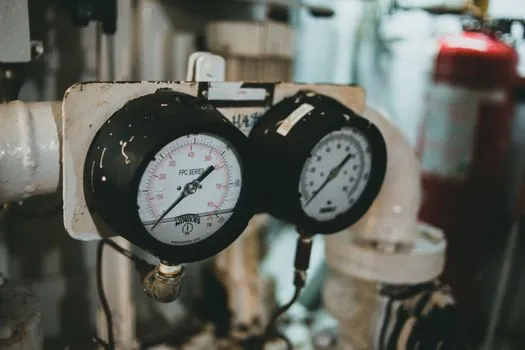
For pressure and level instrumentation in chemical processing service, diaphragm seals are offered as accessory products to isolate the connected gauge or transmitter from corrosive, slurry, or polymerizing process media [S2].
AMETEK USG publishes that its diaphragm-seal program is "available in over 1 million different material combinations" to cover caustic chemical service, and pairs those seals with process gauges and transmitters whose wetted diaphragms are offered in 316L stainless, Monel, or Hastelloy for longer sensor life in aggressive media [S2]. A defensible specification therefore lists (a) process fluid and concentration, (b) operating temperature and pressure, (c) required seal elastomer (Viton, EPDM, PTFE, Kalrez), (d) wetted metal (316L as the default, Monel for HF and some alkalis, Hastelloy C276 for hot concentrated chlorides and oxidizing acids), and (e) fill fluid (silicone, halocarbon, or inert oil) before the seal is selected; choosing the seal body before the fill fluid is a common source of drift and rupture [S2].
Selection Comparison: Protection Options Side by Side
On four decision criteria relevant to a CPI motor and its connected instruments, the dominant protection options line up as follows [S1][S2][S4].
Explosion/dust ignition: explosion-proof cast-iron or aluminum motor enclosure (NEC Class I Div 1, or ATEX zone 1) is the conservative default; dust-ignition-proof enclosures suit NEC Class II; severe-corrosion versions add a coated or stainless housing and sealed conduit entries [S3]. Surface protection for motor frames and instrument bodies: PVDF/Kynar (broad chemical, moderate temperature, good electrical insulation); ECTFE/Halar (chemical + abrasion, tougher mechanically); PPS/Ryton (higher temperature, broad chemical); electroless nickel (Nedox) / Magnaplate HCR (best for aluminum substrates needing hardness) [S1][S4]. Instrument isolation: 316L diaphragm seal (default, most aqueous and mild chemical service); Monel (hydrofluoric acid and some alkalis); Hastelloy C276 (hot chlorides, oxidizing acids); PTFE or EPDM elastomer stacked on a stainless body when process temperatures or permeation rule out standard fluoroelastomer [S2]. Approvals scope: dual-certified ATEX + IECEx + FM/CSA transmitters are now standard for cross-border CPI plants, and selecting a model with all four marks removes a class of paperwork revisions during commissioning [S2].
Who This Protection Package Is For, and Where It Over-Specs

The coating + enclosure + diaphragm-seal stack is for chemical, petrochemical, and fertilizer plants producing plastics, polymers, paints, detergents, soaps, and agricultural chemicals, where the published guidance is explicit that "material compatibility with the pressure and temperature sensors is important to reduce down time and extend the life of the instrumentation investments" [S2].
It is over-spec for clean-room pharmaceutical suites, food-grade lines, and water-treatment aerators: a TEFC motor with an epoxy or stainless frame and a basic NEMA 4 / IP55 enclosure will usually outlast a coated explosion-proof motor in those services at lower cost. It is also under-spec if you skip the hazard classification step; retrofitting a Magnaplate-coated motor into a Class I Div 1 area without an XP-rated enclosure does not solve the ignition risk, it only delays it [S3]. The honest answer: the protection package is only as strong as its weakest layer, so a single spec that names a coating brand without naming the AIT, the class/division, and the wetted alloy will fail commissioning review.
Known Failure Modes and What the Research Calls Out
Three failure modes show up across these sources. First, electrical risk: motors arc and spark and run hot enough to ignite combustible gases or airborne dust, and the failure consequence ranges from downtime to fatality, so the class/division/group/AIT step is non-optional [S3].
Second, chemical attack on motor frames: aluminum frames in chloride, acid, or solvent service pit and lose mechanical strength, and the published remediation is HCR-class anodizing for new builds and Nedox-class electroless nickel for retrofit surfaces that also need wear resistance [S1]. Third, instrument drift and rupture: diaphragm seals with the wrong elastomer or fill fluid are the dominant cause of pressure-transmitter failure in chemical service, and the published remedy is to lock the seal elastomer, wetted metal, and fill fluid to the process fluid's SDS data before issuing the purchase order [S2]. Operators should also note that air-purifying respirators and other PPE-side protections are not substitutes for engineering controls; the same separation-of-layers logic applies to motors, where a coating cannot replace a properly classified enclosure [S5].
Related Reading and Adjacent Spec Maps

For plants also weighing RF admittance level switches alongside the pressure instruments covered here, the 2026 spec map for chemical processing is the natural next read, and it lays out the same wetted-alloy and approvals logic in a level-instrument context RF admittance level switch for chemical processing: 2026 spec gates. For process engineers who need to revisit the fundamentals of motor protector selection criteria, the encyclopedia entry is a useful cross-check on terminology such as overload, locked-rotor, and thermistor trip classes. Plants importing elastomer and seal materials from Chinese chemical suppliers will also want to align the elastomer and alloy stack to a documented chemical material spec, while the broader chemical reagent and chemical anchor entries are useful when the same supply chain covers both instrumentation and structural fixings. [S2]
Trackable signals to watch over the next quarter: vendor updates to dual-certified ATEX + IECEx + FM/CSA transmitter portfolios, any new Magnaplate or Nedox coating data targeting higher continuous service temperatures on aluminum, and any published cross-reference between Hastelloy C276 and the newer low-cobalt super-austenitic alternatives for hot chloride service [S1][S2].