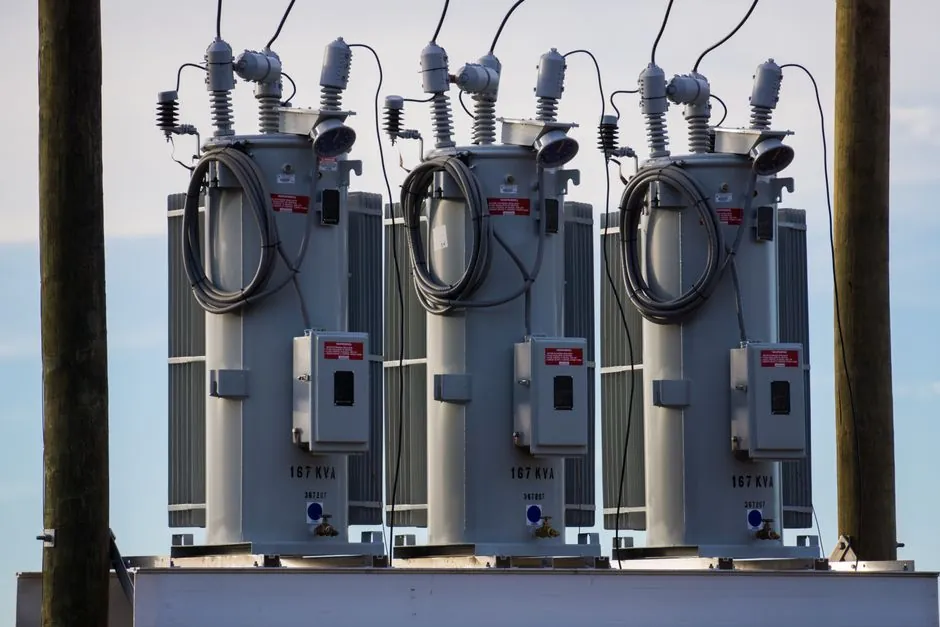
The cited classification identifies three types of motor protectors: thermal relays, motor protectors, and comprehensive intelligent types [S2].
The practical classification depends on the protected motor, application severity, required fault functions, and whether the installation needs local indication, remote monitoring, or network integration [S2][S3].
Motor protector functions and protection scope
A motor protector is the primary safety device for industrial motor equipment, monitoring operating conditions and disconnecting the motor when abnormal conditions threaten the windings, mechanical system, or production continuity [S3]. The motor-protector type detects three-phase current and provides overload, phase-loss, and three-phase-unbalance protection, while the comprehensive intelligent type integrates protection, measurement, and display [S2].
Overload protection compares motor current with a preset nominal-current threshold and applies an inverse-time characteristic, allowing a short high-current event such as starting while acting faster as overload severity increases [S3].
Phase-loss protection identifies a zero-current phase or excessive imbalance among three phase currents and initiates a protective trip. Short-circuit protection is a separate high-current function intended to interrupt dangerous faults before they produce motor or fire damage [S3].
Five principal motor protector classifications
Thermal relays use a thermal operating principle and suit small-capacity AC motors operating under good, stable conditions with infrequent starts. Their limitations include lower precision and, in the cited classification, a lack of phase-loss protection, making them unsuitable where dependable phase supervision is required [S2].
Current-monitoring motor protectors measure three-phase current and provide overload, phase-loss, three-phase unbalance, and other fault protection. Conventional units generally use analog circuits, inverse-time characteristics, potentiometer or pull-code setting, and indicator lights for fault identification; the UL-E2 series is given as one example [S2].
Comprehensive intelligent protectors combine protection, measurement, and display in a microcontroller-based device. Parameters are entered through an operating panel, displayed on an LED or LCD screen, and can be modified for the actual load and operating conditions [S2].
Manual motor protectors versus intelligent devices
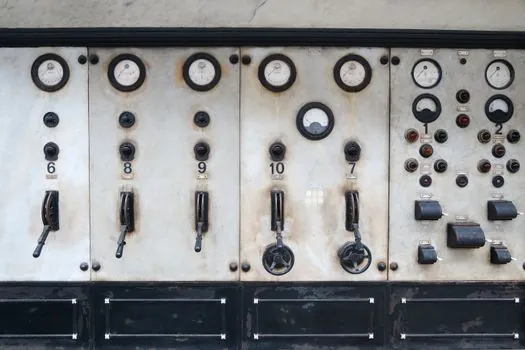
The cited page is titled “Motor Protectors” [S1]. A manual protection device is therefore classified primarily by its switching and fault-interruption role, while thermal relays, intelligent protectors, and embedded sensors are classified by measurement principle and protection depth [S1][S2].
Application-based selection for operating conditions
Ordinary motor protection is appropriate for simple, independently operated equipment with limited production impact, straightforward controls, and relatively informal monitoring. The cited classification states that thermal relays are suitable for ordinary small-capacity AC motors operating under good conditions without frequent operation, but notes their poor precision and lack of phase-loss protection [S2].
High-consequence processes require a more capable device. Safety, continuity, automation, specialist supervision, and MCC network monitoring point toward a medium-to-high-end protector with protection, measurement, display, and communications [S2]. For comparison with the enclosure and control architecture that may receive those signals, see Motor Control Center Types and Classification.
The cited classification says the motor-protector type detects three-phase current and provides overload, phase-loss, and three-phase-unbalance protection [S2].
Selection limits, installation issues, and failure modes
Protection cannot be selected by motor horsepower alone. The device must cover the functions associated with overload, phase loss, phase unbalance, short circuit, stall, and overheating, while its response must suit the motor and load [S1][S2][S3]. Protection thresholds also need to be coordinated with the machine so that normal starting current does not cause an unwanted trip [S3].
Thermal relays may fail to provide sufficient precision or phase-loss coverage for critical installations [S2]. Embedded thermal protection alone may not react before winding damage during a stall because of its thermal hysteresis [S2]. A current-based protector must also be configured for the actual current, load, and protection conditions rather than installed with generic settings [S2].
Intelligent protectors support field adjustment, measurement, and display, but they represent a more complex product class than ordinary protection [S2]. Magnetic-field temperature detection requires both a magnetic-field coil and a temperature sensor inside the motor, which can be difficult in complex field environments [S2].
Motor-protection selection is not limited to ordinary industrial motors. The available motor protector reference covers the broader device family, while surge protection concerns a different electrical disturbance and should not be treated as a substitute for motor overload or phase protection.
Specification data and sourcing requirements
A purchaser's specification should record motor rated current, starting behavior, fault functions, trip response, phase-loss threshold, control-circuit arrangement, indication method, and communications requirement. The 15 HP, 18.8 A, and 25 A example and the 10% to 20% phase-imbalance threshold provide concrete reference points, but they remain application-specific rather than universal settings [S3].
For procurement, the device class should be stated explicitly: thermal relay, manual motor protector or MPCB, current-monitoring protector, intelligent motor protector, embedded thermal protector, or magnetic-field temperature detection device [S1][S2]. Required functions should also be separated into overload, short circuit, phase loss, three-phase unbalance, stall, overheating, and wear monitoring [S2].
Trackable procurement signals are the motor's full-load current and starting current, the required phase imbalance setting, and whether the installation must report to an MCC or other networked monitoring system [S2][S3]. For higher-risk machines, also document the required wear monitoring and inspection access, especially for explosion-proof motors and large high-pressure submersible pumps [S2].