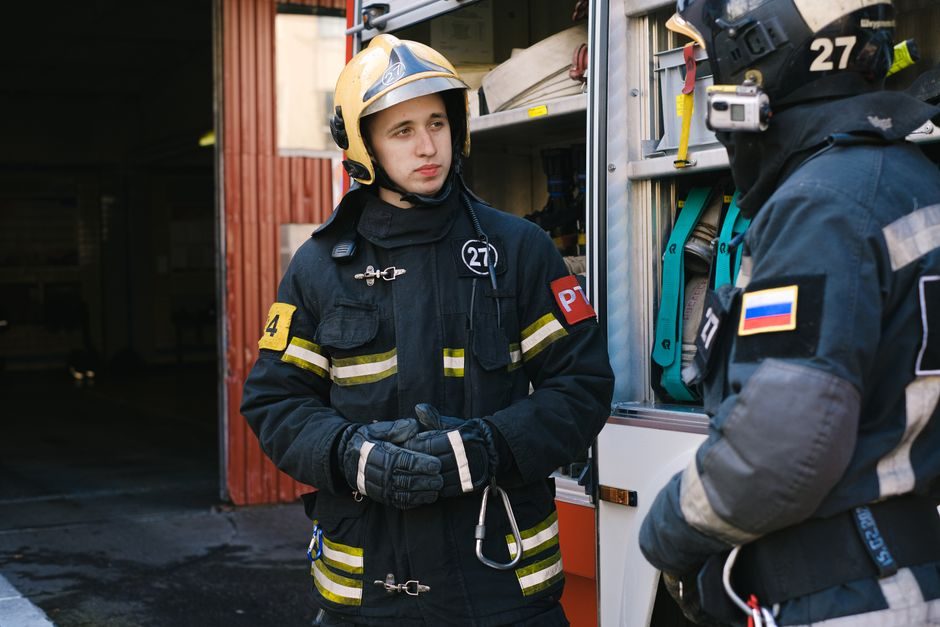
For structural firefighting and hazmat response, the baseline handheld multi-gas detector carries four sensors — O2, LEL, CO, and H2S — and adds toxic-gas cells (HCN, NO2, SO2, Cl2) when the incident profile demands them, per the DHS SAVER Application Note on handheld multi-gas detectors [S1].
Procurement starts with the hazard inventory of the jurisdiction: confined-space rescue, structural overhaul, vehicle extrication, or chemical spill each pull a different sensor stack, and selection of a multi-gas detector without that stack leaves the responder blind to the dominant toxic risk.
Hazard-Driven Sensor Stack: Baseline Four-Gas Plus Fire-Specific Toxics
The DHS SAVER document states that most handheld units come standard with O2, LEL, CO, and H2S detection, and the responder organisation must match additional toxic sensors to the risks it actually faces [S1]. For fireground and overhaul operations this baseline is insufficient because combustion of modern synthetics generates hydrogen cyanide (HCN), nitrogen dioxide (NO2), and at industrial incidents sulfur dioxide (SO2), chlorine (Cl2), and chlorine dioxide (ClO2) at concentrations that can incapacitate a crew before LEL or CO alarms trip.
For a combustible gas detector channel the lower explosive limit (LEL) reading is calibrated against methane or pentane equivalents; the SAVER guide notes that catalytic-bead and infrared LEL sensors behave differently in low-oxygen or high-temperature post-fire atmospheres, and the responder must understand the cross-sensitivity rather than trust the displayed %LEL value blindly [S1]. Oxygen sensors used in fire service are typically lead-free galvanic with a 1–2 year expected life, and the SAVER assessment documents that calibration drift on O2 cells is the single most common cause of a pre-entry failure during an audit [S1].
Specific Gas Hazards and Trigger Thresholds on the Fireground
Hydrogen sulfide is flammable at 4 percent by volume (40,000 ppm) and has an IDLH of 100 ppm, with the low alarm on a typical multigas meter set at 10 ppm — a value pulled from Fire Engineering's Multigas Meter technical reference and consistent with OSHA general industry limits [S8]. The same reference documents that H2S deadens the olfactory nerve at concentrations above ~100 ppm, which is why a meter, not a nose, must drive the entry decision.
Carbon monoxide on the fireground is the dominant toxic for overhaul, and the System Sensor 2251-COPTIR multi-criteria detector uses an electrochemical CO cell with an expected lifetime of approximately six years as part of its smoke-sensing decision logic, not as a standalone life-safety CO device per the datasheet [S2]. For handheld instruments the CO channel typically alarms at 35 ppm (8-hour TWA) and a short-term exposure limit around 200 ppm, with the high alarm set to match the IDLH of 1,200 ppm; these figures are not written into the SAVER document, so the actual setpoints must be confirmed against the manufacturer's manual before procurement [S1].
Confined-Space and Command-Link Capability
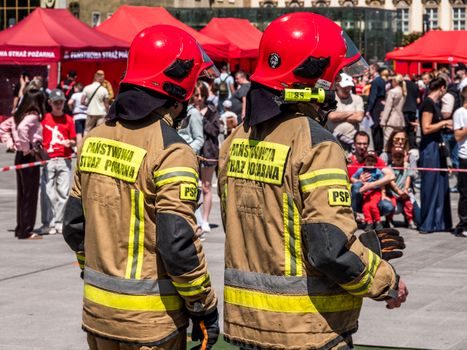
For confined-space rescue the responder needs a five- to seven-gas instrument: Dräger's X-am 8000 measures up to seven gases simultaneously — toxic, flammable, oxygen — and is the typical European fire service specification for that role [S7]. Wireless deployment extends this further: the WatchGas Platoon system pairs POLI multi-gas monitors with IRLink wireless modules that stream readings to a command laptop with mapping and alarm software, deployable in minutes, with simpler Squad Pro and Squad variants used when mapping is not required [S5].
A portable gas detector used by an interior attack crew must be lightweight enough to be chest- or shoulder-mounted without snagging, must run a full shift on one charge (typically 12–24 hours for a four-gas unit, longer with battery-saver modes), and must log events for the post-incident exposure record; the SAVER report explicitly flags battery life and event-logging capacity as evaluation criteria, and notes that calibration gas cost and bump-test station availability frequently decide the total-cost-of-ownership calculation long before the sticker price does [S1].
Comparison of Typical Detector Classes for Fire Service
Four-gas compact (e.g., MSA ALTAIR 4XR, Dräger X-am 5000) suits engine companies doing overhaul and CO monitoring — short warm-up, 12–24 h runtime, single-button bump test, IP-rated for hose-down [S6]. Five- to six-gas instruments (X-am 8000 class) add a second toxic channel — typically HCN or NO2 — for high-rise or industrial fireground and hazmat, and add roughly 30–60% to unit cost [S7]. Wireless command-linked sets (WatchGas Platoon) bundle 4–8 monitors with IRLink, a command laptop, and mapping software, and are specified at incident-command level rather than per crew [S5].
Fixed-area multi-gas detectors (fixed gas detector) are not the right tool for the fireground — they are specified for refinery, wastewater, and confined-space permanent installations, with 4–20 mA or Foundation Fieldbus outputs back to a control room, not a chest harness — and procurement officers sometimes confuse the two categories when the budget is written; the SAVER guide is explicit that handheld units for responders are the AEL 07CD-01-DPMG category, not the fixed-instrument line [S1].
Selection Criteria and Procurement Gate
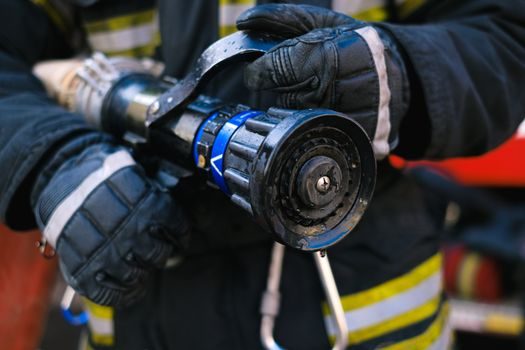
The SAVER Application Note frames selection as a five-step process: inventory the hazards, match the sensor stack, evaluate ingress protection (IP) and drop rating, verify calibration gas and bump-test regime, and confirm event-logging and PC interface capability [S1]. The same document warns that the most common procurement error is over-specifying the sensor list — buying an HCN cell that the crew has no calibration gas for, so the cell is disabled and the crew reverts to a four-gas baseline that the instrument is no longer optimised for [S1].
For a toxic gas detector channel the procurement gate is the calibration gas supply chain, not the sensor itself: an HCN cell requires a calibration gas cylinder with a shelf life measured in months, and a department that cannot keep that cylinder in date will end up with a non-functional sensor in the field [S1]. A second gate is the bump-test station: automated systems that record pre-entry bump results into the device log are now standard on MSA, Dräger, and Industrial Scientific units, and they replace a paper checklist that historically was not completed under incident pressure.
Standards, Maintenance, and Common Failure Modes
The DHS SAVER document is the U.S. federal reference for handheld multi-gas detector selection and explicitly does not endorse any specific commercial product; agencies are directed to test against their own hazard inventory [S1]. Maintenance discipline — daily bump test before shift, monthly calibration with traceable gas, sensor replacement on published end-of-life — is named in the same document as the largest single source of pre-entry failure, and the SAVER evaluation framework treats the maintenance regime as part of the equipment specification, not a separate procurement line [S1].
Two failure modes recur in fire service use: oxygen sensor consumption in a hot, humid fireground environment (cells drift low and force a false alarm or, worse, a failure to alarm on a true low-O2 atmosphere), and H2S sensor poisoning by silicone vapours, cleaning compounds, or high concentrations of the target gas itself; both are documented in manufacturer literature and reinforced in the SAVER maintenance discussion [S1]. The procurement specification should therefore require the manufacturer to publish a sensor life expectancy in months under documented conditions, not just a warranty period, and should require a documented bump-test pass criterion that the officer can execute at the truck in under 60 seconds.
Track the following before the next budget cycle: the NFPA 1500 / 1561 alignment on incident-command wireless monitoring (referenced in WatchGas fire-service documentation as a deployment driver) and the next SAVER assessment update on five- and seven-gas instruments, which historically has been the federal trigger for state-level grant eligibility on multi-gas purchases [S5][S1].
This topic is covered further in Mining Dozer Selection: 2026 Spec Map for Crawler vs. Wheel Units.