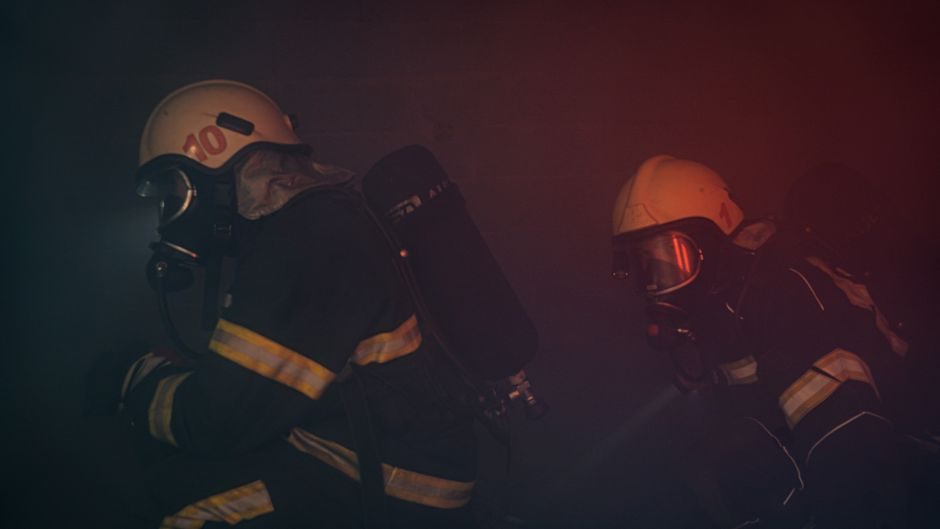
A confined-space entry monitor should be specified as a portable, four-gas diffusion instrument carrying sensors for oxygen (O2), lower explosive limit (LEL), carbon monoxide (CO) and hydrogen sulphide (H2S), with an impact-rated, water-resistant housing and a slide-on motorized sampling pump for pre-entry atmospheric testing [S2].
The baseline 4-gas configuration covers the OSHA/typical permit-required confined space (PRCS) hazard envelope: an enriched or oxygen-deficient atmosphere, an explosive hydrocarbon vapour, and the two toxic contaminants most often present in sewer, tank and vault work. Industrial Scientific's Ventis MX4 and the Gri Instrument WASP-D4 both ship in exactly this LEL/O2/CO/H2S arrangement, and both transition from personal diffusion mode to pumped sampling for entry testing without a second instrument [S1][S2].
Sensor Count vs Permit Scope
Specifying more sensors than the permit envelope drives cost, calibration burden and false-alarm rate without a safety return, so instrument selection is a sensor-count problem first and a brand problem second [S1]. A two-gas Tango TX2 covers only H2S/CO or O2/CO pairs and is meant for personal exposure monitoring outside a permit, not for entry into a Permit-Required Confined Space where O2 and LEL are mandatory readings. The four-slot Ventis MX4 and the WASP-D4 platform are the entry-level conformant spec for general industry PRCS work; the five-gas Ventis Pro5 and six-gas MX6 iBrid add PID, IR or a fifth toxic channel and are warranted only when the written hazard assessment explicitly lists those gases [S1]. Gri Instrument's "GRI smart sensor platform" allows EC, LEL, PID and IR to be combined freely, so the same physical housing can be reconfigured for a 4-gas general entry or a 5-gas PID-equipped tank entry [S2].
Diffusion vs Pumped Sampling
Pre-entry atmospheric testing requires drawing a sample from the bottom, middle and top of the space through a hose, so the unit must accept a slide-on motorized pump; a diffusion-only personal monitor cannot perform an entry test by itself [S1]. The Ventis MX4 explicitly converts from personal diffusion monitoring to confined-space sampling with a slide-on pump accessory, and Industrial Scientific's MX6 iBrid ships with an internal motorized pump as standard [S1]. The WASP-D4 is built around the same diffusion-plus-pump architecture, with CO, O2, H2S and EX (catalytic-bead LEL) as the default four sensor channels [S2]. A diffusion-only monitor used for pre-entry testing is the most common audit finding in municipal wastewater and brewing PRCS programs, and is a non-conformance against the "test before enter" requirement in OSHA 29 CFR 1910.146.
Alarm, Ingress and Power Envelope
Typical audible output for this class sits in the 95 dB @ 0.3 m range with visual strobes at 360°, both required to be heard and seen through a full-face respirator and a hard hat [S1]. Sensor response for the standard four channels is in the T90 single-digit to low-tens-of-seconds range; EC toxic sensors (CO, H2S) are typically T90 ≤ 30 s, the O2 lead-free electrochemical cell ≤ 20 s, and catalytic LEL ≤ 25 s, which sets the minimum dwell time during a pre-entry test. Battery life on a four-sensor Li-ion pack is generally 12–24 hours of continuous run, and the 3.6 V primary-cell variant of the Ventis MX4 is documented at up to 20 hours, with a thin-profile Li-ion giving shorter runtime in a lighter housing [S1]. For entry into a wet or steam-cleaned space, an IP66/67 rating is the practical minimum; Industrial Scientific markets the Ventis and MX6 lines to an IP66/67 dust- and water-resistance spec, and the WASP-D4 datasheet lists "shockproof, waterproof, anti-corrosion, anti-electromagnetic interference" as the four main features [S2].
Selection Criteria Comparison
Across the four mainstream options, the decision matrix is sensor slots, pump, weight and battery chemistry, not brand loyalty [S1]. Ventis MX4: 4 sensor slots, slide-on pump optional, ~182 g, 3.6 V Li-ion or AA primary, suited to general-industry PRCS [S1]. Ventis Pro5: 5 sensor slots, slide-on pump optional, ~3% heavier than MX4 in vendor spec, adds man-down, panic button and alarm sharing via peer-to-peer radio [S1]. MX6 iBrid: 6 sensor slots, internal motorized pump standard, larger and heavier, used where PID or IR CO2 is on the written hazard assessment [S1]. Tango TX2: 2 sensor slots, no pump path, ~2-year battery on a single primary cell, dedicated to personal exposure pairs outside an entry permit, so it is NOT a confined-space entry device [S1]. WASP-D4: 4 sensor slots, EC/LEL/PID/IR freely combinable on the GRI platform, slide-on pump option, aimed at the same 4-gas PRCS envelope as the MX4 [S2].
Calibration, Bump Test and Sensor Life
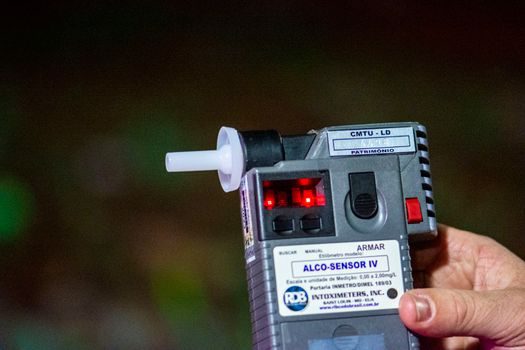
Every multi-gas instrument in this class requires a bump test before each shift's use and a full span calibration on a documented interval, typically every 30–180 days depending on sensor and jurisdiction [S1]. Catalytic-bead LEL sensors lose sensitivity when poisoned by silicones, lead compounds or halogenated solvents, so any LEL reading that drops more than 5% from bump-test value on a known gas should fail the unit and force a recalibration or sensor replacement. EC sensors for CO and H2S carry a stated life of 24–36 months and an end-of-life warning on most platforms, including the GRI smart sensor platform, which logs calibration history and sensor serial number for audit purposes [S2]. A documented sensor-inhibit or "force calibrate" mode is mandatory; without it a unit that fails a bump test will not start, which prevents an uncalibrated monitor from being carried into a permit. For fleet management, vendors offer dock-based automatic bump and cal stations; the Ventis line supports iNet Exchange, while Gri ships its own docking and data-acquisition module for centralized calibration records [S1][S2].
Cross-Reference: Related Selection Spec Maps
A multi-gas monitor is only one node in the safety instrument chain; on a typical electrical permit the same instrument family also covers the H2S and CO hazards during battery-room work, and the spec map for that application is laid out in the working selection guide for electrical work. For construction and infrastructure crews who also have to spec concrete admixtures, wheel loaders, stainless steel grades, dry-type transformers, screw conveyors, hot-chamber die casting and impact drills, the same selection-by-criteria discipline applies across the rest of the equipment fleet, and the linked selection maps for concrete admixtures in school projects, wheel loaders in urban infrastructure and stainless steel grades in construction cover the parallel spec process in those categories. [S2]
Limitations and Failure Modes
Catalytic-bead LEL sensors read low or zero in oxygen-deficient atmospheres, so any PRCS that has been purged, steam-cleaned or allowed to breathe nitrogen will under-report flammability; an IR LEL sensor is the correct choice for those spaces, and the MX6 iBrid's IR/LEL option exists exactly for that failure mode [S1]. A four-gas monitor without a PID will miss volatile organic compounds such as benzene, toluene or xylene that are common in refinery and chemical-plant entries, and that gap must be closed on the written hazard assessment before the permit is issued, not after. Electrochemical H2S sensors cross-react with CO and with certain solvents at low temperature, so cold-weather calibration at < 0 °C should be done on a certified gas cylinder, not assumed from a room-temperature bump test. Finally, a monitor that passes a bump test in clean air can still fail inside the space if the sampling hose is kinked, too long, or has been used on a previous job without a documented leak check; the hose and the wand should be leak-tested to a 5–10 s response against a known gas before every entry, and the hose length on most slide-on pumps is capped at about 30 m of sample line.
Trackable signal: the 4-gas diffusion-plus-pump segment (Ventis MX4 / WASP-D4 class) remains the default PRCS spec in 2026, with the 5-gas Ventis Pro5 class absorbing any permit that adds man-down telemetry, and the 6-gas MX6 iBrid / IR-LEL class reserved for oxygen-deficient and PID-required entries. Watch vendor datasheets for sensor-end-of-life alarm behaviour and for the next revision of the GRI smart sensor module datasheet, which lists freely combinable EC, LEL, PID and IR channels on a single 4-slot carrier [S2].
The underlying component specifications are covered under multi gas detector, gas detector, and combustible gas detector.