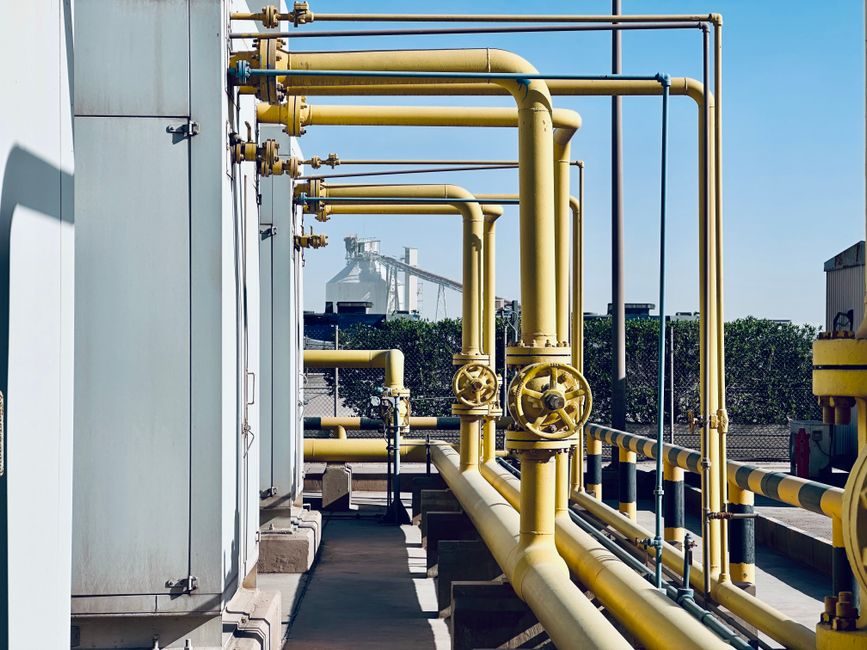
In a food or beverage plant, a fixed gas detector is not chosen by brand first — it is chosen by target gas and by the wet, wash-down, or hygienic-clean environment it has to survive on a daily basis [S3].
Ammonia refrigeration, CO2 carbonation, chlorine- or ozone-based CIP sanitising, and combustion risks from boilers and ovens each demand a different sensor chemistry, and 2026 fixed-point offerings on the market reflect that split: the Prosense PQ series pairs infrared, electrochemical, semiconductor, pellistor, magnetic, and PID sensors under one ATEX/IECEx, SIL2 housing [S1], while dedicated single-gas units like the ATO fixed NH3 detector ship in selectable 0–50 / 0–100 / 0–200 ppm ranges for refrigerant-leak duty [S4].
Match the target gas before you match the brand
Food processing covers at least five distinct gas hazards: NH3 from industrial refrigeration, CO2 from dry-ice or carbonation lines, Cl2 or ClO2 from CIP sanitation, H2S/CO from anaerobic digesters and boiler rooms, and combustible vapours from solvent-based flavour or extract operations [S3].
For NH3, electrochemical and semiconductor sensors are the dominant fixed-point choices, and ATO's 0–50/100/200 ppm NH3 head shows the typical full-scale envelope that ammonia-refrigeration specifiers write into their P&IDs [S4]. For CO2 in carbonated-beverage plants, infrared (NDIR) sensors avoid the cross-sensitivity that electrochemistry suffers in humid wash-down areas [S1]. Combustibles — including ethanol from spirit handling and LPG from forklift charging — still rely on pellistor or infrared LEL sensors, and the PQ family explicitly covers LEL, ppm, ppb and VOL output ranges in one platform [S1]. The takeaway: write the target gas and full-scale ppm on the datasheet request before discussing housing colour or display type.
Sensor technology trade-offs in a wet, hygienic environment
Electrochemical cells offer ppm-level resolution at low cost but drift in temperature-cycled wash-down zones and have a finite 2–3 year service life; infrared sensors are non-consuming and tolerate humidity swings, which is why Dräger builds dedicated DrägerSensor lines for both electrochem and IR chemistries on the same fixed transmitter [S3]. PID is mandatory where volatile organic compounds — cleaning-solvent residues, flavour extracts — must be read at ppb level, and the PQ series integrates PID as a first-class option alongside the four other sensor families [S1].
For combustible-gas monitoring, pellistor (catalytic bead) sensors respond to a broad LEL envelope but are vulnerable to silicone and sulphur poisoning; infrared LEL sensors are immune to those poisons, which matters in bakeries (silicone release agents) and animal-rendering plants (H2S exposure) [S1]. Semiconductor sensors sit at the low-cost end and suit qualitative leak detection rather than safety-trip duty, so specifiers usually restrict them to non-alarm trend channels. A sound 2026 design rule of thumb: route safety trips through IR or pellistor LEL, route sanitation-area sanitiser residuals through electrochemical with redundant IR where CO2 is also present.
Housing, ingress, and certifications that survive the wash-down
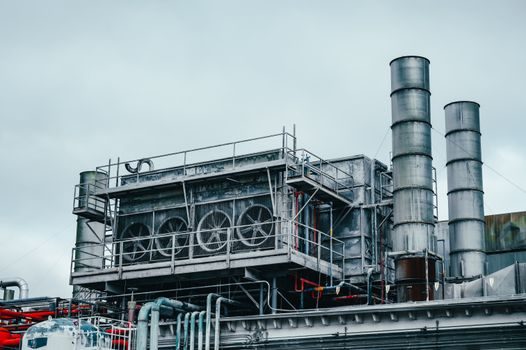
Food plants hose down floors and equipment daily, often with hot caustic or acidic foam, so a fixed detector housing has to be smooth, gasketed, and rated to at least IP66 — the PQ series publishes IP66 alongside its ATEX/IECEx and SIL2 certification stack and EN 60079-29-1 performance approval [S1]. For ammonia machinery rooms that fall under IEC 60079-10 area classification, the detector must also carry explosion-proof marking for the zone, and the same PQ head supports both combustible-gas and toxic-gas variants in the same enclosure [S1].
Stainless-steel or food-grade polymer heads are preferred over aluminium where chloride-based CIP foam contacts the detector, because chloride attacks cast aluminium faster than 304/316 stainless. Remote-mounting is a common workaround when the sensor has to sit inside a duct or above a process tank but the display needs to be at eye level: the PQ platform offers up to 15 m remote-control separation between sensor and transmitter, with the operator adjusting zero and span through magnetic keys without breaking the hazardous-area seal [S1]. Non-intrusive calibration is more than a convenience — it is the only way many plants keep their detector calibration cycles on schedule without shutting down the line.
Output, integration, and controller pairing
Most 2026 fixed detectors push data over 4–20 mA with HART, Modbus RTU, or a dedicated bus, and the PQ series exposes Modbus natively for SCADA or BMS integration [S1]. For multi-point ammonia machinery rooms, a multi-channel controller that aggregates 8, 16, or 32 detectors and drives audio/visual alarms and shutdown relays is the standard architecture, mirroring the GG / GASMARK M1 / GASMARK M255 controller family used in industrial refrigeration sites [S2].
For a wider overview of the fixed gas detector category and how it differs from portable and multi-gas variants, the encyclopedia entry covers sensor families, certifications, and output protocols. Where the application is a single-hazard CO2 storage room or nitrogen-flush line, a dedicated toxic gas detector head may be sufficient and cheaper; where the line carries both refrigerant leak risk and solvent VOC risk, a multi-gas detector head with stacked sensors is the cleaner architecture. For combustible vapours from ethanol handling or natural-gas-fired ovens, a combustible gas detector with pellistor or IR LEL is the appropriate pick.
Siting, coverage, and detector count per zone
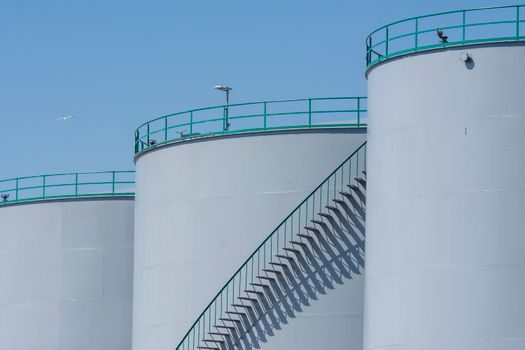
Detector density follows the gas being measured: NH3 is lighter than air and pools near the ceiling of machinery rooms, CO2 is heavier and settles into pits and below-floor voids, chlorine and ClO2 are heavier and corrosive at low ppm so they demand sensors close to the release point. The prosense of mapping is to use computational gas-mapping, not just rule-of-thumb spacing — Dräger's engineering workflow explicitly uses flame/gas mapping to size detector counts before the BOM is frozen [S3].
Typical 2026 ammonia machinery rooms ship with one detector per 50–100 m² of floor area at ceiling height plus one in the air stream of each compressor suction line; chlorine rooms run one detector at the lowest point of the room plus one at the cylinder header. The Prosense PQ data log holds the last 250 alarm, fault, and maintenance events on the device, which gives EHS teams an auditable trail without pulling data through SCADA [S1]. For QA auditors and insurance inspectors, that on-board log often satisfies the documentation leg of a HACCP-linked gas-safety plan.
Calibration, bump-testing, and life-cycle cost
Fixed detectors in food plants drift faster than the same models in dry chemical plants because of humidity, CIP foam exposure, and temperature cycling; a 90-day bump-test interval is common for NH3 and Cl2 heads, with full span calibration every six months. The Prosense PQ supports non-intrusive span and zero via magnetic wand, which removes the need for hot-work permits in hazardous areas [S1].
Service life drives the 5-year operating cost more than the unit price: electrochemical NH3 cells typically last 24–36 months, IR CO2 and IR LEL cells 5–7 years, and PID lamps 6–12 months depending on exposure. For multi-refrigerant or mixed-sanitiser sites, a gas detector platform with swappable sensor heads reduces spares stock and shortens mean-time-to-repair. Buying a detector only on purchase price usually inflates the 10-year cost of ownership by 30–50% once sensor replacements, calibration gas, and proof-test labour are added back in.
Selection criteria compared for the four dominant food-plant cases
For NH3 refrigeration: electrochemical or semiconductor sensor, 0–50/100/200 ppm range, ceiling-mount, ATEX/IECEx zone, IP66 housing, Modbus or 4–20 mA to a multi-channel controller [S1][S4]. For CO2 in carbonation or dry-ice lines: NDIR sensor, 0–5% VOL or 0–100% LEL range, floor or below-grade mounting, IP66, same controller architecture. For Cl2 or ClO2 sanitation: electrochemical sensor, 0–10 ppm range, low-point mounting, IP66 with stainless head, frequent bump-test interval. For ethanol or natural-gas combustible risk: pellistor or IR LEL sensor, 0–100% LEL range, ATEX zone, IP66, relay or Modbus trip output [S1][S2].
The cross-cutting decision criteria are: target gas and full-scale range, sensor-technology fit for the chemistry, ingress protection (IP66 minimum), hazardous-area certification matching the zone, non-intrusive calibration to keep maintenance windows short, and an output protocol that drops cleanly into the existing SCADA or controller layer. Detectors that miss two or more of these criteria — for example, an IP54 head in a daily wash-down zone, or a pellistor LEL sensor in a silicone-exposed bakery — should be deselected regardless of price.
Limits, failure modes, and what fixed detection cannot do
Fixed detectors are line-of-sight, point-measurement instruments — they confirm the air at one location is within the alarm setpoint, but they cannot see an unventilated pocket 10 m away, and they cannot substitute for a hardwired emergency-stop or refrigerant-shut-off valve. Condensation on the sensor face, blocked hydrophobic membranes, and corroded cable glands are the top three documented failure modes in food plants, and the PQ datasheet's IP66 + remote-sensor option is a direct response to condensation dripping from overhead pipework [S1].
Sensor cross-sensitivity is the other silent failure mode: an electrochemical H2S cell will respond to SO2, and an electrochemical Cl2 cell can drift in the presence of high humidity CO2, which is why IR or dual-sensor verification is increasingly common in CIP areas. For worker-entry permits and confined-space work on cookers, dry-ice vaults, or CO2 flooding rooms, a fixed head is not a substitute for a portable gas detector worn by the entrant — the fixed unit tells the control room the room is safe at this instant, the portable confirms the air at the worker's face.
For broader site-safety cross-reference, see the spec map for Fixed Gas Detector Selection for Construction Sites, which covers scaffolding and confined-space risks adjacent to food-plant expansion projects, and the electrical-work perspective in Fixed Gas Detector Selection for Electrical Work: Spec Map for switchroom and generator-set rooms. The two tracks converge when a food plant is built out: construction-phase detector choices differ from operational-phase choices, and a clean handover spec separates the two.
Trackable signals for the rest of 2026: ATEX and IECEx scheme updates covering ammonia machinery rooms in EU food plants, and any IEC 60079-29-1 performance-approval additions for IR LEL sensors at sub-zero evaporator-room temperatures. Also worth watching: food-grade stainless housing options on the Prosense PQ family, and wider release of Modbus-TCP gateways that drop fixed detectors directly into plant historian databases without a proprietary controller in the loop [S1][S3].