
The natural flake graphite market is estimated at 1.87 million tons in 2026, while China holds the majority of mined output and more than 90% of downstream processing capacity.
The critical constraint is conversion into qualified material because purification, spheronisation, and carbon coating are required, making processing capacity more important than raw mine volume.
2026 Supply Profile: Concentrated Mining and Processing
China holds the majority of mined natural graphite output and more than 90% of downstream processing capacity.
More than 90% of downstream processing capacity was located in China in 2024, creating a structural dependency for Western cell producers [S2].
Raw mine availability therefore does not equal qualified anode supply. The natural graphite supply chain depends on concentrating, purification, spheronisation, graphitization where applicable, coating and cell-level qualification rather than geological reserves alone [S2][S4].
Anode Feedstock: Size, Purity and Particle Form
Battery-grade anode demand is accelerating faster than any other outlet in the natural flake graphite market. Raw graphite must be converted into battery-grade material through purification, shaping, and qualification.
Spheronisation converts irregular flakes into rounded particles that are better suited to repeatable electrode processing and cycling, and a carbon coating improves first-cycle efficiency and cycle life [S4].
Refractory Supply Uses a Different Grade Structure
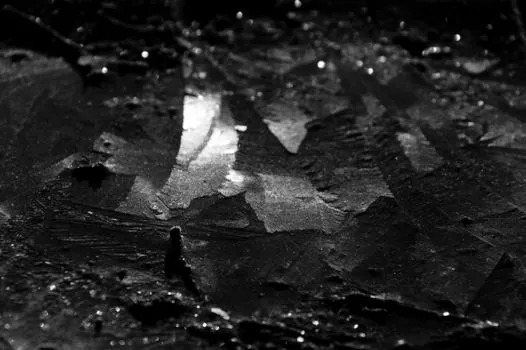
Natural graphite has established non-battery uses in brake linings, lubricants, powdered metals, refractory products and steelmaking, while U.S. consumption in 2025 was estimated at 71,000 tons valued at $128 million [S1]. Natural graphite is widely used in refractory applications.
The U.S. market imported an estimated 79,000 tons of natural graphite in 2025, including 73.4% flake and high-purity material, 26.2% amorphous material, and 0.4% lump and chip graphite [S1]. The average unit value of U.S. flake graphite imports in 2025 was $1,000 per metric ton at foreign ports.
Refractory users should not treat battery-grade purity targets as universal purchasing criteria. Carbon content, flake size, impurity profile, particle morphology, packing density and application performance must be assessed separately for brick, casting products, furnace linings and insulation [S1][S4].
Natural, Amorphous and Synthetic Graphite Compared
Natural flake graphite offers a lower-cost carbon source and, for batteries, can deliver lower lifecycle emissions than synthetic graphite, but it varies by flake size, carbon content and impurity profile [S2][S4].
Amorphous graphite is a separate material stream rather than a purified flake substitute. It accounted for 26.2% of estimated U.S. natural graphite imports in 2025 and had an average import value of $470 per metric ton, versus $1,000 for flake [S1].
The practical comparison is therefore not simply natural versus synthetic. Battery buyers compare feedstock purity, spheronisation yield, coating requirements and qualification performance, while refractory buyers compare carbon content, texture, packing and thermal-service requirements [S1][S4].
Price and Lead-Time Risks Remain Uneven

Benchmark Minerals recorded its Natural Graphite Index at 78.45 with a 0% quarterly change on 17 July 2026, while its Anode Index stood at 80.45 and the Anode Coke Index at 86.15 [S3]. The same review described natural material as rangebound during the second quarter of 2026 as synthetic anode prices strengthened [S3].
Market transparency remains limited because natural graphite has no global benchmark comparable to a single standardized commodity price, and its value depends on origin, processing stage, particle size and carbon grade [S4]. Procurement teams should separate raw concentrate from purified, spheronised and coated material rather than compare headline tonnage as if the products were interchangeable.
Trade policy adds another variable. U.S. preliminary antidumping duties on graphite active anode material from China were set at 93.50%, while countervailing duties ranged from 11.58% to 721.03% by company in 2025 [S1]. These measures affect delivered cost and supplier qualification, although the cited decision covered active anode material rather than every natural graphite refractory grade [S1].
Procurement Criteria for 2026 Contracts
Separate anode and refractory purchasing into distinct qualification pathways. For battery-grade flake, require documented carbon purity, iron content, flake-size distribution, spherical-particle morphology, coating specification, moisture limits and cell-level qualification results rather than relying on a generic “battery grade” label [S2][S4].
For refractory applications, specify the intended service, carbon grade, particle-size distribution, apparent density, thermal behavior and impurity tolerances for the particular brick or lining formulation [S1]. The impressed-current anode is a different electrochemical application, so its graphite and processing requirements should not be transferred automatically to refractory contracts.
Use dual sourcing where qualified. China’s estimated 82% share of 2025 natural graphite mine production and more than 90% share of downstream processing capacity create both concentration and geopolitical exposure [S1][S2]. New non-Chinese processing volumes are not expected to reach meaningful scale before 2027, making supplier diversification a qualification project rather than a spot-purchase exercise [S2].
Market Scale and Trackable 2026 Signals
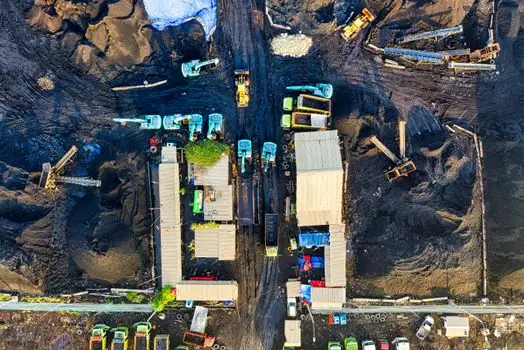
The natural flake graphite market was estimated at 1.87 million tons in 2026 and projected to reach 3.22 million tons by 2031, an 11.47% compound annual growth rate [S2]. Asia Pacific is the largest and fastest-growing market in the natural flake graphite market.
Procurement teams should track three specific indicators through the remainder of 2026: the natural graphite and anode price indices, awarded non-Chinese purification and spheronisation capacity, and the conversion of imported flake into qualified spherical purified graphite.
Track those indicators against delivered-cost changes, qualification lead times and supplier concentration rather than against raw graphite headlines alone. The decisive 2026 question is how much qualified processing capacity can reliably serve anode and refractory contracts, not whether geological flake exists in the market [S1][S2][S4].