
NBR surface bloom is a migration phenomenon, not a material defect: paraffin and microcrystalline waxes, antiozonants, excess sulfur or peroxide curatives, and over-loaded plasticizers diffuse from the bulk of the nitrile compound to the surface and deposit as a visible film [S1][S2].
Nitrile (NBR) is especially prone because the acrylonitrile content (typically 18–50%) controls polarity, and any additive whose solubility in that polarity band is exceeded will exude over time. The same mechanism produces both the desirable antiozonant wax film and the undesirable oily bleed; only the additive category differs [S1][S7].
Why nitrile rubber blooms: the four migrating species
Four additive families drive NBR bloom, and each has a different visual signature. First, paraffin and microcrystalline waxes are deliberately added (often 1–3 phr) to migrate to the surface and form a barrier against ozone attack, the same dull film you can wipe off a new tire [S1][S2]. Second, antiozonants and antioxidants such as IPPD and 6PPD are partially soluble in NBR; when their concentration exceeds the matrix solubility limit, they diffuse outward and re-crystallise as a yellowish or whitish haze [S2][S4].
Third, excess sulfur or peroxide curative that is not fully consumed during vulcanisation migrates outward and forms a white or gray powdery deposit, a common root cause when cure time or temperature was trimmed too aggressively [S1][S4]. Fourth, plasticizers (phthalates, adipates, and low-molecular-weight ester extenders) and processing lubricants (silicone oil, erucamide, fatty acid derivatives) bleed when the loading is greater than the NBR matrix can hold, particularly in high-acrylonitrile grades where non-polar plasticizer uptake is limited [S1][S6]. For background on how nitrile polarity sets the solubility window, see the nitrile rubber reference page.
Wax bloom versus plasticizer bleed: a side-by-side comparison
The two defects look superficially similar but require opposite corrective actions, a point emphasised in compounding casework where a 5 phr plasticizer cut made PVC bloom worse because the real culprit was lubricant excess [S5]. Translating that diagnostic logic back to NBR, the table below lines up the four decision criteria a compounder or QA tech can read on the shop floor.
Wax/antiozonant bloom presents as a dry, whitish, waxy film that wipes off cleanly with isopropyl alcohol and feels slippery-dry to the touch; it appears gradually during storage and concentrates at the surface only [S1][S4][S5]. Plasticizer bleed presents as an oily, tacky, sometimes shiny film that leaves a greasy residue on the finger, develops over weeks of storage, and can migrate into adjacent contacting materials such as plastics or painted metal [S1][S5]. Lubricant bleed (silicone oil, fatty acid amides) is in between: a waxy-powdery surface film from an additive that is inherently less compatible with the matrix than the plasticizer, so it exudes first [S1][S5]. Excess-curative bloom is the easiest to misdiagnose: white to gray powdery deposit, often correlated with under-cure or very fast cure cycles [S1][S4].
Triggers that accelerate migration in NBR service
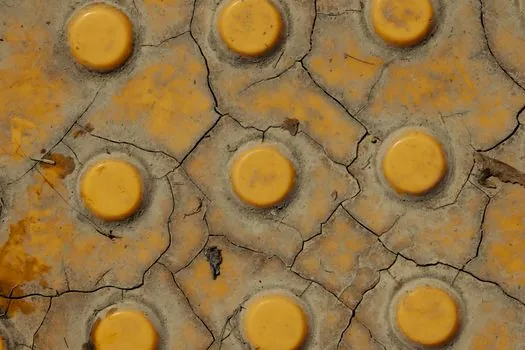
Bloom is rarely caused by a single bad batch; it is usually the compound hitting a solubility limit under specific conditions. Temperature cycling is the dominant accelerator: a drop in temperature reduces additive solubility in the elastomer, so wax and stearyl-type lubricant species exude during cold storage and re-absorb when parts warm back up, a reversible effect documented in PVC casework and observed in NBR [S5]. Elevated storage or service temperature (above roughly 60–80°C) does the opposite: it pushes low-MW plasticizers to the surface faster, especially in high-ACN grades where the matrix is already near its plasticizer-loading ceiling [S1][S6].
Other accelerants are formulation-related, not environmental. Over-loading wax beyond roughly 2–3 phr in an NBR designed for dry, low-ozone service leaves free wax that has nowhere to go but out. Adding non-polar plasticizer to a high-acrylonitrile (40%+ ACN) compound hits the compatibility wall almost immediately, and the oil separates at the surface within days [S1]. Inconsistent cure, whether under-cured parts or post-cure exposure that drives unreacted curative to the skin, also produces a powdery bloom that QA can confuse with mold [S3][S4].
How to confirm which additive is bleeding
A wipe test is the first filter, not a conclusion. Isopropyl alcohol on a lint-free wipe will remove wax and antiozonant bloom cleanly; plasticizer and silicone-oil bleed will leave a smearing, oily streak on the same wipe, and excess-curative powder will transfer as a dry white dust [S1][S4][S5]. For non-destructive confirmation on a representative part, FTIR-ATR spectroscopy can identify the migrating species by matching the surface spectrum against wax, phenolic antioxidant, phthalate, or silicone libraries, a standard technique in bloom analysis [S2].
When contamination of an adjacent surface is in play, solvent extraction followed by GC-MS is the next step, and SEM-EDS can be added if inorganic contamination (talc, calcium stearate from a cross-contaminated batch) is suspected [S2]. DSC and TGA are useful when the dispute is whether the deposit is a low-melting wax (clear melt endotherm below ~100°C) versus a higher-MW polymeric species. Storage-condition audit is the cheapest check: a part held at 23°C/50% RH for 72 hours that stops blooming was almost certainly showing temperature-driven exudation, not a formulation error [S3][S5].
Fixes that work for each bloom type
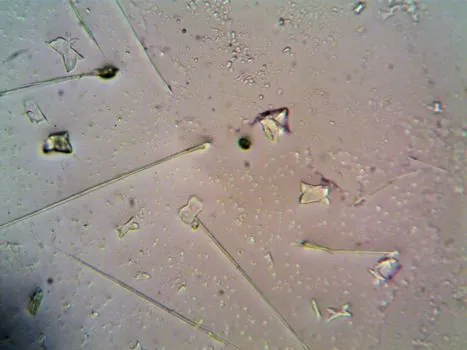
Corrective action tracks the additive class, which is why identifying the bloom type before reformulating is non-negotiable. For wax/antiozonant bloom, the deposit is doing its job, so the answer is usually a wipe with IPA before bonding or a reformulation toward a lower-wax or higher-MW wax grade, plus selecting more compatible antioxidants with higher rubber solubility [S2][S4]. Storage in a cool, dry, dark environment slows the visible re-formation [S3][S4].
For plasticizer bleed, the move is to switch to a higher-molecular-weight grade, not to reduce plasticizer level, because cutting plasticizer sacrifices low-temperature flexibility while leaving the migration problem unsolved [S5]. For high-ACN NBR, restrict non-polar plasticizer to the small fraction the matrix can actually solvate, and consider polymeric plasticizers when low extractables matter. For lubricant bloom, reduce the loading (external lubricant typically 0.2–1.0% in the polymer) or switch to a more compatible wax or fatty-acid-amide [S5]. For excess-curative powder, the cure is process-side: extend cure time, raise cure temperature within the formulation's window, or rebalance the accelerator package so residual curative is fully consumed [S1][S4]. Anti-bloom additive packages and post-cure baking (to volatilise surface excess) are the documented fallback options when a formulation change is not yet on the table [S4].
When to worry and when to leave it alone
Wax bloom on an NBR seal, gasket, or hose intended for outdoor or ozone-exposed service is a feature, not a failure: the wax film is the antiozonant barrier and wiping it off shortens service life [S1][S2]. The same deposit on a bonded rubber-to-metal part, a medical NBR component, or any surface that must be painted, over-moulded, or glued is a defect, because the bloom destroys adhesion and interferes with downstream processing [S3][S4].
Plasticizer bleed is rarely benign. It signals a saturated matrix, contaminates nearby plastics and electronics, raises friction on dynamic seals, and is the most common root cause of NBR parts failing extractables tests in pharmaceutical and food-contact service [S1][S2]. Treat any oily bleed on a critical-function NBR part as a lot-disposition event, not a wipe-down. Excess-curative bloom sits in the middle: cosmetic in most static applications, but a red flag for under-cure that should trigger a re-check of mechanical properties and compression set before shipment [S1][S4].
Trackable signals to watch over the next compounding cycles: reformulating high-ACN NBR grades away from low-MW phthalate plasticizers toward polymeric or adipate alternatives, and tightening incoming-wax and curative QC to a declared migration rate rather than a visual-only acceptance window.
For the relevant spec sheets and selection criteria, see surface roughness tester, and pressure transmitter.
For related coverage, see Positive vs Centrifugal Discharge Bucket Elevator for Fragile Material.