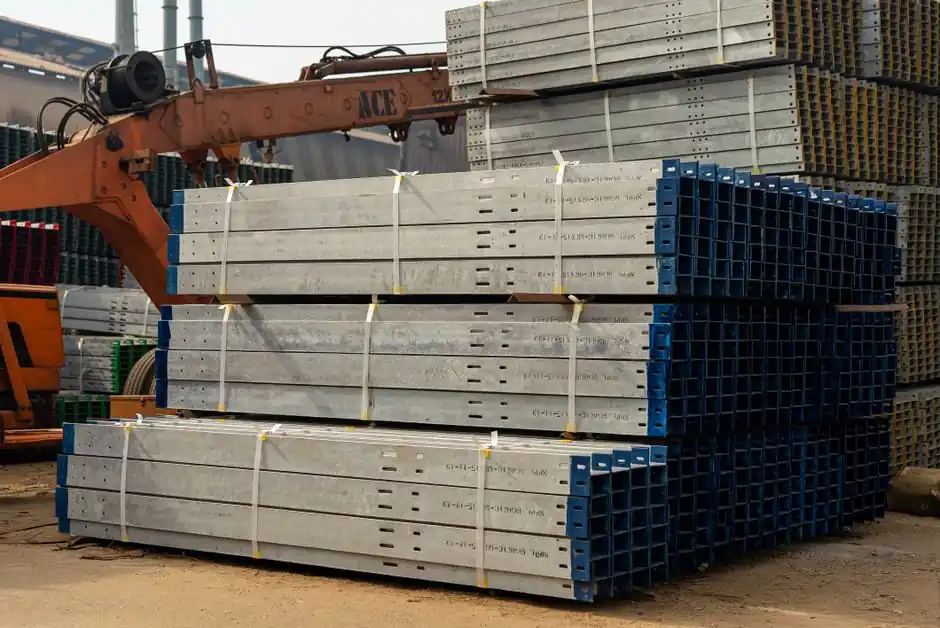
ASTM A572 Grade 50 is specified over ASTM A36 plate when a project needs higher strength without giving up weldability: 50 ksi minimum yield versus 36 ksi lets designers use less material and build lighter, stronger structures [S3]. A572 is a high-strength low-alloy (HSLA) steel using small additions of manganese, niobium, or vanadium to lift strength while keeping the carbon low enough for standard shop welding [S3].
For structural framing, bridges, commercial buildings, and heavy equipment skids, that strength delta is the deciding factor. A36 still wins for base plates, gussets, brackets, and general light-to-moderate fabrication where the extra 14 ksi of yield simply is not needed [S2][S3]. A572-50 plate is typically priced 2.5-5% higher per pound than A36, but because less material is bought, the total installed cost on large structural jobs often ends up lower [S1].
Yield Strength, Chemistry, and the 40% Gap
A36 sets a 36 ksi minimum yield, the baseline that has defined U.S. carbon structural plate for decades, and pairs it with excellent weldability and easy machining [S2]. A572 Grade 50 lifts that floor to 50 ksi minimum yield through controlled HSLA microalloying, the same family of tricks used in modern high-strength sheet [S3].
Chemistry is the lever: A36 is a plain carbon steel, while A572 uses small manganese, niobium, or vanadium additions that pin grain structure and lift strength without driving carbon high enough to hurt the weld puddle [S3]. That keeps preheat and procedure complexity close to A36 shop practice when the WPS is written for the actual heat input and combined thickness. For reference on how plate grade selection flows downstream into fabrication economics, see the steel plate encyclopedia entry for the broader property ranges and grade families.
Weight Reduction and Structural Efficiency
Higher yield lets the designer use a thinner or lighter section to carry the same load, and that is where A572 pays for itself on a real project. Lower total steel weight means easier transport, smaller cranes on site, reduced erection tonnage, and lighter foundation reactions on the concrete side [S3]. On long-span beams, high-rise columns, and bridge girders, that efficiency compounds across every member on the drawing.
For smaller fabricators doing one-off base plates, brackets, and short beams, the efficiency story is weak: A36 is stocked almost everywhere, A572-50 plate is also widely available but some thicknesses or oversized plates can carry longer lead times, and the tonnage saved does not move the budget needle [S3]. The decision therefore tracks project scale, not just strength.
Weldability, Fabrication, and Shop Reality
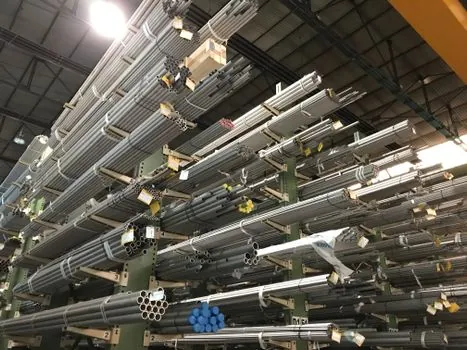
Both grades weld cleanly with standard SMAW, GMAW, and FCAW processes. A36 is more forgiving under dirty or imperfect conditions, while A572 requires a written WPS matched to the actual heat input, joint restraint, and combined thickness, but performs just as well when that procedure is followed [S3]. Neither grade is exotic in a typical fab shop; the only practical difference is procedure discipline.
Machining and forming behavior is similar at shop temperatures. The HSLA alloy additions in A572 do not push hardness into a range that defeats standard cutting tools, so plasma, oxy-fuel, and waterjet shops see no meaningful change in consumable life or cut quality versus A36. The same logic shows up in other HSLA product families, for example in the spec comparison of bucket elevator belting materials, where higher-grade polymers replace steel thickness rather than replicate it.
Cost, Availability, and Total Installed Price
On a per-pound basis A572 Grade 50 plate runs about 2.5-5% above A36, a small premium that is easily erased by the tonnage reduction on a structural job [S1]. The break-even point is roughly where the weight savings on a member or a full framing package exceed that percentage gap. Below that, A36 is the cheaper ticket; above it, A572-50 is the better value even before factoring transport, erection, and foundation cost [S3].
Availability favors A36: it is the default carbon structural plate in almost every U.S. service center, in a full thickness and width range, ready for same-week pickup. A572-50 plate is widely stocked for common thicknesses, but heavier gauges, unusual widths, or large discrete plate quantities can push lead times out, and that schedule risk has to be priced into the spec [S3]. For procurement teams juggling rolling schedules, the DCS market snapshot for process industries shows the same pattern: control hardware is broadly available, but high-spec variants carry longer delivery tails.
When A36 Still Wins, and When A572 Is the Wrong Call
A36 is the right pick for non-critical base plates, gussets, lintels, light beams, and general fabrication where the 36 ksi yield comfortably covers the design load, where every shop in the district stocks the thickness, and where the tonnage saved by upgrading to A572 would not pay back the per-pound premium [S2][S3]. Specifying A572 in those cases adds procurement friction with no structural return.
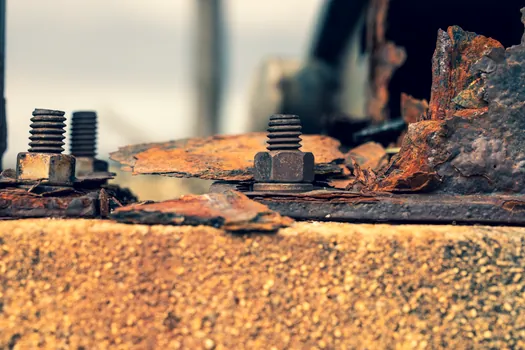
A572 is the wrong call when the structure does not benefit from thinner sections, when the welding procedure qualification budget is zero, or when the only available stock is in a thickness that negates the weight savings. It is also not a corrosion-resistant grade, so for outdoor unprotected service A588 weathering steel is the parallel upgrade on the strength-plus-durability axis rather than A572 [S2]. Pick A572 when the design loads demand the 50 ksi yield and the fabrication shop is set up to run it; pick A36 when simplicity, cost, and schedule dominate the decision.
Track the next round of structural plate pricing and mill lead times through the A36/A572 spread published by major U.S. service centers, and watch A572-50 plate price as a percentage of A36: a narrowing gap is the clearest signal that HSLA structural plate is pulling more spec volume on bridge and high-rise work.
For component-level specifications, see orifice plate flowmeter, and plate heat exchanger.