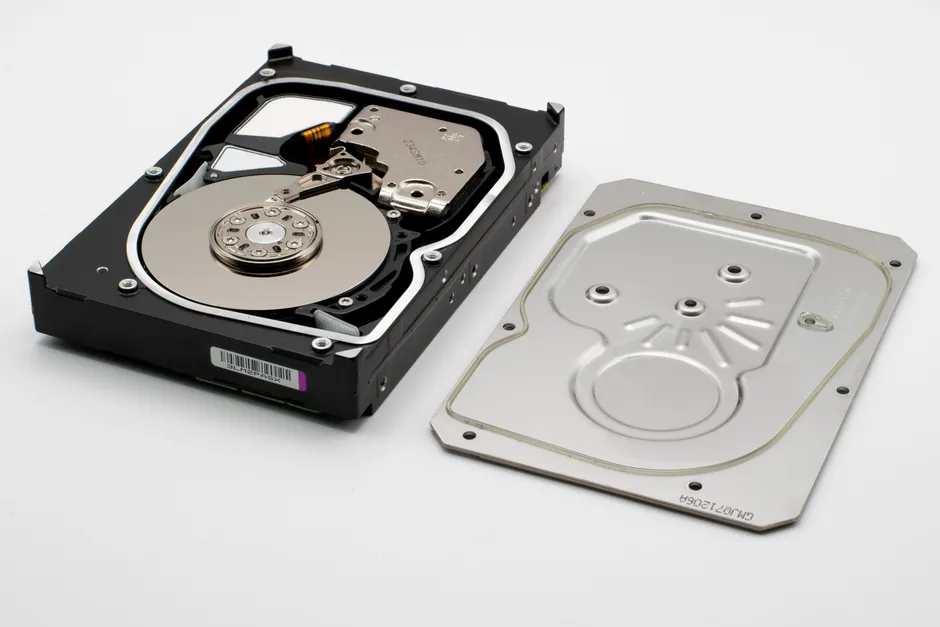
Spoke-type ferrite magnet motors for EV traction are now buildable and have been demonstrated by multiple OEM and lab teams, but they remain about 30 percent heavier than comparable NdFeB permanent magnet machines at the same power output [S1].
For automotive buyers outside China, the case for ferrite is supply-chain driven: roughly 90 percent of processed rare earths originate in China, so reducing NdFeB content cuts exposure to that single source [S1]. The trade-off is a real loss in energy density, which forces larger active motor volumes and complicates vehicle packaging [S6].
Where Ferrite Sits on the Substitution Ladder
Ferrite (strontium and barium hexaferrite) is the most mature rare-earth-free permanent magnet chemistry available for motor builders, with a well-established global manufacturing base going back decades [S3]. It is the only non-rare-earth PM material that is in series production today; everything else in the pipeline is at lab, pilot, or low-volume commercial stage [S2].
On the same substitution ladder sit three other contenders. Samarium-cobalt (SmCo) magnets are rare-earth magnets in their own right and are therefore excluded from rare-earth-free programs [S5]. Niron Magnetics' iron nitride (alpha-Fe16N2) chemistry is targeting field strength approaching NdFeB but has not entered high-volume motor production as of late 2024 [S2]. Proterial (formerly Hitachi Metals) is developing anisotropic NdFeB reduction routes and rare-earth-lean grades, which sit between ferrite and full NdFeB on the performance axis [S2]. Ferrite is the floor of that ladder: lowest cost, lowest remanence, but available today in tonnage.
Performance Trade-offs the Spec Sheet Will Show
Br versus Hc: sintered ferrite grades typically deliver Br in the 0.38-0.44 T range and intrinsic coercivity HcJ around 250-350 kA/m, compared with NdFeB grades that reach Br of 1.2-1.4 T and HcJ above 1000 kA/m on N52 and N54SH magnets. That roughly 3x gap in remanence is the single number that dictates the mass penalty engineers keep quoting [S3][S5].
Temperature behaviour cuts the other way: ferrite Curie temperatures sit near 450 degrees C versus roughly 310-340 degrees C for NdFeB, so ferrite motors can run hotter before irreversible demagnetisation. Designers can sometimes trade that thermal headroom for reduced cooling, which partially offsets the volume penalty at the system level [S3].
Cost per kilogram of ferrite sits an order of magnitude below NdFeB, but cost per unit of magnetic energy stored (the figure that actually matters in a motor) closes much of that gap, because you need roughly three times more ferrite material to store the same energy [S6].
Motor Topologies That Accept Ferrite
Spoke-type interior permanent magnet (IPM) rotors concentrate the lower-Br ferrite flux into a tighter air-gap coupling, recovering a meaningful share of the lost torque density and becoming the dominant ferrite motor architecture under study [S1].
Switched reluctance, synchronous reluctance, and externally excited synchronous (EES) machines are the rare-earth-free non-PM alternatives ZF Friedrichshafen and others are developing; ZF's in-rotor inductive-excited synchronous demonstrator eliminates permanent magnets entirely and uses electromagnets in both stator and rotor [S1].
For direct-drive wind and industrial applications, the same spoke-ferrite concept has been modelled and prototyped, with published work confirming that ferrite substitution is viable when the envelope penalty is acceptable [S7]. The point is that topology choice is not optional: dropping ferrite into an NdFeB-shaped rotor design is the fastest path to a poor machine.
Industrial Versus Traction Use
For industrial servo drives, fans, pumps, and appliance motors, ferrite is already the default permanent magnet, with no rare-earth content required in the bill of materials. The specifications buyers should track on a pressure transmitter or flow meter spec sheet are different from those on a motor magnet, but the procurement reality is the same: ferrite is a commodity material with stable, multi-source supply [S3].
For EV traction the picture is more constrained. The same supply-chain logic that pushes automakers toward ferrite is pushing PLC and motor controller suppliers toward wider constant-power speed ranges and higher-RPM gearboxes, so that a lower-torque-density ferrite motor still meets vehicle-level targets. Tesla's stated direction of a rare-earth-free permanent magnet drive unit is the most public data point; GM and Stellantis have publicly partnered with Niron on a parallel iron-nitride path [S1].
Limits and Failure Modes Engineers Hit in the Field
Demagnetisation under fault current is a real risk in any PM machine, and the lower HcJ of ferrite means a short-circuit current spike can partially irreversibly demagnetise rotor magnets. The mitigation is oversizing the magnet and adding a buried flux-barrier geometry, both of which add back mass that the topology choice was trying to remove [S5].
Mechanical limits matter too: sintered ferrite is denser than NdFeB (roughly 5.0 g/cm3 versus 7.5 g/cm3), so even at three times the magnet volume, ferrite mass only roughly doubles, not triples, which is why published mass penalties cluster around the 30 percent figure for the complete motor, not the magnet alone [S1][S6]. At very low temperatures (below roughly -40 degrees C), ferrite coercivity rises, but remanence falls, and at very high temperatures the magnet becomes electrically conductive in some grades, raising eddy-current loss. Spec writers should pull the B-H curve and the resistivity value, not the brochure number.
Standards, Sourcing, and Decision Criteria
No single ISO or IEC standard dictates a ferrite-versus-NdFeB choice in EV traction motors; the relevant magnet characterisation standards (IEC 60404 parts 4, 5, 7, and 14 for material classification and test methods) apply to both chemistries. Sourcing decisions are driven by OEM internal material standards, US Defense Production Act allocations for non-China rare-earth capacity, and EU Critical Raw Materials Act risk-weighting rather than a published motor standard [S1][S6].
Decision matrix for selecting rare-earth-free motor materials on a new program: (1) Magnet energy product target, where ferrite is lowest, iron nitride (Niron) targets mid-NdFeB range, Proterial rare-earth-lean NdFeB sits closest to incumbent; (2) Volume/mass penalty the vehicle platform can absorb, where ferrite requires 25-40 percent more active mass; (3) Operating temperature window, where ferrite's higher Curie point is an advantage; (4) Supply-chain exposure, where fully ferrite eliminates Chinese rare-earth dependence while rare-earth-lean grades only reduce it [S2][S6].
Trackable signals to watch next: a ferrite-only series-production EV traction motor reaching a Western OEM showroom; Niron's iron nitride line scaling past pilot tonnage; and a published SAE or IEC technical report comparing ferrite and NdFeB traction motors on a common dynamometer cycle. For readers tracking the broader electrification supply chain, the same critical-mineral pressure is reshaping EHV cable plant order books and FEOC-driven battery material tracing, so the ferrite-versus-NdFeB call is one node inside a much larger materials-availability problem.