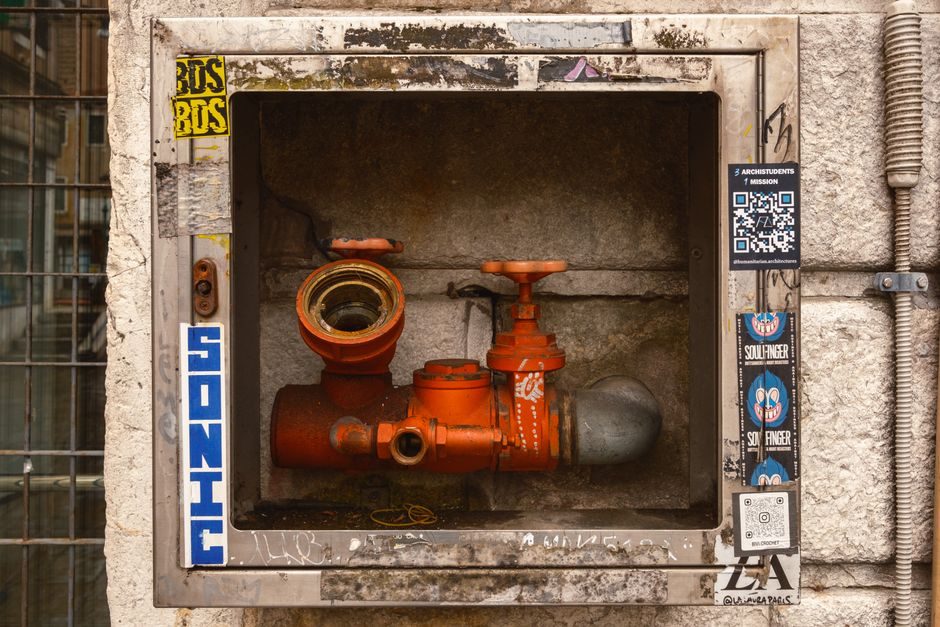
A needle valve meters flow by lifting or lowering a conical plug from a conical seat, producing the fine-adjustment throttling action that distinguishes it from on/off isolation valves like a ball valve or a butterfly valve [S1][S4].
General-purpose water-service needle valves cover DN50 to DN100 (1.969 in to 3.937 in), 0–200 bar (0–2,900.8 psi), and −20 °C to +100 °C (−4 °F to +212 °F), per a current OEM datasheet for the NV series [S1]. Selection is governed less by line size and more by required flow coefficient (Cv), seat material, and end-connection duty.
Operating Envelope: DN, Pressure, Temperature
For a general-purpose needle valve used on liquids, a published operating envelope sits at DN 50–100, 0–200 bar, and −20 °C to +100 °C [S1]. That band covers most instrument-air header block-and-bleed duty, sampling line isolation, and analytical tap throttling in water-treatment skids.
For higher temperatures or corrosive media, the same geometry is offered in 316 stainless steel, Monel, or Hastelloy trim, with pressure-temperature ratings de-rated per ASME B16.34. Forged-body needle valves in carbon steel typically reach Class 800 (≈138 bar at 38 °C / 100 °F) on 1/2" NPT ports; the larger DN 50–100 flanged patterns align with Class 150/300 flange ratings (PN 20/50).
Cv-Based Sizing Logic vs. Pipe-Size Logic
Control-valve sizing follows ANSI/ISA-75.01.01 (IEC 60534-2-1 Mod), which expresses required capacity as Cv at a defined travel, then matches it to the manufacturer's published Cv table [S2]. A needle valve is a subset of globe-family throttling, so the same Cv equations apply, with the trim reduced to a single conical plug-and-seat rather than a cage or characterized plug.
The sizing step: (1) calculate required Cv from Q, ΔP, SG, and temperature using the liquid or gas equations in IEC 60534-2-1; (2) read the OEM's Cv-vs-travel curve; (3) select a port size whose rated Cv at 80–90% travel exceeds required Cv by 1.2–1.5× to leave controllability margin. Vendor sizing software (e.g., the IEC-compliant tool at valvesizingprogram.com) outputs a calculation trace, material pressure-temperature warnings, and a red-flag summary on undersized selections [S3]. Free generic Excel spreadsheets following ANSI/ISA-75.01.01 (IEC 60534-2-1 Mod)-20012 are also published for manufacturer-neutral sizing [S2].
Needle Valve vs. Globe, Ball, and Butterfly on Four Criteria
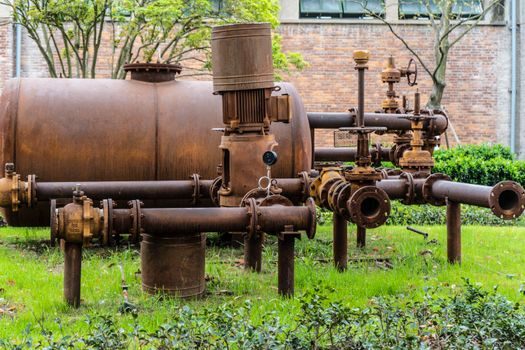
Compared on a fixed set of duty criteria, needle valves land in a narrow band: very fine resolution, moderate Cv, low cost, and limited DN/pressure range. [S1]
Rangeability/resolution: needle ≈ 50:1, globe ≈ 50:1, segment ball ≈ 100–200:1, butterfly ≈ 20:1. Cost (relative, DN 50, Class 150): needle = 1.0×, globe = 1.5–2×, segment ball = 1.2×, high-performance butterfly = 0.6× (larger sizes 8"+ cheaper still) [S2]. Flow capacity per same DN: globe baseline = 1.0×, segment ball ≈ 2.0×, eccentric rotary plug ≈ 1.0×, needle ≈ 0.3–0.5× (restricted by the narrow seat annulus) [S2]. Typical max DN: needle ≈ 100 mm, ball ≈ 600 mm, butterfly ≈ 2,400 mm [S1].
That comparison maps needle valves to fine-metering and instrument duty, not main-line throttling. For DN ≥ 150 mm on high-cycle service, segment ball or high-performance butterfly dominates on installed cost and footprint.
Material and End-Connection Selection
Body material is chosen by media corrosivity, not by pressure: WCB carbon steel for water, steam, and non-corrosive hydrocarbons; 316 SS for mildly corrosive chemicals and deionized water; Monel or Hastelloy C for HF, HCl, and seawater; brass or bronze for low-pressure instrument air [S1]. Seat and plug are typically matched to the body, with Stellite 6 hard-facing on the seat when the duty includes particulates or steam cutting.
End connections are NPT (≤DN 15, Class 800), socket-weld (DN 15–25, Class 800), or flanged (DN 50–100, Class 150/300 per ASME B16.5). For fugitive-emissions service in hydrocarbons, spec ISO 15848-1 BH-class stem packing with graphite or PTFE chevrons; the needle valve's small stem diameter makes low-emission packing easier to achieve than on a ball valve of equivalent DN.
When NOT to Specify a Needle Valve
Skip a needle valve for slurry, two-phase, or solids-bearing service — the narrow seat annulus erodes quickly and the geometry cannot pass particulates. Skip it for high-cycle modulating duty above 50,000 cycles/year on dirty process streams; globe or segment ball is more durable. Skip it for line sizes above DN 100 where Cv demand is high — the seat length and stem travel become impractical. Skip it for cryogenic LNG (-196 °C) service unless the body, bonnet, and stem are explicitly extended-bonnet rated and impact-tested per ASME B31.3. [S2]
For high-pressure small-bore throttling on instrument manifolds and chemical injection quills, a needle valve is the correct call. For 8"+ modulating service on cooling-water or flare gas, the butterfly valve class wins on cost and footprint, and the ball valve wins on tightness and rangeability.
Verification and Sourcing Discipline
Always size to required Cv at the design ΔP, not to line size; pipe-size logic over-specs the seat and starves resolution. Cross-check the OEM's Cv-vs-travel curve against the IEC 60534-2-1 calculation trace, and confirm the body pressure-temperature rating against ASME B16.34 for the design temperature. Verify fugitive-emission packing against ISO 15848-1 for hydrocarbon or hazardous-gas duty. For instrument-skid sourcing, the needle valve cluster is widely available from European and Chinese OEM catalogs; cross-reference supplier lists such as the China Solenoid Valve Suppliers sourcing map when qualifying Asian sources, and align instrument-side valve selection with broader process-side guidance such as the diaphragm valve sizing and selection guide when the same skid also carries chemical-metering duty. [S1]
Final verification node: the IEC 60534-2-1 calculation trace and the OEM Cv curve must agree to within ±10% at the design travel before release.